Myths and Symbols of the Roman Triumvirate
The Roman Triumvirate, a political alliance that shaped the course of Roman history, is steeped in myths, symbols, and intricate narratives that extend beyond the mere power struggles of its key players. While the term “triumvirate” broadly refers to a three-man rule, the most notable examples occurred during the late Roman Republic, particularly in the First Triumvirate (60 BCE) involving Julius Caesar, Pompey, and Crassus, and the Second Triumvirate (43 BCE) with Octavian (later Augustus), Mark Antony, and Lepidus. This article delves into the myths surrounding these alliances, the symbols they employed, and the long-lasting impact they had on the Roman world.
The First Triumvirate
Formation and Myth
The First Triumvirate represents a fascinating intersection of ambition, necessity, and political maneuvering. Officially formed around 60 BCE, it was shrouded in mythological representations. The alliance came amid political tensions and opposition, which makes it seem almost fated in Roman storytelling. Myths often portrayed Caesar as a cunning strategist, Pompey as the legendary general, and Crassus as the wealthy puppet master, weaving their narratives to create a larger-than-life portrayal of their alliance.
Legends often romanticized their goals, framing them as champions of the Roman Republic’s future. In reality, however, their motivations were self-serving, driven by personal ambitions rather than a shared vision for Rome. The specter of their eventual betrayal and conflict loomed large, turning their partnership into a tragic narrative common in Roman lore—one that emphasized the fleeting nature of power.
Symbols of Power
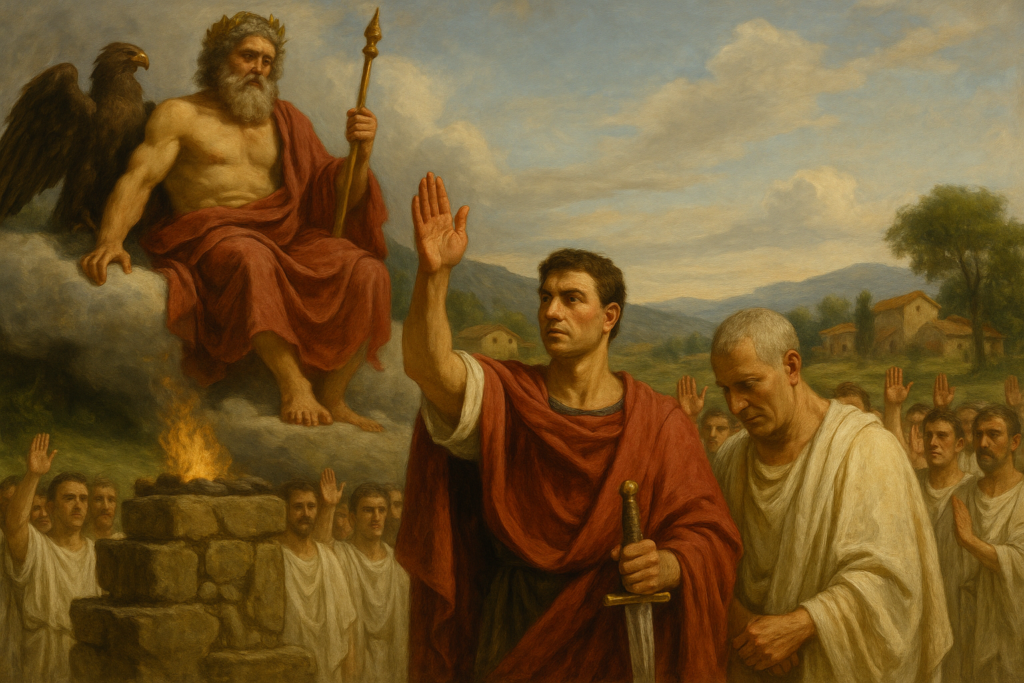
The Triumvirate also employed various symbols to communicate their authority. The most potent symbol for working in coalition was the act of oaths, a testament to their mutual loyalty despite the inherent distrust among them. They utilized public ceremonies to reinforce their alliance; for instance, joins displays of military might and public overtures, with parades showcasing their army’s victories.
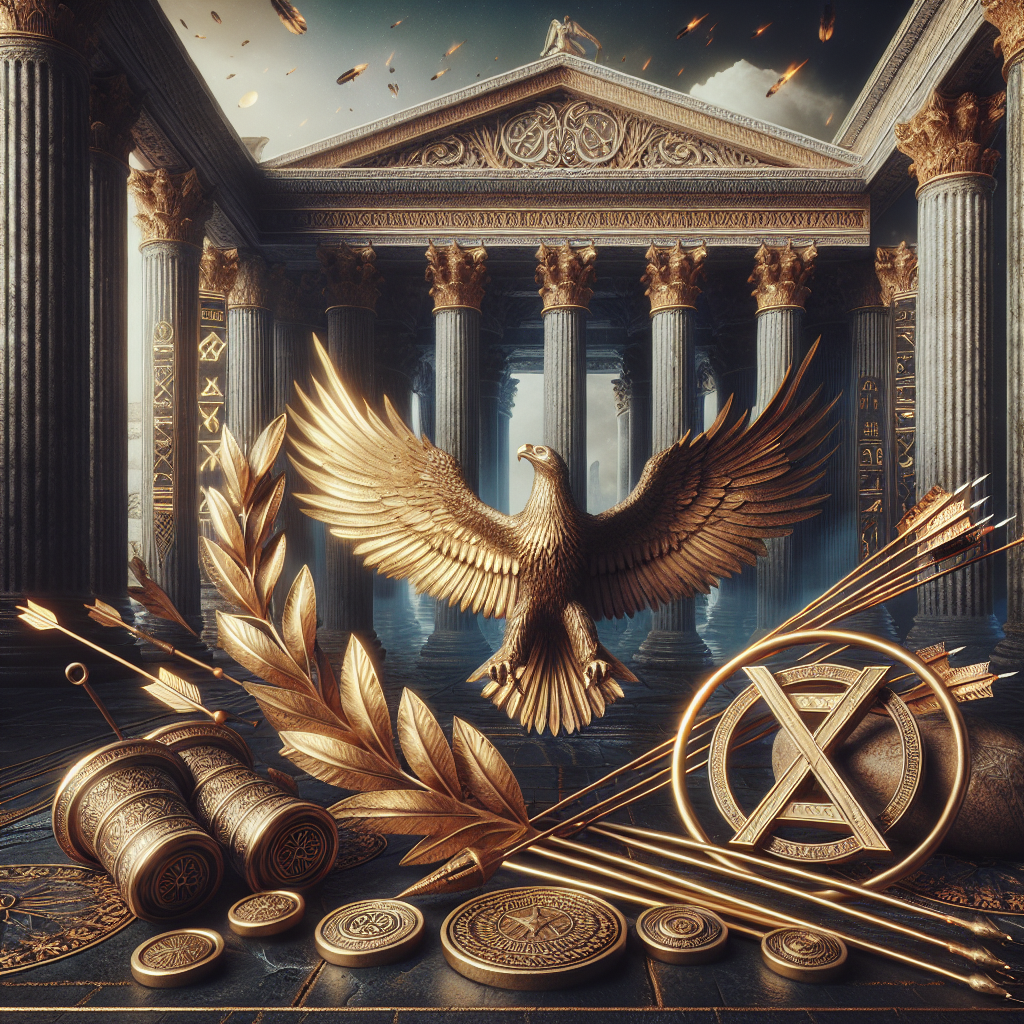
Additionally, the portrayal of allegorical figures in art and architecture served as a vehicle for their propaganda. Statues, coins, and public inscriptions often depicted the leaders participating in divine rituals, bridging the gap between mortal ambition and divine will. By linking themselves to gods and popular myths, they sought to legitimize their rule and garner public favor.
The Second Triumvirate
Formation and Conflict
The Second Triumvirate, formed in 43 BCE after the assassination of Julius Caesar, took a different tone marked by a much deeper betrayal, impending civil war, and the struggle for legacy. This coalition consisted of Octavian, Mark Antony, and Lepidus, and they quickly transformed into a ruthless group engaged in purging their enemies and consolidating power. Here again, mythology played a crucial role in shaping the narrative around their alliance.
Octavian, often seen as the calculating statesman, was juxtaposed with Mark Antony, a warrior who found himself enthralled by Cleopatra. Their stories unfolded like a classic Roman tragedy, with themes of ambition, love, and betrayal spiraling into disastrous semi-mythical implications. In hindsight, these characters became archetypes: Octavian as the cold rationalist, Antony as the passionate hero enamored with fate, and Lepidus as the overly ambitious but ultimately forgotten figure.
Mythical Symbolism
The symbols used by the Second Triumvirate reinforced the grandiosity of their ambitions. The cestrum, a scepter symbolizing their authority, was a prominent motif in their public appearances, encapsulating themes of power and dominion. Themes of divine providence were also integral to their public persona. Octavian, after his victory at Actium, was often associated with Apollo—god of prophecy and music—sublimating his reputation into one of divine destiny.
Additionally, commemorative coins and statues furthered the mythos surrounding Octavian as the eventual savior of Rome. He commissioned structures that paid tribute to his lineage and the gods’ favor, embedding these myths into the very landscape of Rome. The Forum of Augustus is a prime example, blending political celebration with religious veneration, thus solidifying the triumph of the new order over the chaos of civil war.
The Legacy of Myth and Symbol
The ramifications of the myths and symbols wielded by the Triumvirates extend far beyond the characters of Julius Caesar, Octavian, and their cohorts. These alliances reshaped political structures, influenced literature, and inspired Roman artists and poets for centuries to come. Mythical representations of these leaders that emerged subsequently helped to establish norms of leadership, governance, and power struggles in Roman culture.
Roman historians like Livy and Cicero were instrumental in creating narratives that further mythologized the events and figures involved. Their works framed the Triumvirate within a historiographical context that imbued these political maneuvers with moral lessons, conveying the ethos of Roman virtue versus vice.
The imagery and stories from the Triumvirate era continue to resonate in modern interpretations of political alliances and governance. The archetypes of ambition and betrayal, the resilience of power, and the intoxicating allure of authority rooted in myth are still relevant as we examine contemporary political landscapes.
Conclusion
In sum, the Roman Triumvirate is a complex tapestry of power, myth, and symbolism. The narratives surrounding the First and Second Triumvirates illustrate the nuanced interplay of human ambition and destiny, while their symbolic representations provided a framework for legitimizing authority. The implications of these political alliances linger in our collective memory, serving as both a cautionary tale and an enduring mythic narrative about power dynamics. As history would reveal, the Roman Triumvirate stands not just as a political concept but as a rich cultural phenomenon that encapsulates the enduring struggle for legacy, identity, and authority.