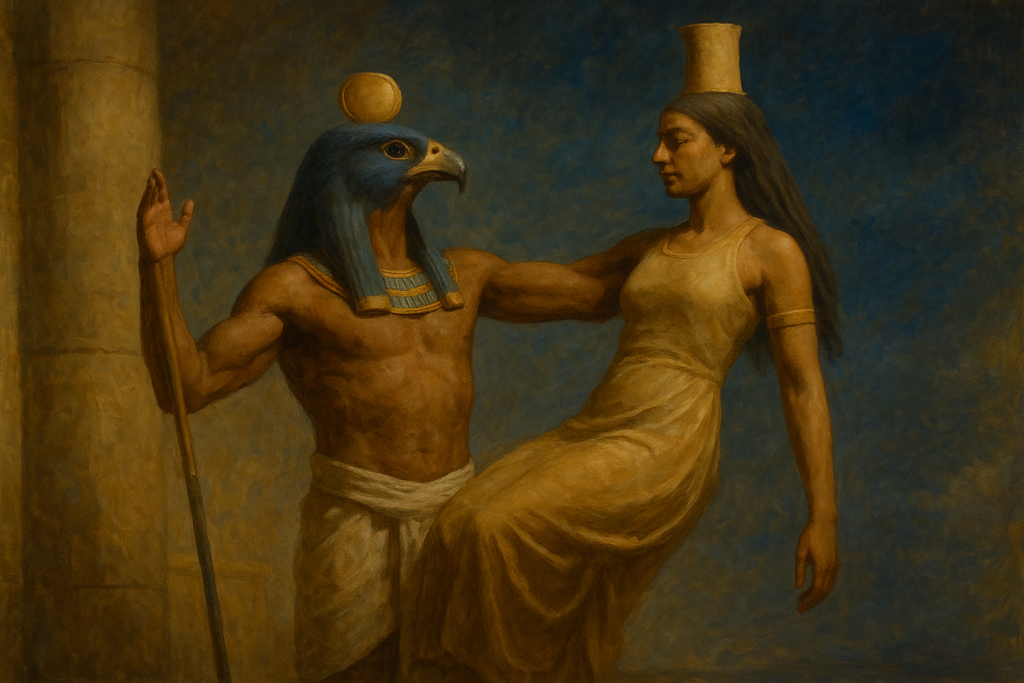
Geb and Nut in the Heliopolitan Sky Story
In the Heliopolitan creation tradition, Geb and Nut are not minor background figures. They sit at the heart of one of ancient Egypt’s most…
Read the story : Geb and Nut in the Heliopolitan Sky StoryAncient Egyptian Mythology is a rich tapestry woven from the beliefs and rituals that formed the foundation of ancient Egyptian culture for over three millennia. This mythology encompasses a vast pantheon of gods and goddesses, each embodying natural phenomena, societal values, or abstract concepts. Central themes include creation, the afterlife, resurrection, and the constant struggle between order (Ma’at) and chaos (Isfet). Myths were not only religious narratives but also reflected the Egyptians’ observations of the natural world, their understanding of morality, and their insights into the mysteries of life and death. From the sun god Ra’s daily journey across the sky to the complex tales of Osiris, the god of the underworld, these stories were integral to the ancient Egyptians’ explanation of the world around them. They influenced every aspect of Egyptian life, including art, architecture, and the rituals performed for the dead. This category delves into the fascinating world of gods who were born from the chaos of the primordial waters, pharaohs considered the embodiments of gods on earth, and the intricate beliefs about the afterlife that led to the creation of monumental structures like the pyramids.
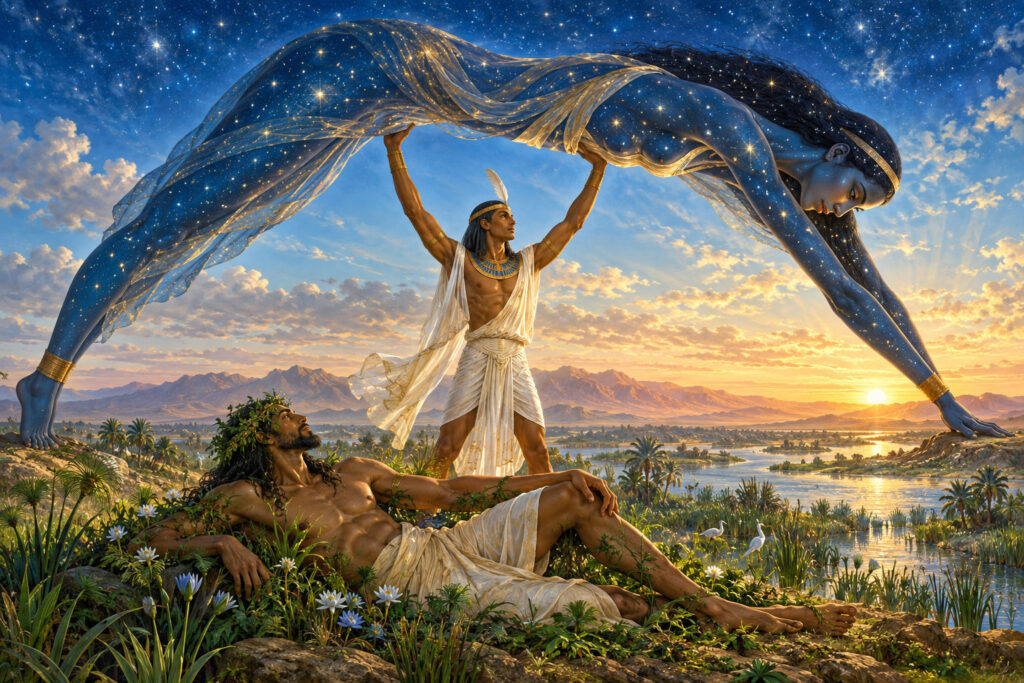
In the Heliopolitan creation tradition, Geb and Nut are not minor background figures. They sit at the heart of one of ancient Egypt’s most…
Read the story : Geb and Nut in the Heliopolitan Sky StoryShu and Tefnut stand at the beginning of one of ancient Egypt’s best-known creation traditions: the Heliopolitan cosmogony. In that theology, they are the…
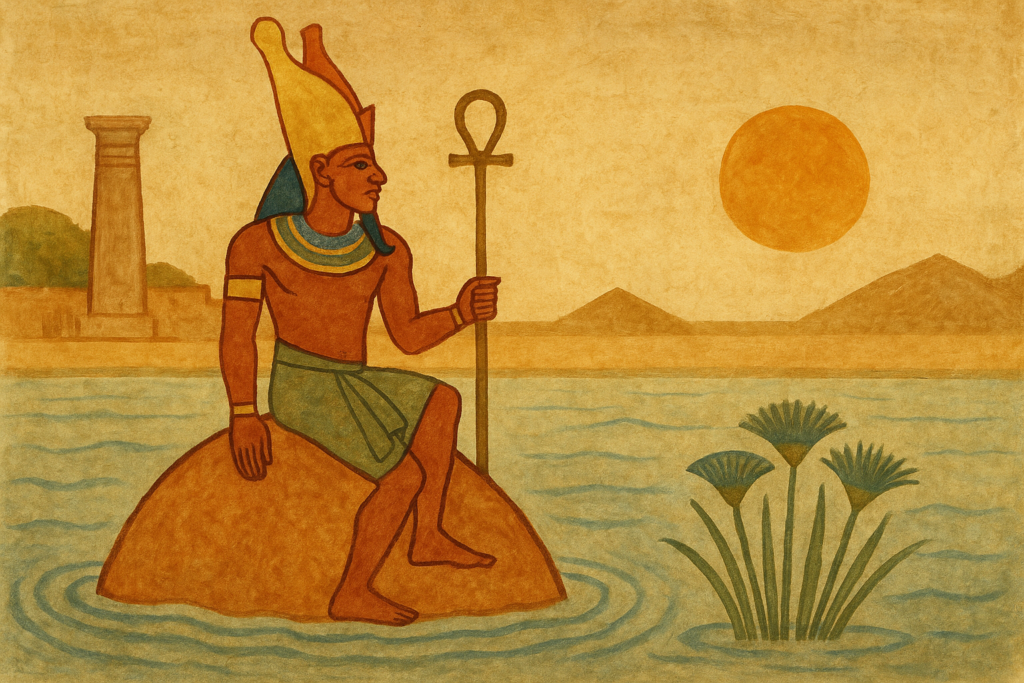
Read the story : Shu and Tefnut in Early Egyptian CosmogonyAtum and the First Mound belong to the Heliopolitan creation tradition, one of ancient Egypt’s most influential accounts of how the world began. In…
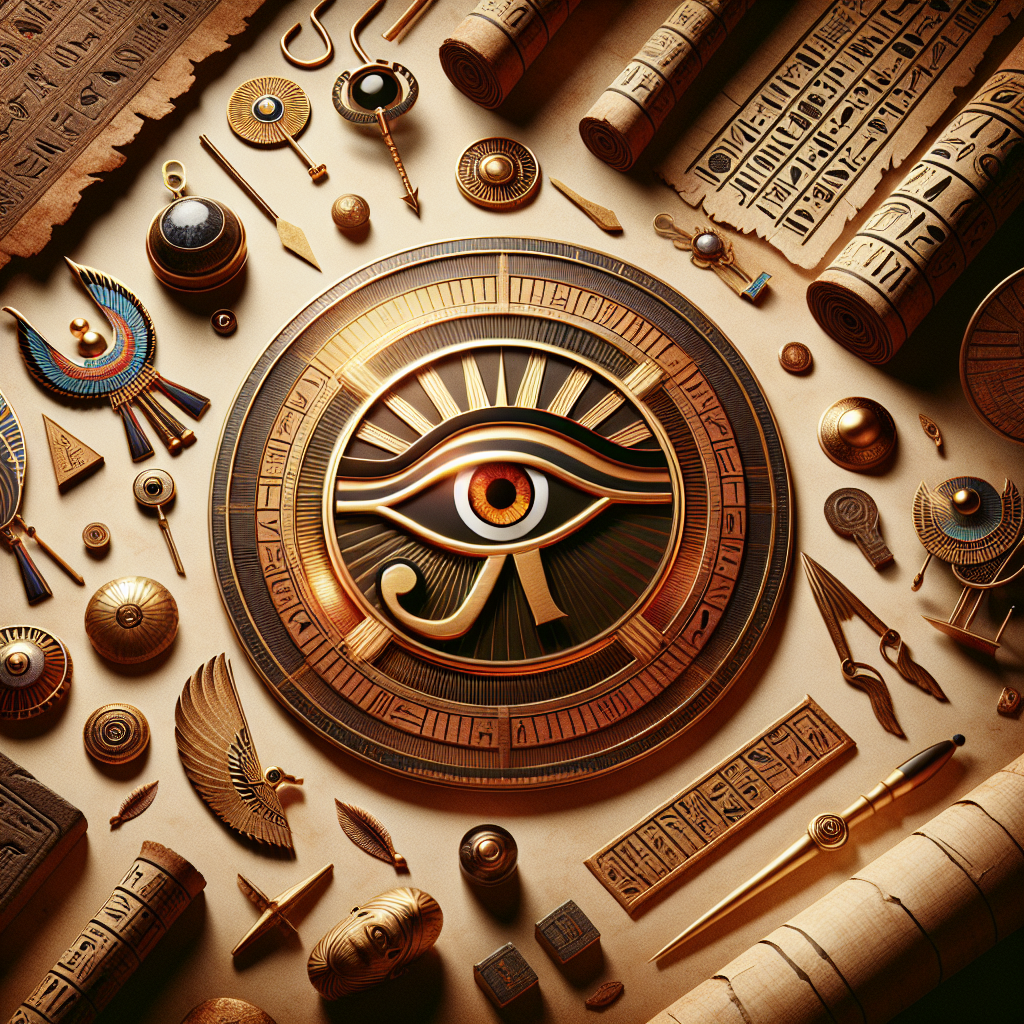
Read the story : Atum and the First Mound at HeliopolisThe Symbolism of the Eye of Horus: Protection and Power The Eye of Horus, an ancient Egyptian symbol, resonates with profound meaning and significance,…
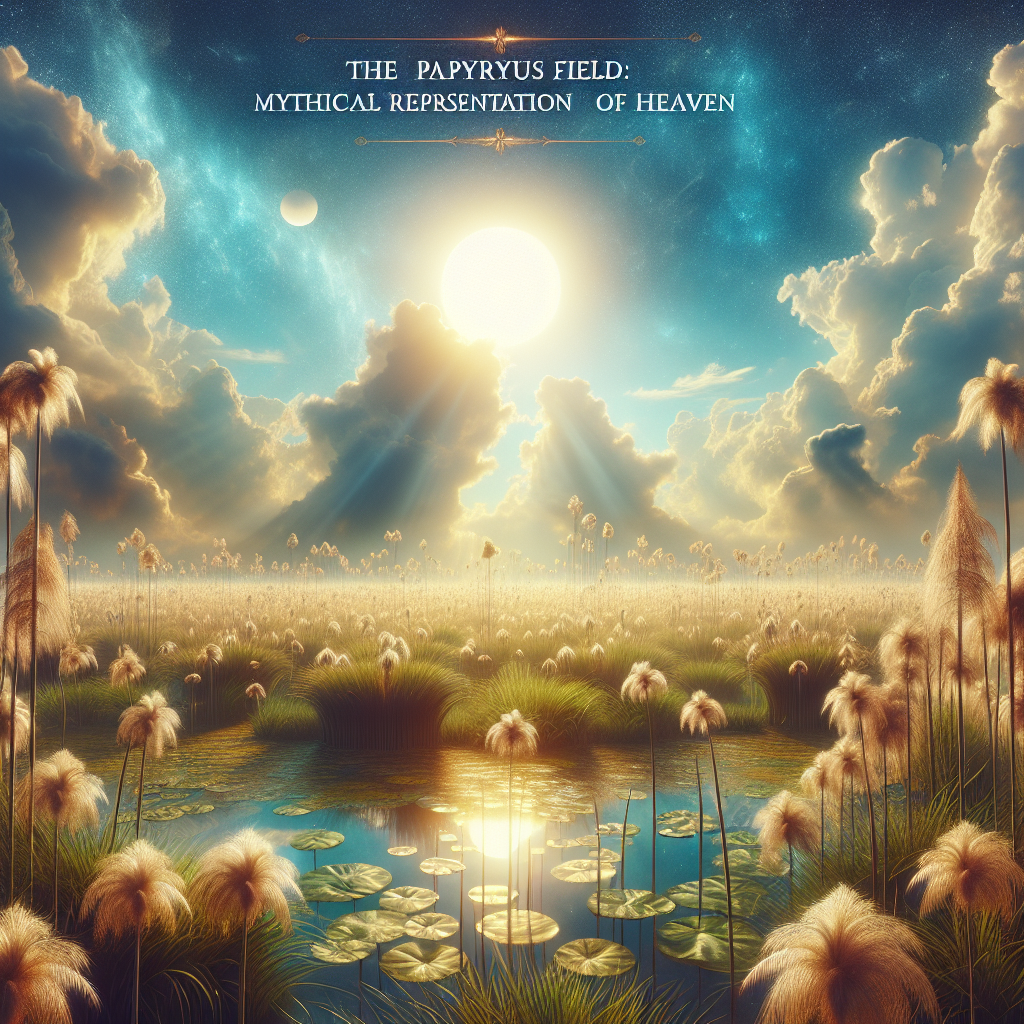
Read the story : Symbolism of the Eye of Horus: Protection and PowerIn ancient Egyptian mythology, the Papyrus Field, known as “Aaru,” represents an ethereal paradise, embodying the ideals of eternal bliss and the ultimate reward…
Read the story : The Papyrus Field: Mythical Representation of HeavenThe ancient Egyptians had a complex and nuanced understanding of the afterlife, one that reflects their rich cultural beliefs and worldview. Central to this…
Read the story : Hell or Heaven? The Dichotomy of Egyptian Afterlife MythsThe Four Sons of Horus: Guardians of the Afterlife In ancient Egyptian mythology, the concept of the afterlife was intricately linked to the beliefs…
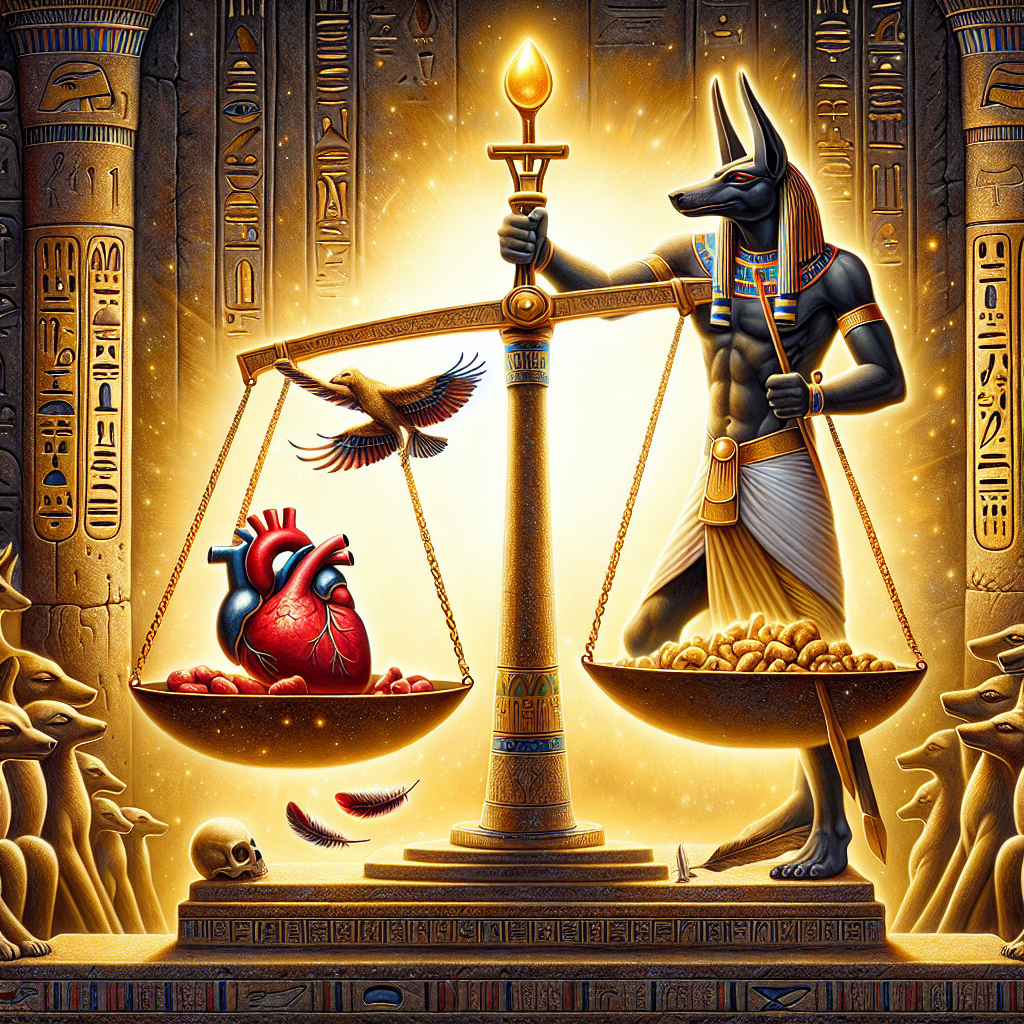
Read the story : The Four Sons of Horus: Guardians of the AfterlifeIn the rich tapestry of ancient Egyptian mythology, few stories capture the imagination as vividly as that of Anubis and the Weighing of the…
Read the story : The Story of Anubis and the Weighing of the HeartThe Myth of the Flood: Deity Conflict and Creation Throughout history, countless cultures have woven narratives surrounding floods, often depicting these catastrophic events as…
Read the story : The Myth of the Flood: Deity Conflict and CreationThe stories of creation are integral to understanding a culture's worldview, and in ancient Egypt, creation myths served as a profound reflection of the…
Read the story : Creation from Chaos: The Emergence of the World in Egyptian MythologyIntroduction In the pantheon of ancient Egyptian deities, few figures are as compelling as Khepri, the scarab god associated with creation and renewal. Often…
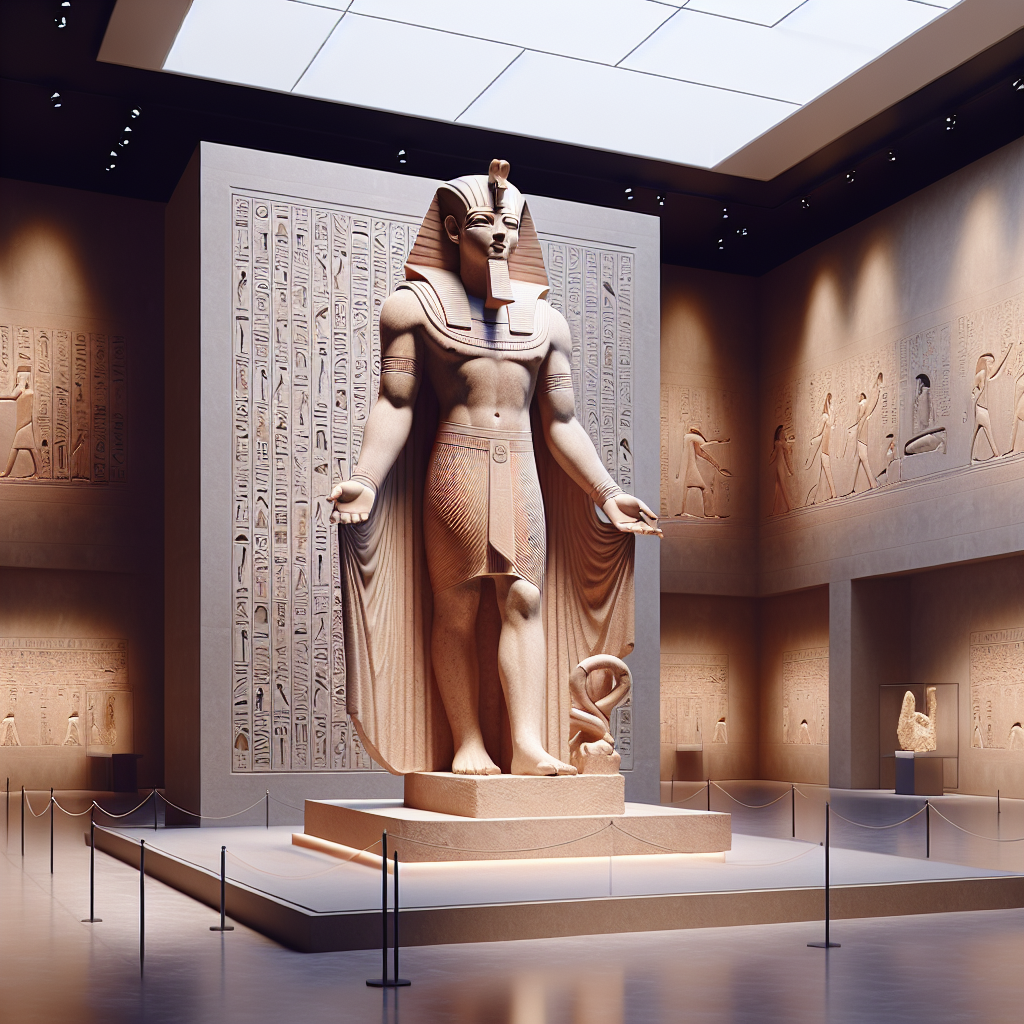
Read the story : Khepri: The Scarab God and Eternal RenewalRepresentations of Myth in Ancient Egyptian Sculpture Ancient Egyptian civilization stands as one of the most fascinating cultures in human history, particularly due to…
Read the story : Representations of Myth in Ancient Egyptian Sculpture