The Role of Music and Poetry in Norse Culture
The Role of Music and Poetry in Norse Culture
Norse culture, steeped in a rich history of mythology, exploration, and spiritual beliefs, is often romanticized in modern storytelling. Among its many elements, music and poetry stand out as foundational components that not only expressed the values and beliefs of the Norse people but also served various practical purposes in their daily lives. From ritualistic performances to communal gatherings, the integration of these art forms was profound, reflecting the complex weave of Norse society.
Historical Context
To understand the role of music and poetry in Norse culture, it’s vital to frame them within the context of their history. The Viking Age, spanning roughly from 793 to 1066 CE, was a period characterized by seafaring nomads, who ventured far beyond Scandinavia in search of trade, conquest, and settlement. This exploration fostered cultural exchanges that influenced Norse music and poetry, incorporating elements from various cultures, especially those encountered through trade and raids.
The Significance of Music
Communication and Expression
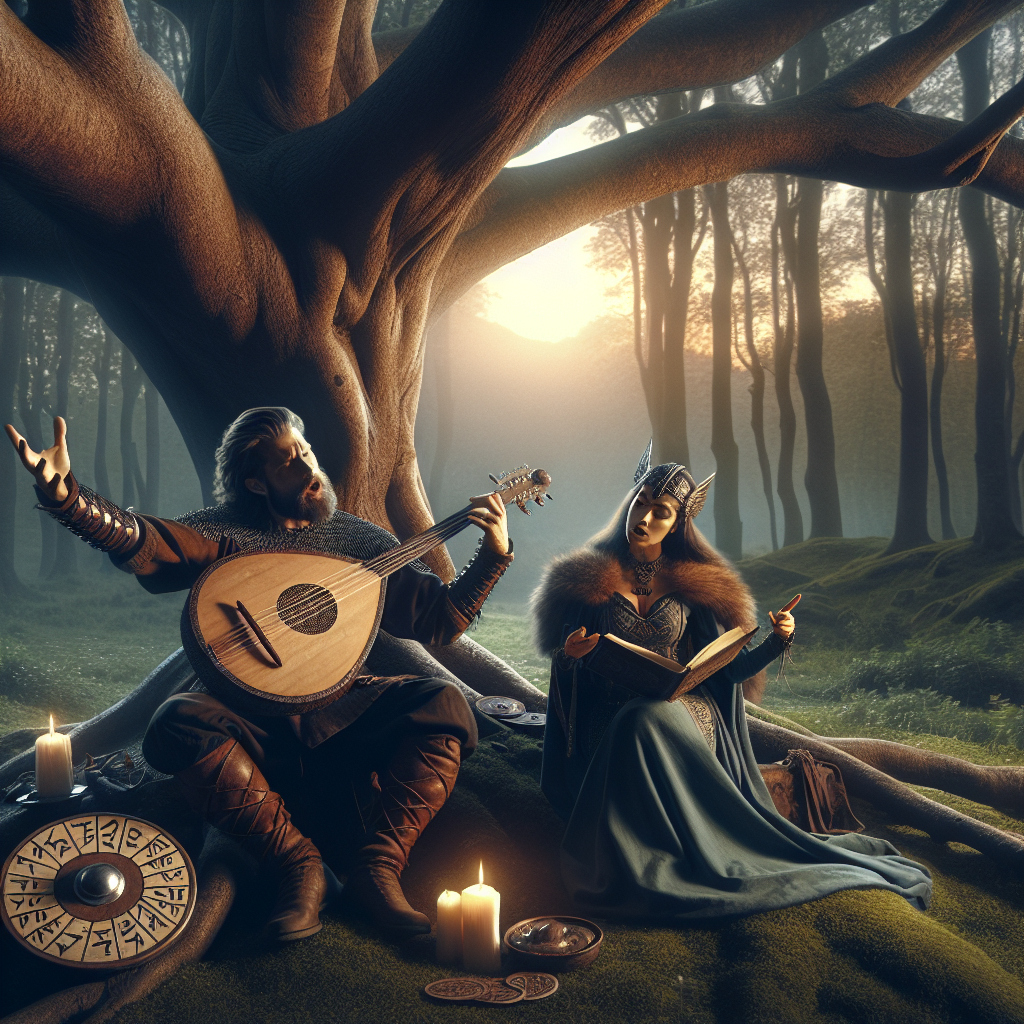
In Norse society, music was a powerful medium of communication. It served not just as entertainment but also as a means to convey emotions, stories, and social values. Instruments such as the lyre, harp, and various flutes played a significant role in everyday life. The melodies created helped foster community bonds, encouraging a sense of collective identity.
Ritualistic Functions
Music also had spiritual significance, often employed during religious ceremonies and rituals. The Norse believed that music had the power to connect them with the divine. Chanting and rhythmic drumming played integral roles in worship and offerings to the gods, such as Odin, Freyja, and Thor. Through music, the Norse sought to invoke favor and influence over their fates.
Storytelling and Historical Record
Songs and ballads were significant for preserving history and folklore. Bards, or skalds, were revered figures responsible for recounting tales of gods, heroes, and historical events. These oral traditions were vital in an era with limited written language, serving as both entertainment and a means of education. The famous “Edda” poems, consisting of both mythological and heroic tales, highlight this role by capturing the essence of Norse mythology and cultural values.
The Role of Poetry
Oral Tradition and Identity
Poetry, much like music, was central to the Norse oral tradition. Skaldic poetry, primarily associated with court poets, employed intricate metrics and kenning—a figurative language through metaphors and compound words. This form was not only an art form but also a showcase of a poet’s status and skill. The complexity of skaldic verse reflected an understanding of social hierarchy, with themes often centered around heroism, honor, and tragedy.
Wisdom and Knowledge Transmission
Beyond entertainment, Norse poetry was an important vehicle for wisdom. Poems often embedded life lessons and moral values, serving as guides for the community. The “Hávamál,” a poem attributed to Odin, is a quintessential text providing ethical pointers and practical wisdom. This underscores the role of poetry as a didactic tool, influencing behaviors and societal norms.
Prophecy and Fate
In Norse mythology, the concept of fate or wyrd plays a significant role. Prophetic verses and visions held a transformative power in communicating destinies, often performed by völvas (seeresses) during rituals. These performances intertwining poetry and divination conveyed not just individual fates but also the fate of communities, making them crucial in decision-making processes.
Cultural Interconnections
The interrelationship between music and poetry in Norse culture extended beyond mere artistic expression. With their travels, Norsemen encountered various cultures, absorbing and adapting influences into their own customs. The rhythms and melodies from the lands they explored contributed to the evolution of their musical practices, while poetic forms evolved through contact with other languages and cultures.
Music and Poetry in Daily Life
The functions of music and poetry permeated daily life, with both found in various social settings. Celebrations, feasts, and gatherings were often accompanied by music, with songs that commemorated shared experiences, victories, or mourned losses. Poetry recitals would engage the audience, drawing them into the narratives being spun. Such gatherings not only entertained but also reinforced communal ties, shared values, and collective memory.
The Legacy of Norse Music and Poetry
As Norse culture transitioned into the medieval period and subsequently influenced broader European traditions, the legacy of their music and poetry endured. The written forms, especially after the advent of Christianity, began to catalog and preserve what had been predominantly oral traditions.
Modern interpretations in literature, art, and music reflect an enduring fascination with Norse mythology and culture. Festivals, reenactments, and contemporary music inspired by Norse themes showcase the timeless relatability of their storytelling and emotional expressions.
Conclusion
The role of music and poetry in Norse culture was multifaceted—serving as a means of communication, spiritual connection, social cohesion, and the transmission of cultural values. These deeply interwoven forms allowed the Norse to navigate their complex world, offering insight into their beliefs, aspirations, and conflicts. While the Viking Age has long passed, the echoes of Norse music and poetry continue to resonate, capturing imaginations and influencing contemporary culture across the globe. Through these ancient art forms, we gain a richer understanding of the vibrant tapestry that was Norse life, a narrative that is as relevant today as it was a millennium ago.