Seasons in Norse Mythology: A Reflection of Nature
Norse mythology, a rich tapestry of tales and beliefs, provides profound insight into the natural world and its cyclical patterns. Among the myriad of stories and characters that populate this ancient tradition, the seasons emerge as a significant thematic element, reflecting not only the physical changes in nature but also the deeper philosophical undertones of life, death, and renewal. The interplay of gods, giants, and the elements illustrates a complex relationship between humanity and nature, echoing the profound respect the Norse held for the environment surrounding them.
The Four Seasons: A Cosmic Cycle
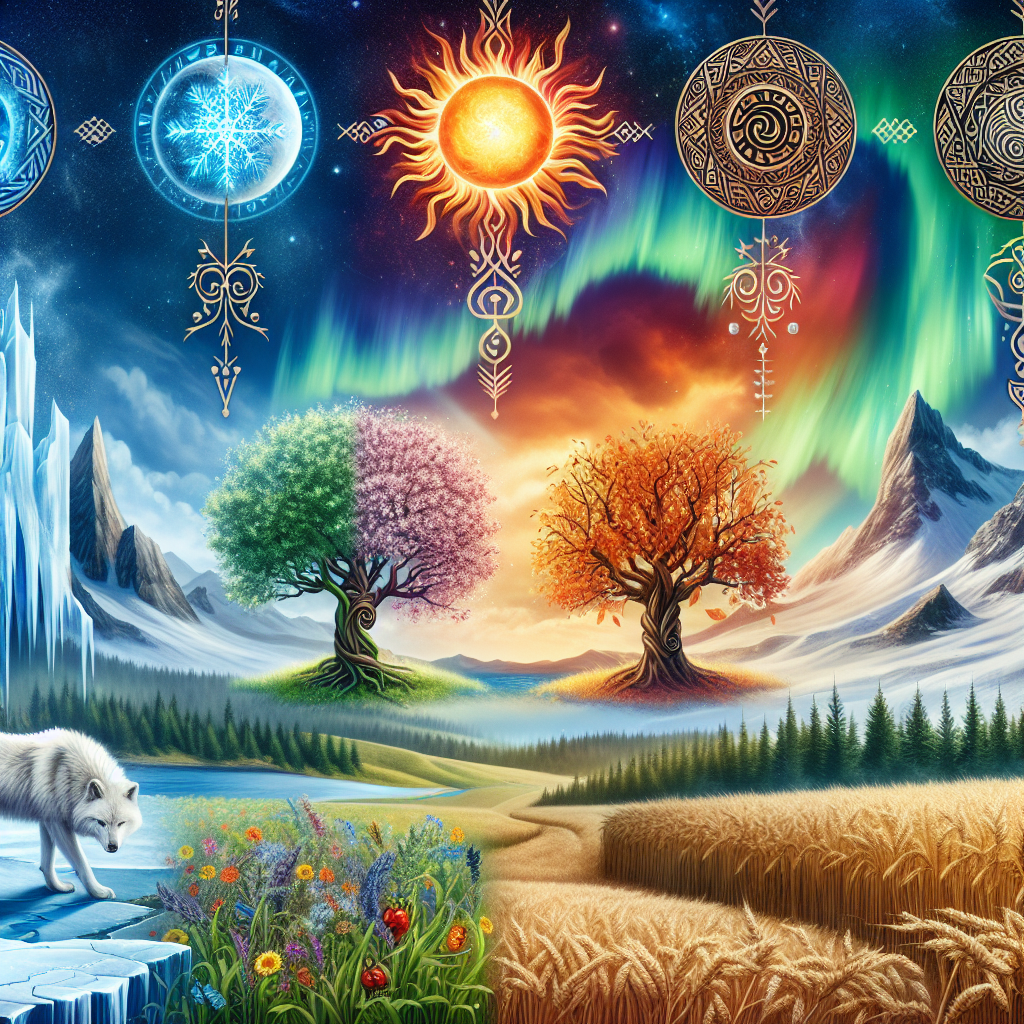
Norse mythology depicts a world governed by the interplay of opposing forces—creation and destruction, light and dark, warmth and cold. The seasons can be viewed as expressions of these dualities, as well as metaphors for the human experience. In the Norse cosmology, time itself is cyclical, aligning with nature’s rhythms. Each season, thus, corresponds to various deities and myths that encapsulate the essence of the transition between life’s phases.
Spring: Awakening and Renewal
Spring represents the rebirth of the earth and the awakening of life after the starkness of winter. The Norse gods often associated with this season include Frey and Freyja. Frey, the god of fertility, prosperity, and growth, embodies the vitality of spring. Celebrated in various festivals, he is a guardian of crops and a symbol of abundance. The flourishing greenery during this season reflects humanity’s connection to the land, and Frey’s role highlights the fertility of both the earth and the human spirit as they enter a time of growth and opportunity.
Freya, his sister and the goddess of love and beauty, complements this theme with her associations to love and passion flourishing in spring. Together, these deities personify the emergence of life and the rejuvenating forces that accompany the thawing of the earth.
Summer: Strength and Abundance
As spring shifts into summer, the days grow longer and warmer, symbolizing the peak of vitality and energy. The Norse mythology depicts summer as a time of abundance, where crops mature and life flourishes in its full vigor. While the deities of spring emphasize growth and renewal, summer is often represented by Thor, the thunder god, whose strength and protective nature resonate with the life-sustaining qualities of the season.
Thor’s power reflects the booming thunderstorms typical of summer, which bring life-giving rains to the fields. The myths surrounding him often involve conflicts with giants—representing chaos and destruction—emphasizing the struggle to maintain balance in the world. These tales remind humankind of the delicate harmony between nature and human existence, highlighting how summer is a season of activity, prosperity, and the celebration of life itself.
Autumn: Transition and Harvest
As summer fades, autumn emerges as a time of transition, symbolized by the harvest season. This period is often associated with the Norse festival of Frey’s Day (Freyja’s Day), where the bounty of the earth is acknowledged and celebrated. The earth’s colors shift dramatically—golden leaves and ripe grains mirror humanity’s efforts and the fruits of labor.
Autumn invokes a sense of reflection, with deities like Njord, the god of the sea and winds, playing a crucial role. Njord’s association with the harvest underscores the significance of utilizing nature’s resources wisely. As the days shorten and temperatures drop, the myths surrounding Njord often remind people to prepare for the harsher months ahead, representing a necessary phase of gathering and introspection.
This season of harvest not only celebrates the fruits of labor but also serves as a poignant reminder of the impermanence of life. Just as crops are gathered, so too must individuals acknowledge what must be relinquished as they prepare for winter.
Winter: Death and Renewal
The arrival of winter brings a drastic transformation of the landscape, enveloping it in cold, darkness, and stillness. This season is often associated with the myth of the great wolf, Fenrir, who symbolizes chaos and destruction. Winter is the time of rest, where the earth lies dormant and the harshness of nature reigns. It is a period marked by challenges, echoing the themes of death and sacrifice.
Yet within this darkness lies the promise of renewal. The concept of Ragnarok, the end of the world in Norse mythology, aligns with the winter season. It signifies destruction but simultaneously paves the way for rebirth—a compelling parallel to the natural cycle where winter’s dormancy eventually leads to spring’s awakening. This duality of death and renewal is a profound aspect of Norse cosmology, suggesting that endings are inherently tied to new beginnings.
The Interconnectedness of Seasons and Humanity
In Norse mythology, the seasons are deeply interwoven with the human experience. The cyclical nature of the seasons serves as a reminder of life’s transitory state—every phase is temporary, and each comes with its own blessings and challenges. The Norse people recognized the importance of respecting nature’s cycles, living in harmony with the land, and understanding their place within the larger tapestry of existence.
Festivals and rituals aligned with the changing seasons were commonplace, celebrating the deities associated with each phase. These practices fostered a sense of community, gratitude, and mindfulness, ensuring that the lessons imparted by nature were passed down through generations.
Conclusion: Nature as a Teacher
Norse mythology invites us to reflect on the lessons imparted by the changing seasons. Each phase symbolizes aspects of life—spring’s rebirth, summer’s vitality, autumn’s reflection, and winter’s dormancy—all encapsulated within the narratives of the gods and their interactions with the world around them. This mythology serves as a testament to human resilience, the perpetual cycles of nature, and the need for balance between the forces of creation and destruction.
As modern society often drifts away from its historical connections to nature, the stories of Norse mythology remind us of the importance of recognizing these cycles and understanding our role within them. Just as the seasons change, so too does life, offering opportunities for growth, reflection, and renewal in the ongoing journey of existence.