Beyond Valhalla: Alternative Afterlife Beliefs in Norse Mythology
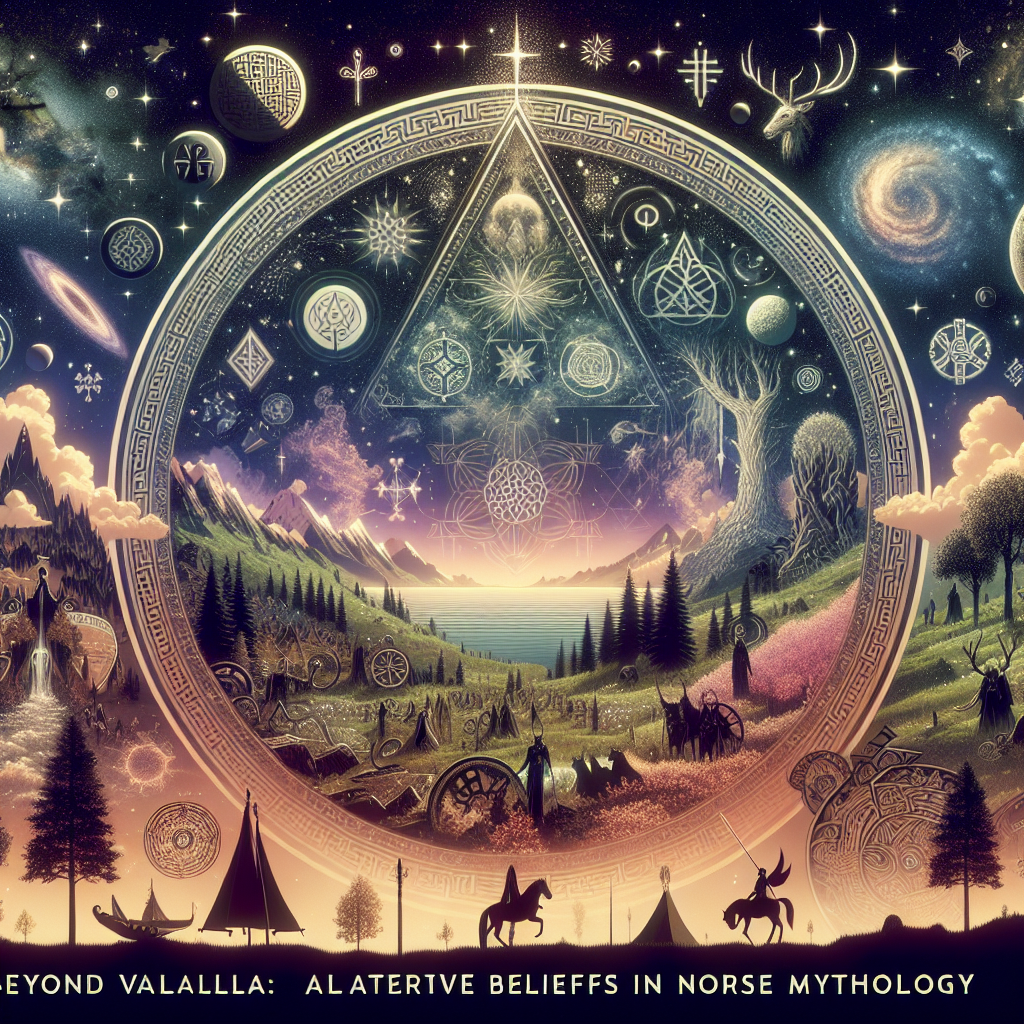
The Norse pantheon, filled with gods, goddesses, and mythical creatures, paints a vivid tapestry of beliefs and narratives that defined the Viking Age and, indeed, shaped much of medieval European thought. Central to these beliefs are the concepts of the afterlife, the realm one inhabits post-mortem, and the cosmic order governing these destinations. While Valhalla, the hall of the slain, presided over by Odin, may be the most recognized afterlife destination today, Norse mythology encompasses a diverse range of beliefs regarding what happens after death. This article delves into the alternative afterlife realms and concepts within Norse mythology, revealing the rich and intricate beliefs of the Norse people.
Valhalla and Its Significance
Valhalla, or “Hall of the Slain,” is often the first image conjured in discussions of Norse afterlife. To qualify for entry into Valhalla, one had to die bravely in battle, thus earning the favor of Odin. This hall, located in Asgard, housed the Einherjar, warriors who would feast and prepare for the final battle during Ragnarök—the end of the world in Norse cosmology. Valhalla represents an idealized warrior’s paradise, providing an eternal cycle of combat and celebration. However, not all souls were destined for this glorious haven, and other fates awaited those who did not meet such militaristic criteria.
Hel: The Realm of the Unheroic
In stark contrast to Valhalla is Hel, ruled over by the goddess Hel, daughter of Loki. Hel is the realm where the majority of souls who did not die a heroic death ended up. Unlike the fiery depictions of Hell in other cultures, Hel is portrayed as a more neutral, if gloomy, place—a shadowy realm that exists in the underworld.
The entrance to Hel is guarded by a river called Gjöll, which must be crossed to reach the land of the dead. The inhabitants of Hel are said to reside in peaceful shadows, somewhat akin to a dream state or an endless slumber, where they experience neither punishment nor joy. It is a resting place rather than a place of torment, where those who lived good or middling lives found final peace.
Folkloric Afterlife Destinations: Fólkvangr and the Gjallarhorn
Not every soul ends up in Valhalla or Hel; alternative realms are also significant in the broader mythological landscape. One of these destinations is Fólkvangr, another of Odin’s domains, which serves as a gathering place for warriors. Governed by the goddess Freyja, Fólkvangr offers a welcoming atmosphere for those who were blessed by Freyja, celebrating their lives in a different manner than those in Valhalla.
Fólkvangr translates to “Field of the Folk” and is visually described as a beautiful meadow where fallen warriors gather. Freyja, known for her compassion and warmth even towards those who are not valiant in life, provides solace and an afterlife filled with camaraderie and revelry. The perceived difference in these two realms invites contemplation on how heroism and virtue are defined within Norse cosmology.
The Land of the Giants: Jotunheim and Other Realms
Moreover, Norse mythology hints at various fantastical realms, including Jotunheim, the land of the giants. Though primarily known as the adversaries of the gods, giants inhabited this lush and wild terrain. Some myths suggest that the boundaries between the realms were not impermeable; thus, it’s conceivable that some souls could wander into Jotunheim after death, especially those who identified more with the attributes of the giants than the gods.
Jotunheim reflects a rich tapestry of the Norse belief system, characterized by dualities: order versus chaos, divine versus monstrous. It embodies the idea that death does not lead to a singular ending, but rather a multitude of possibilities that depend on how one lived.
Rebirth and the Soul’s Journey
In addition to specific locations, Norse beliefs also touched on concepts of the soul’s journey beyond the grave. The notion of reincarnation, while not as explicitly defined as in some Eastern religions, lingers beneath the surface of Norse cosmology. Certain sagas hint at the idea that souls may be reborn, as seen in the tale of Balder’s death and resurrection, signifying potential cycles and new beginnings. This cyclical understanding of existence suggests that the journey does not cease with death but continues into new experiences, narratives, and lives.
The Role of the Gods
The role of the gods in the afterlife wasn’t limited to governance but also included guiding and determining the paths of souls after death. Odin, in particular, played a multifaceted role, serving as both a war god and a knowledgeable figure prepared to aid the spirits in their transitions. His acquisition of wisdom and his sacred quest for knowledge highlight a deeper understanding of the human condition, extending to afterlife beliefs that encompass both glory and tranquility.
Integration Within the Viking Worldview
Integrating these beliefs into the broader Viking worldview reveals a complex understanding of life, death, and the cosmos. The Norse understanding of fate, or wyrd, ensures that each soul’s path is predestined yet subject to the individual’s choices and actions in life. This interplay between destiny and personal agency manifests vividly in their afterlife beliefs, showing a cultural richness that acknowledged various experiences and outcomes beyond mere valor.
Conclusion
While Valhalla dominates popular imagination, Norse mythology offers a diverse array of afterlife beliefs that reflect the complexity of human existence. From Hel’s quiet repose to Fólkvangr’s warm embrace, the realms beyond death serve as significant markers of cultural values, ideals of heroism, and the acceptance of various life paths. The stories of these realms remind us not only of the spiritual beliefs of the Norse but also of our ceaseless quest to understand what lies beyond the veil of mortality. Through these alternative narratives, the ancient Norse grappled with profound questions about destiny, the nature of existence, and the echoes of our actions in life that resonate into the afterlife.