Mythical Landscapes: The Geography of the Norse Universe
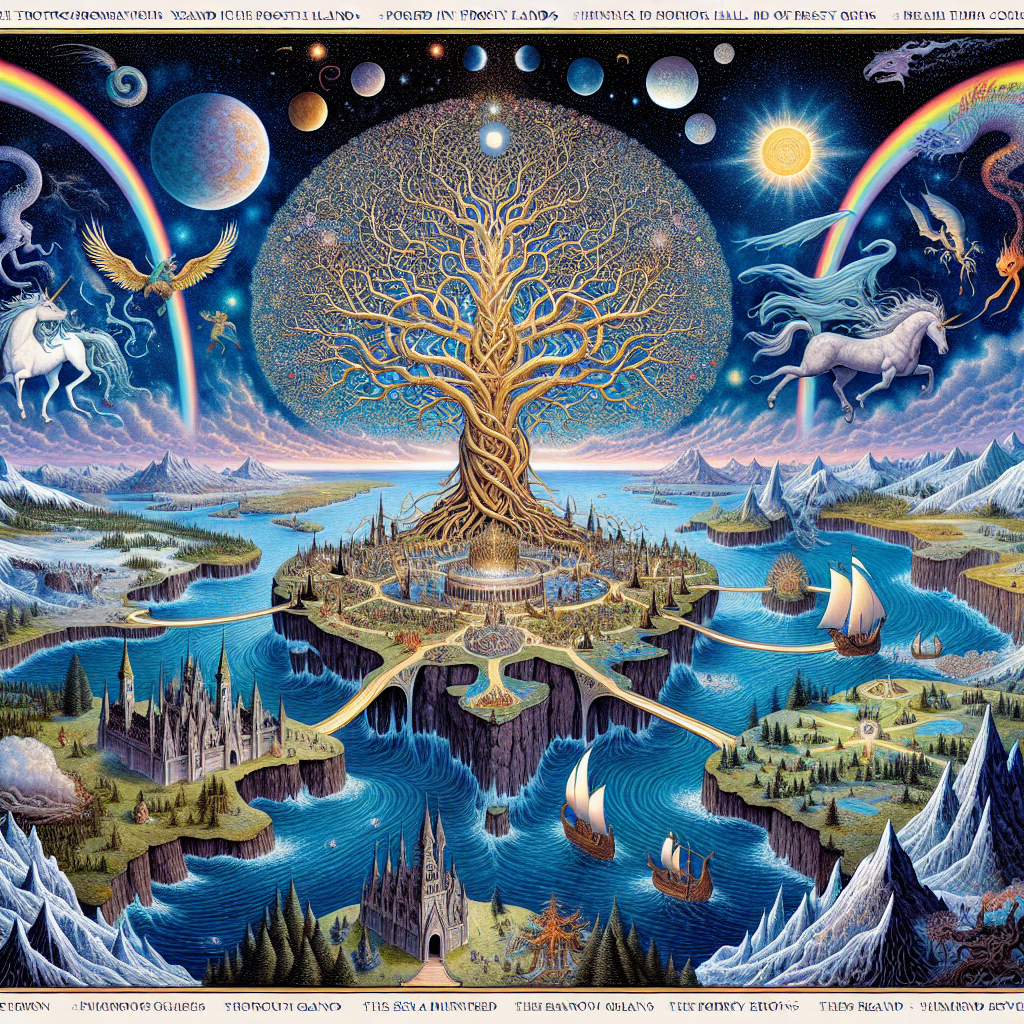
The Norse universe, a tapestry woven from the threads of mythology, cosmology, and rich storytelling, presents a geography as vibrant and complex as the deities and creatures that inhabit it. From the frost-clad realms of Niflheim to the fiery depths of Muspelheim, the Norse mythology introduces us to a range of worlds, each with its own distinct characteristics, inhabitants, and narratives. This article embarks on a journey through the mythical landscapes of the Norse universe, exploring its nine realms and their interconnectedness.
The Nine Realms
At the center of Norse cosmology lies Yggdrasill, the World Tree, an immense ash tree that connects all nine realms. Yggdrasill’s branches reach into the heavens, while its roots delve deep into the underworld. This central axis mundi serves as the structural spine of the Norse universe, holding the disparate realms together.
1. Asgard
Asgard, often considered the seat of the gods, is home to the Aesir, the principal pantheon of Norse deities, including Odin, Thor, and Frigg. This celestial fortress is accessed through Bifrost, the rainbow bridge that connects it to Midgard, the realm of humans. Asgard’s stunning halls, such as Valhalla, are characterized by grandeur and opulence, echoing the valor of warriors who die in battle. Valhalla, in particular, serves as both a hall of honor and a place of preparation for the final battle, Ragnarok.
2. Midgard
Midgard, or “Middle Earth,” represents the realm of humans. Created by the gods from the body of the slain giant Ymir, it is surrounded by a vast ocean and protected by a massive wall. Midgard’s landscape is diverse, featuring forests, mountains, rivers, and the enigmatic realms of the giants. This interconnectedness with nature reflects the Norse belief in the harmony between humanity and the world around them.
3. Vanaheim
Vanaheim is the home of the Vanir, a group of deities associated with fertility, prosperity, and nature. In contrast to the militaristic Aesir, the Vanir embody a sense of tranquility and abundance. Their realm is often depicted as a lush, fertile landscape, rich in flora and fauna. The fertile fields and flowing rivers symbolize the deep bonds between the Vanir and the earth, emphasizing themes of growth and sustainability.
4. Alfheim
Adjacent to Vanaheim lies Alfheim, the realm of the light elves. These ethereal beings are often depicted as guardians of nature, illuminating the world with their grace and beauty. The landscape of Alfheim is imbued with a sense of magic, characterized by shimmering forests, sparkling rivers, and ethereal lights. As the light elves are considered benevolent, their realm mirrors their characteristics—peaceful, enchanting, and flourishing with life.
5. Helheim
In stark contrast, Helheim is the realm of the dead ruled by the goddess Hel, one of Loki’s children. Often misunderstood, Helheim is not a place of eternal torment, but rather a resting place for those who do not die a heroic death. The geography of Helheim is chilling and foreboding, characterized by icy rivers and shadowy landscapes. Yet, it serves a crucial purpose in the Norse understanding of life and death, offering a space for the souls of the departed to dwell.
6. Niflheim
To the north lies Niflheim, the realm of mist and ice. It is a place of swirling fog, freezing temperatures, and darkened landscapes. Niflheim’s primordial essence represents chaos—from its icy waters emerges the primordial giant Ymir, from whom the world was created. This realm underscores the duality of the Norse universe, where even chaos and cold have a significant role in the cycle of creation and destruction.
7. Muspelheim
In stark contrast to Niflheim, Muspelheim is a realm of fire and heat, inhabited by the fire giants, including the notorious Surtr. Indicating a world brimming with volcanic activity, Muspelheim represents the creative and destructive forces of fire. It plays a pivotal role during Ragnarok, where Surtr leads his forces against the gods, symbolizing the inevitable clash between creation and destruction in Norse lore.
8. Jotunheim
Jotunheim, the realm of giants, is a land of harsh terrains and formidable landscapes. Often depicted as mountain ranges and rugged forests, Jotunheim reflects the chaotic nature of its inhabitants. The giants, embodying primordial forces, create a tension within the Norse universe. Their interactions with the gods highlight themes of conflict and harmony, as well as the balance of power that permeates the mythic tapestry.
9. Svartalfheim
Lastly, Svartalfheim, also known as Nidavellir, is the realm of the dwarves, skilled artisans and craftsmen. This subterranean world is characterized by its intricate tunnels, forges, and gold-rich mines. The dwarves, known for their exceptional craftsmanship, create legendary artifacts, including Thor’s hammer, Mjölnir. Their connection to the earth and minerals reflects notions of labor, creativity, and the importance of craftsmanship in Norse society.
Connections and Themes
The geography of the Norse universe stretches beyond mere landscapes; it embodies fundamental themes of duality, interconnectedness, and balance. The interplay between Asgard, Midgard, and the realms of chaos—Niflheim and Muspelheim—reflects a broader understanding of existence. The cycles of life, death, and rebirth are artistically layered within this narrative, echoing the natural rhythms observed in the seasons and human life.
The depiction of these realms also reflects the values and beliefs of the Norse people. The heroic ideals of valor and honor in Asgard, the connection to nature in Vanaheim and Alfheim, and the acceptance of mortality in Helheim shape a worldview that appreciates both the beauty and challenges of existence.
Conclusion
The mythical landscapes of the Norse universe are not merely geographical; they are intricate narratives that reflect the complexities of life, death, nature, and the cosmos. Yggdrasill stands as the central lifeline connecting these diverse realms, symbolizing the interconnectedness of all existence. The geography of the Norse universe invites us to explore and learn from its depths, reminding us of the rich tapestry of stories and lessons that persist through time. As we navigate these landscapes, we discover that they offer not just a glimpse into a mythic world but also profound insights into our own understanding of existence.