
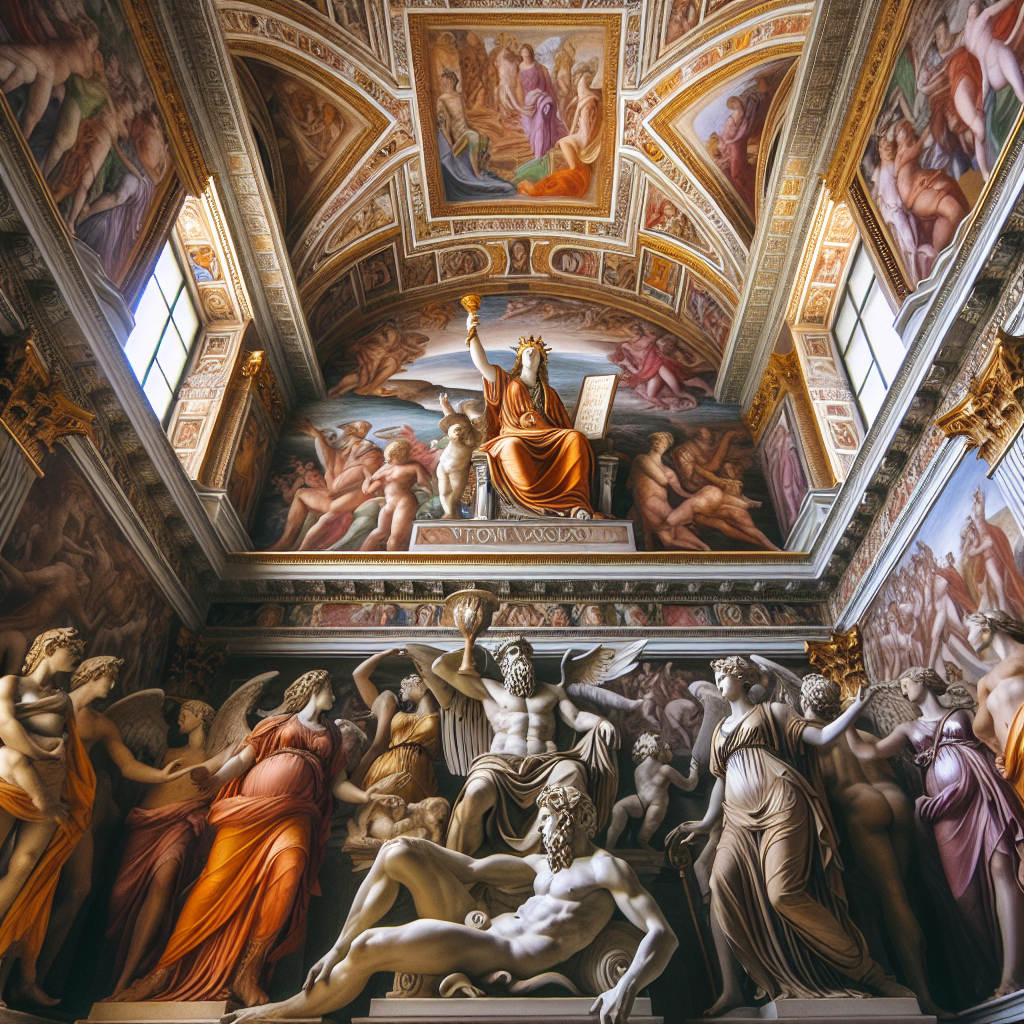
The Renaissance, a period spanning the 14th to the 17th century, marked a profound transformation in art, culture, and intellectual inquiry in Europe. Characterized by a renewed interest in the classical ideals of Ancient Greece and Rome, the Renaissance saw a resurgence of ancient mythology, particularly Roman mythology, which became a significant influence on the artistic expressions of the time. Artists drew upon these myths to explore human experiences, emotions, and the complexities of the human condition, embedding rich symbolism and cultural references in their works.
The Rebirth of Classical Ideals
The term “Renaissance” literally means “rebirth.” During this era, scholars, poets, and artists sought inspiration from the classical texts and philosophies of antiquity. In particular, Roman mythology provided a treasure trove of narratives and characters that were rich in meaning and symbolism. These narratives with their adventures, moral lessons, and intricate human emotions became a fertile ground for creative expression. Humanism, a prevalent intellectual movement of the Renaissance that emphasized the value of human beings, also drew heavily on classical texts, thereby aligning the revival of Roman myths with broader cultural trends.
Themes of Humanism and Individualism
One of the central themes of Renaissance art is humanism, which celebrates human potential and individual experience. Roman mythology, with its emphasis on the environment, emotions, and moral complexities of its gods and heroes, was particularly suited to this theme. For instance, the mythological figures of Venus, Mars, and Apollo were depicted not just as divine beings but as representations of love, war, and the arts, respectively. Artists like Botticelli portrayed Venus in “The Birth of Venus,” glorifying not only her beauty but also the ideals of love, beauty, and desire. This portrayal resonated with the humanist belief in the potential and dignity of the individual, intertwining divine mythology with human experiences.
Symbolism and Allegory
Roman mythology also provided artists with a rich symbolic language, which enabled them to convey deeper meanings and themes. Works of art often featured mythological allegories, allowing artists to communicate complex ideas through recognizable figures and events from the Roman pantheon. For example, Raphael’s “The School of Athens” features Apollo and Athena, the gods of music and wisdom, symbolizing the pursuit of knowledge, a central tenet of Renaissance humanism.
The use of mythology as allegorical narratives created layers of meaning in artworks. The portrayal of mythological themes allowed artists to discuss contemporary issues, social constructs, and philosophical inquiries indirectly. For example, the depiction of the Trojan War or the trials of Hercules could serve as allegories for contemporary political maneuverings or moral dilemmas, allowing artists to engage with the societal issues of their time while remaining cloaked in the classical narratives of the past.
An Artistic Revival
The Renaissance was also marked by various artistic techniques and developments that transformed how mythological subjects were portrayed. The advancements in perspective, realism, and naturalism enabled artists to create more lifelike representations of mythological scenes. Michelangelo’s sculptures, characterized by their anatomical precision and emotional expressiveness, drew upon ancient myths to encapsulate the grandeur and heroism inherent in mythological figures. His iconic work, “David,” although technically biblical, shares a classical heroism akin to figures from Roman tales.
Moreover, the application of chiaroscuro, the use of strong contrasts between light and dark, contributed to the dramatic tension often found in mythological representations. Caravaggio’s works, with their intense dramatic lighting and emotional depth, revitalized ancient themes by highlighting the psychological elements of mythological tales, making them vivid and immediate.
Influence Beyond Italy
While Italy was the epicenter of Renaissance art, the influence of Roman mythology spread throughout Europe, affecting artists in various countries. In Flanders, for example, artists like Peter Paul Rubens harnessed the dynamic poses and emotional intensity of classical figures, creating vibrant and expressive representations of mythological subjects. Rubens’ “The Fall of the Rebel Angels” illustrates the chaos of the myth with exuberance, embracing the baroque dynamism rooted in the classical tradition.
Additionally, in the North, the Michelangelo-inspired techniques were adapted to create powerful, visually arresting works. The intertwining of Christian themes with classical mythology became particularly evident, leading to a unique fusion that characterized post-Renaissance art.
The Legacy of Roman Mythology in Art
The influence of Roman mythology on Renaissance art extends beyond the surface level of imagery. It provided artists with a vast lexicon of themes—moral struggles, human passions, divine qualities—that resonate even today. This interplay between human experiences and myth forged a narrative continuity that echoes through the ages.
Moreover, the revival of interest in classical antiquity set the stage for future artistic movements, including Neoclassicism, which sought to emulate the ideals of ancient Rome in the 18th century. The exploration of mythology continued to captivate artists and audiences alike, further solidifying the themes and stories of Roman mythology within the broader canon of Western art.
In conclusion, Roman mythology served as a wellspring of inspiration during the Renaissance, shaping the artistic landscape of the period. Through the revival of ancient narratives and the integration of humanist ideals, artists not only expressed the cultural values of their time but also created enduring works that resonate with their inherent complexity and emotional depth. The legacy of this intertwining relationship continues to inform the discourse on art and mythology, highlighting the timelessness of these ancient tales in their ability to articulate the complexities of human experience.


