The Legend of Balder: Light and Tragedy in Norse Myth
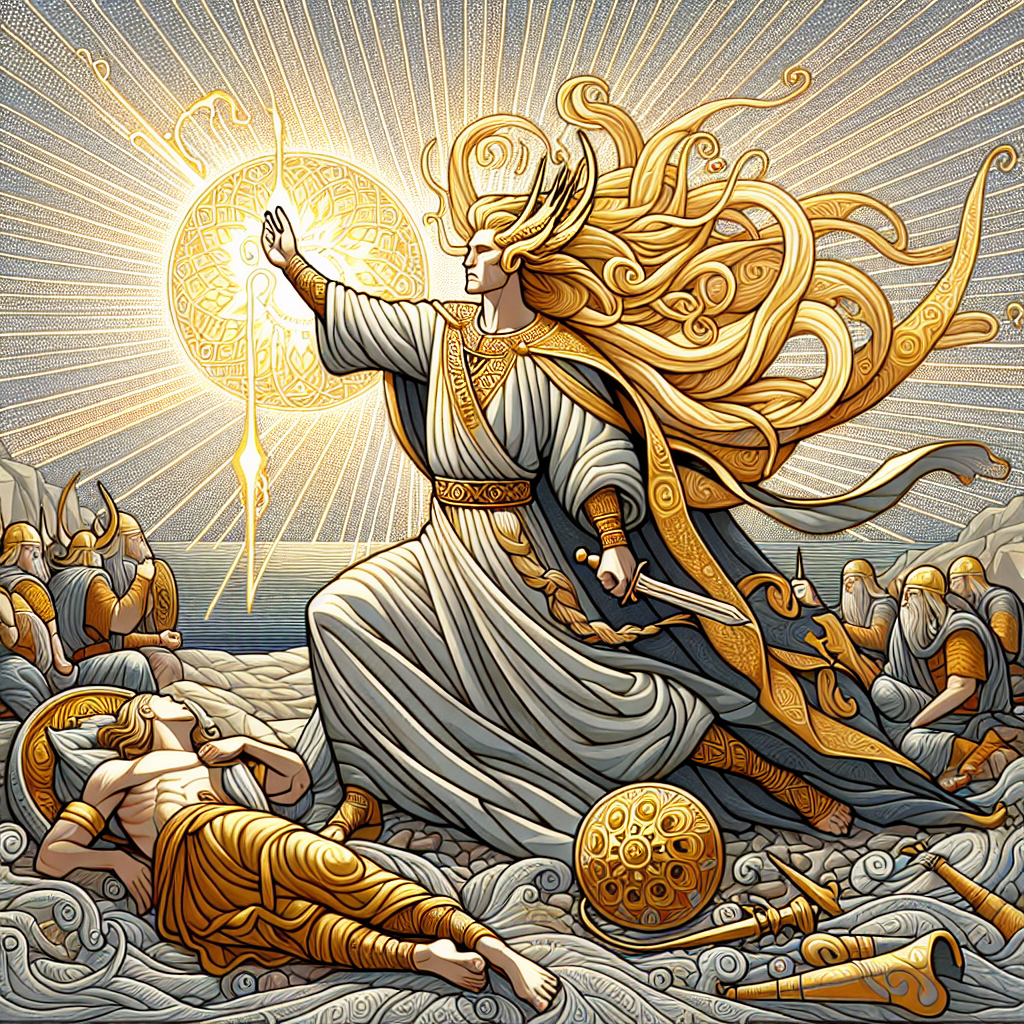
In the vast and intricate tapestry of Norse mythology, few tales resonate with as much poignancy as that of Balder, the god of light, purity, and beauty. His story is one where the themes of light and hope intertwine with the shadows of tragedy and foreboding, ultimately leading to a narrative that explores the inevitability of fate and the fragility of life. Balder’s legacy not only illuminates the nature of the gods but also serves as a powerful reminder of the human condition.
The Birth of Balder
Balder is often depicted as the most beloved of the Aesir gods, possessing qualities that embody goodness, beauty, and invulnerability. He is the son of Odin, the chief of the gods, and Frigg, the goddess of love and fertility. His birth is celebrated, bringing light to the halls of Asgard. According to the myths, he radiates light so intensely that he is sometimes referred to as the “shining one.” His charm and wisdom not only endear him to the gods but also to the mortal beings and realms beyond.
Balder’s invulnerability is a result of his mother, Frigg, making a solemn vow from every creature and object in existence to never harm him. However, in her desire to protect him, she inadvertently sets the stage for his tragic demise.
The Dream of Doom
As Balder matures, he begins to experience foreboding dreams that hint at his death. Troubled by these visions, he confides in his mother, who enlists the support of the gods in confronting this ominous fate. The gods, buoyed by confidence in Balder’s invulnerability, devise a game where they throw various objects at him, curiously showcasing their own strength against Balder’s seemingly unbreakable spirit. However, one creature is left unprotected: mistletoe. The deceptively simple plant, overlooked by Frigg, becomes the embodiment of his doom.
Loki’s Deception
In the rich narratives of Norse mythology, Loki emerges as a figure of mischief and malice. He is Balder’s blood brother and, fueled by jealousy and a malicious desire, plots to exploit Frigg’s oversight regarding mistletoe. He crafts a spear from this innocent-looking plant and manipulates the blind god Hodr into throwing it at Balder. The impact is catastrophic; Balder falls dead, and with his fall, the world plunges into darkness.
This tragic event illuminates the darker shades of existence, where the harmony of the gods is disrupted not by a grand battle but through deceit and betrayal. Loki emerges as a tragic anti-hero, demonstrating how envy and vengeance can lead to irrevocable consequences, leaving a trail of sorrow across the realms.
The Grief of the Gods
The death of Balder sends shockwaves through Asgard and beyond. The gods, stricken by grief and remorse, attempt to right the wrongs they inadvertently participated in. Odin embarks on a perilous journey to Hel, the underworld ruled by the goddess Hel, in hopes of retrieving his beloved son. This journey symbolizes the lengths to which one will go for love, and it emphasizes the theme of sacrifice.
Odin pleads with Hel to return Balder to the realm of the living, promising that all beings, including even the most light-hearted, will weep for his loss. Hel agrees but only if every being in existence mourns Balder’s death. Yet, not even the stone-hearted giantess, Thokk, is willing to shed a tear, leading to Balder’s remaining in the realm of the dead. This highlights one of the core themes of Norse mythology: the inevitability of fate. Despite the gods’ best efforts, some destinies cannot be altered.
The Significance of Balder’s Death
Balder’s death is not merely an isolated tragedy but rather a significant event that sets in motion a series of cataclysmic events leading to Ragnarök, the end of the world in Norse mythology. His demise symbolizes the fragility of the divine and the cyclical nature of life and death. The gods’ power is portrayed as limited and vulnerable, revealing that even the mightiest beings are subject to fate’s inexorable grip.
Moreover, Balder’s story serves as a catalyst for reflection on the nature of love, loss, and grief. His light, which once illuminated Asgard, becomes a haunting memory, a symbol of what has been irrevocably lost. The relationship between light and darkness is central to the human experience, and Balder’s narrative epitomizes this duality.
Theological Reflections
Balder’s tale has inspired countless interpretations, transcending mere myth to address deeper philosophical questions. His character embodies the essence of hope and the yearning for a world free from pain and sorrow. The narrative implores its audience to consider the fleeting nature of happiness and the inevitability of sorrow, thus bridging the human experience with that of the divine.
In Norse culture, Balder’s death plays a crucial role in the overarching belief in fate and destiny—concepts deeply ingrained in the human psyche. The event underscores the belief that one’s fate is inescapable; no matter how powerful, wise, or beloved, every being must confront its mortality.
The Legacy of Balder
The legend of Balder endures, resonating through ages as a mythical reflection of light, love, and tragedy. In art, literature, and modern adaptations, the duality of light and dark in Balder’s story has been explored and reimagined. His character embodies the beauty of life and the sorrow of loss—a poignant reminder of the complexities intertwined in the fabric of existence.
As we reflect upon Balder, we are drawn to contemplate our own lives—our joys, our sorrows, and the fleeting moments of happiness that define our human experience. In the brilliant light of his story, we find not just a tragic hero but a mirror reflecting our vulnerability, our love, and ultimately, the irrevocable passage of time.
In conclusion, the legend of Balder is far more than a tale of a beloved god; it is a profound exploration of light and tragedy, of love and loss, of fate and the human condition. Balder’s narrative serves as a timeless reminder that while darkness may fall, the light once illuminated—in moments of joy and love—continues to shine within us, guiding our way through the trials of existence.