
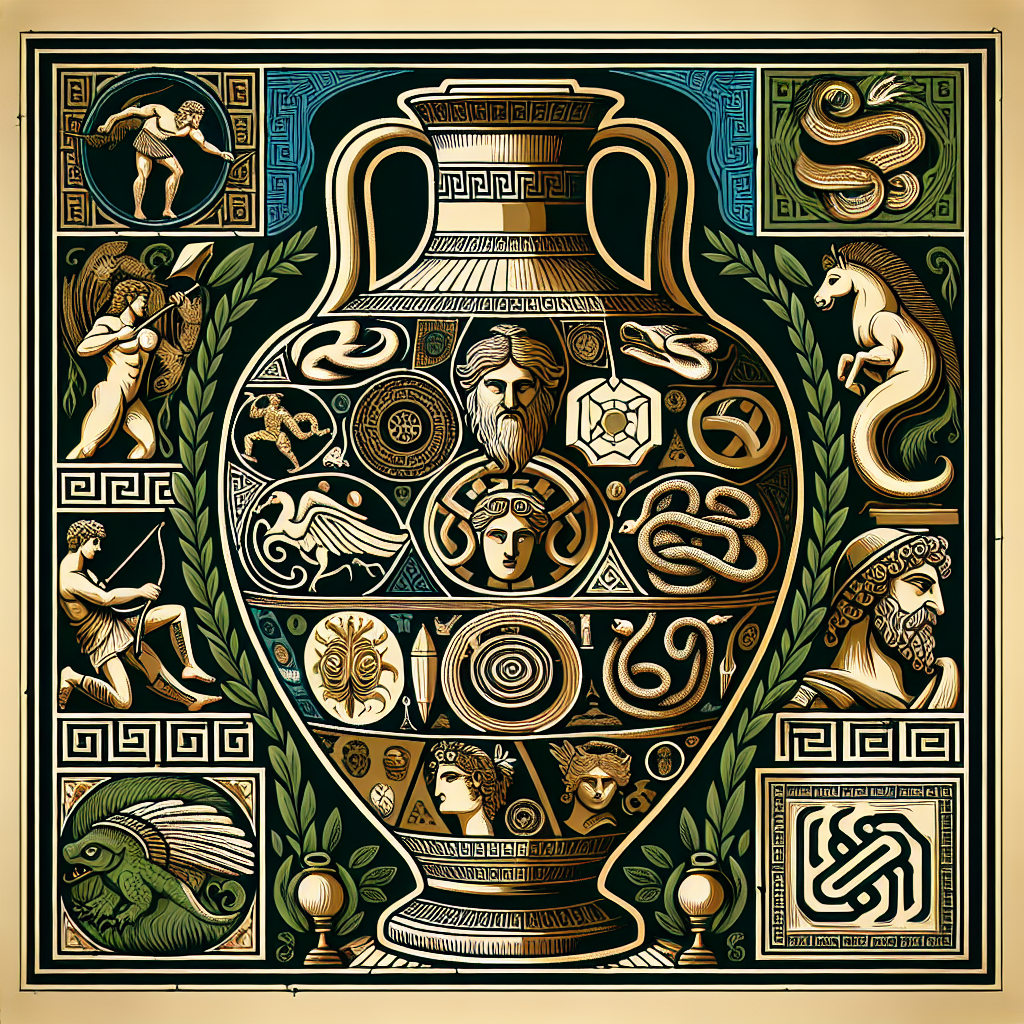
Greek mythology, a vibrant tapestry of gods, heroes, and mythical creatures, is not only a narrative of epic tales and grandeur but also a richly symbolic world. Symbols in Greek mythology serve as powerful tools to convey complex truths, moral lessons, and profound existential concepts. From the light of the sun to the depths of the underworld, symbols in these ancient myths help us understand not only the characters and their stories but also the values and beliefs of the ancient Greeks.
The Dual Nature of Symbols
Symbols often carry dual meanings—individual and collective. To a storyteller or artist, a symbol might evoke personal emotion or memory. To a culture, it might reflect shared values, fears, hopes, and societal norms. In the context of Greek mythology, symbols resonate on both levels, allowing contemporary audiences to derive personal significance while grappling with universal archetypes.
The Gods and Their Symbols
Zeus: The Thunderbolt and Eagle
Zeus, the king of the gods, wields the thunderbolt as his primary symbol. This powerful weapon represents authority, control over nature, and the concept of divine justice. The thunderbolt’s ability to strike from above signifies the power of the sky—an association with the heavens and the divine judgment that Zeus dispenses. The eagle, often accompanied by Zeus in artistic representations, is a potent symbol of strength, loyalty, and the ability to soar above challenges, reflecting his role as a ruler.
Athena: The Owl and Olive Tree
Athena, the goddess of wisdom, warfare, and crafts, is often depicted with the owl, a symbol of knowledge, perception, and wisdom. The nocturnal nature of the owl, able to see in darkness, symbolizes insight and revelation, traits that characterize Athena herself. The olive tree, another symbol associated with her, represents peace and prosperity, emerging from her contest with Poseidon for the patronage of Athens. This dual aspect of the owl and olive tree highlights Athena’s balanced nature—both as a warrior and a protector of civilization.
Poseidon: The Trident and Horse
Poseidon, the god of the sea, earthquakes, and horses, is closely associated with the trident, a three-pronged spear that symbolizes his dominion over the ocean and its depths. The trident represents power and control, rendering him capable of creating storms and calming the waters. The horse, often depicted in Greek art, symbolizes freedom, strength, and the untamed wild—qualities that resonate with the unpredictability of the sea itself.
Heroes and Their Symbols
Heracles: The Nemean Lion and Club
Heracles (Hercules in Roman mythology), known for his incredible strength and twelve labors, carries the skin of the Nemean lion, a symbol of invulnerability and valor. The lion’s impenetrable skin contrasts with the vulnerability of humans, illustrating Heracles’ extraordinary capabilities. His club, often depicted in artworks, represents brute strength and determination. Together, these symbols paint a picture of a hero who embodies both ferocity and resilience.
Persephone: The Pomegranate and Seasons
Persephone, the daughter of Demeter and queen of the underworld, is closely tied to the pomegranate, a symbol of life, fertility, and the cyclical nature of seasons. The story of Persephone’s abduction by Hades and her subsequent return to the earth reflects the changes in season—her descent into the underworld signifies winter while her return heralds spring. The pomegranate, with its many seeds, symbolizes both the richness of life and the inevitability of death, inviting contemplation of life’s cyclical nature.
Mythical Creatures and Their Symbols
The Minotaur: The Labyrinth and Caution
The Minotaur, a creature with the body of a man and the head of a bull, is confined to the labyrinth—a complex maze that symbolizes confusion, entrapment, and the struggle to navigate complex situations. The Minotaur itself embodies the consequences of unchecked desires and emotional turmoil, and the labyrinth serves as a cautionary tale about the dangers of losing one’s way, both literally and metaphorically.
The Phoenix: Rebirth and Resilience
The phoenix, though more commonly associated with Egyptian mythology, appears in Greek tales as well. It symbolizes rebirth, renewal, and immortality. The story of the phoenix rising from its own ashes encapsulates the idea of transformation and the cyclical nature of existence. In many ways, this symbolism reflects the resilience inherent in the human spirit, emphasizing that even from destruction, one can arise anew.
Nature and Cosmic Symbols
Fire: Transformation and Knowledge
Fire is a recurring symbol in Greek mythology, representing transformation, purification, and the illuminating power of knowledge. Prometheus, the Titan who stole fire from the gods to give to humankind, illustrates the duality of fire: it can create warmth and nurture life but also destroy. The myth of Prometheus serves as a powerful reminder of the struggle for enlightenment and the consequences that often accompany it.
The Labyrinth: The Journey of Life
The labyrinth, intricately linked to the Minotaur myth, transcends its literal meaning to symbolize the complex journey of life. It emphasizes the trials and tribulations we face in pursuit of understanding and self-discovery. Navigating through the labyrinth can be seen as a metaphor for personal growth, where the twists and turns of life ultimately lead to greater wisdom, transformation, and enlightenment.
Cultural Reflection
Symbols in Greek mythology provide insight into the values and fears of ancient Greek society, such as the importance of balance between chaos and order, the relationship between humanity and the divine, and the inevitability of death and rebirth. Through these symbols, stories convey lessons about morality, resilience, and the human experience.
Conclusion
The symbols in Greek mythology serve as windows into the ancient world, enriching our understanding of their culture, beliefs, and values. Through the stories of gods, heroes, and mythical creatures, we are invited to reflect on our existence, morality, and the intricate tapestry of life. As we explore these age-old stories, we find that their symbols remain deeply relevant, offering timeless insights into human nature and the world around us.


