The Role of Revenge in Greek Myths and Tragedies

The Role of Revenge in Greek Myths and Tragedies
Revenge, or “nemesis,” is a complex theme interwoven throughout Greek mythology and tragedy. It reflects the delicate balance between justice and retribution, often propelling characters into a cycle of violence and suffering. In examining Greek literature, one can discern how the quest for vengeance not only drives the narrative but also showcases profound moral and philosophical dilemmas. This article delves into the significance of revenge across various myths and tragedies, revealing its foundational role in the human experience as explored by the ancient Greeks.
The Concept of Nemesis
The Greek concept of nemesis transcends simple retribution. It embodies a more considerable notion of cosmic justice and balance. In mythology, Nemesis is the goddess who enacts retribution against hubris, the excessive pride that often leads individuals to overstep their mortal bounds. This idea of divine justice is critical in understanding why revenge is pursued. It is not merely an act of personal grievance but is often depicted as a necessary restoration of social order.
Revenge in Greek Myths
Greek myths provide vivid examples of how desire for revenge can lead to tragic outcomes. One of the most notable tales is that of Orestes and Electra, who avenge their father Agamemnon’s murder by slaying their mother, Clytemnestra, and her lover, Aegisthus. The idea of familial loyalty intertwined with revenge creates a moral ambiguity. Clytemnestra’s act of murder stems from her desire for vengeance against Agamemnon for sacrificing their daughter, Iphigenia, presenting a cycle of violence that perpetuates suffering.
In another poignant myth, the story of the Furies serves as a personification of the consequences of revenge. These avenging goddesses pursue Orestes relentlessly after he kills his mother, illustrating the immense psychological burden that vengeance carries. They represent the moral ramifications of revenge, suggesting that retribution exacts a heavy toll not just on the victim, but also on the perpetrator.
Revenge in Greek Tragedies
Greek tragedies frequently explore the theme of revenge, encapsulating the tragic consequences that arise from the pursuit of vengeance. A paramount example is Aeschylus’s “Oresteia,” a trilogy that chronicles the downfall of the House of Atreus. The transformation of Orestes from a vengeful son to a character seeking redemption is a central focus. As he avenges his father’s death, he becomes trapped in a cycle of violence and guilt, illustrating how the quest for revenge can lead to moral ambiguity and personal torment.
Euripides’ “The Bacchae” also presents revenge as a significant theme. In this tragedy, Dionysus exacts vengeance on the city of Thebes and his mother’s family for denying his divinity. The double-edged nature of revenge is explored as Dionysus’s actions lead not only to the tragic demise of Pentheus but also to the devastation of his own followers. Here, the consequences of revenge extend beyond the immediate, affecting entire communities and leading to the unraveling of societal norms.
The Cycle of Revenge
Greek tragedies masterfully illustrate how the pursuit of revenge creates a cycle that is hard to escape. The cycle often begins with an initial act of violence or betrayal, prompting a subsequent need for retribution. This cycle is evident in the Theban Cycle, which includes the tragedies of Oedipus and Antigone. Oedipus seeks to uncover the truth about his past, only to discover that he has killed his father and married his mother. The tragic revelation serves as the impetus for a series of revenge-driven actions, as his children, particularly Antigone, grapple with their family’s cursed legacy.
Antigone’s determination to bury her brother Polynices, despite the edict against it, illustrates the complexity of justice and revenge. Her actions can be perceived as a form of revenge against Creon’s authority, challenging the societal norms of her time. The tragedy culminates in a heartbreaking chain of deaths, emphasizing how revenge can lead to irreparable loss and sorrow.
The Philosophical Implications of Revenge
The exploration of revenge in Greek myths and tragedies invites philosophical debates on morality, justice, and human nature. Many characters grapple with the morality of their vengeful acts, questioning whether such actions can ever be justified. The characters often embody the struggle between personal duty and communal harmony, raising pertinent questions about the consequences of their choices.
For instance, in Sophocles’ “Ajax,” the titular character’s pursuit of vengeance against the Greeks for denying him Achilles’ armor leads to his tragic downfall. Ajax ultimately takes his life, illustrating the destructive power of revenge on one’s psyche. The play invites audiences to reflect on how revenge, instead of delivering satisfaction or justice, often leads to self-destruction.
Conclusions
The theme of revenge in Greek myths and tragedies not only serves as a catalyst for plot development but also reveals deep moral and existential questions that remain relevant today. As characters seek vengeance, they illuminate the struggles between justice and retribution, personal desire and communal responsibility. The cyclical nature of revenge depicted in these narratives serves as a poignant reminder of the inherent dangers that accompany the pursuit of retribution.
Through these ancient tales, audiences are prompted to reflect on their own understandings of justice and vengeance, ultimately recognizing the fragile nature of human morality. As contemporary society grapples with similar themes, the lessons drawn from Greek literature continue to resonate, illuminating the perilous path of revenge and the profound implications it carries for individuals and communities alike.
Recommended reading
These are affiliate links. If you buy through them, we may earn a commission at no extra cost to you.
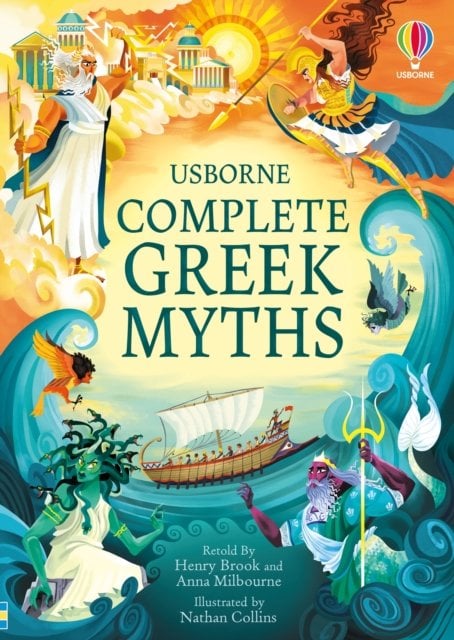
Complete Greek Myths: An Illustrated Book of Greek Myths
Featuring detailed retellings, beautiful character illustrations, and cultural background, this comprehensive volume brings the best-known and obscure Greek myths to life for readers of all ages. Complete with maps, a glossary, and a QR code for pronunciation guides and extra resources, it is an essential addition to any family bookshelf.
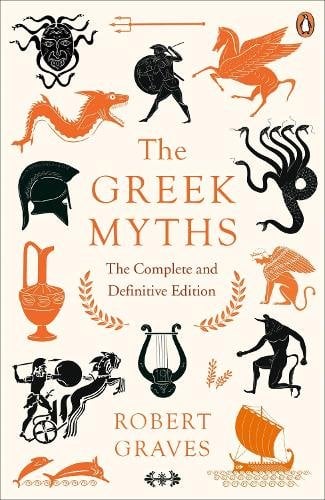
The Greek Myths: The Complete and Definitive Edition
Robert Graves’s definitive edition weaves the classic Greek myths, from the Labours of Hercules to the Trojan War, into one sweeping, authoritative narrative. Perfect for both first-time readers and classicists, this comprehensive volume combines engaging storytelling with detailed scholarly commentary and a complete index of names.

The Odyssey
Homer’s timeless epic The Odyssey follows the hero Odysseus on a perilous decade-long journey home from Troy, facing mythical monsters and divine wrath. Meanwhile, his wife Penelope and son Telemachus defend their kingdom against ruthless suitors in this classic tale of loyalty and endurance.