Amentet: The Goddess of the West and the Afterlife
Amentet: The Goddess of the West and the Afterlife
In the rich tapestry of ancient Egyptian mythology, where gods and goddesses played integral roles in the daily lives and spiritual beliefs of the people, Amentet stands out as a significant figure representing the passage between life and the afterlife. Known as the goddess of the West and an embodiment of the afterlife, Amentet holds a unique place in the pantheon, symbolizing the eternal cycle of death, rebirth, and the journey of the soul.
Origins and Attributes
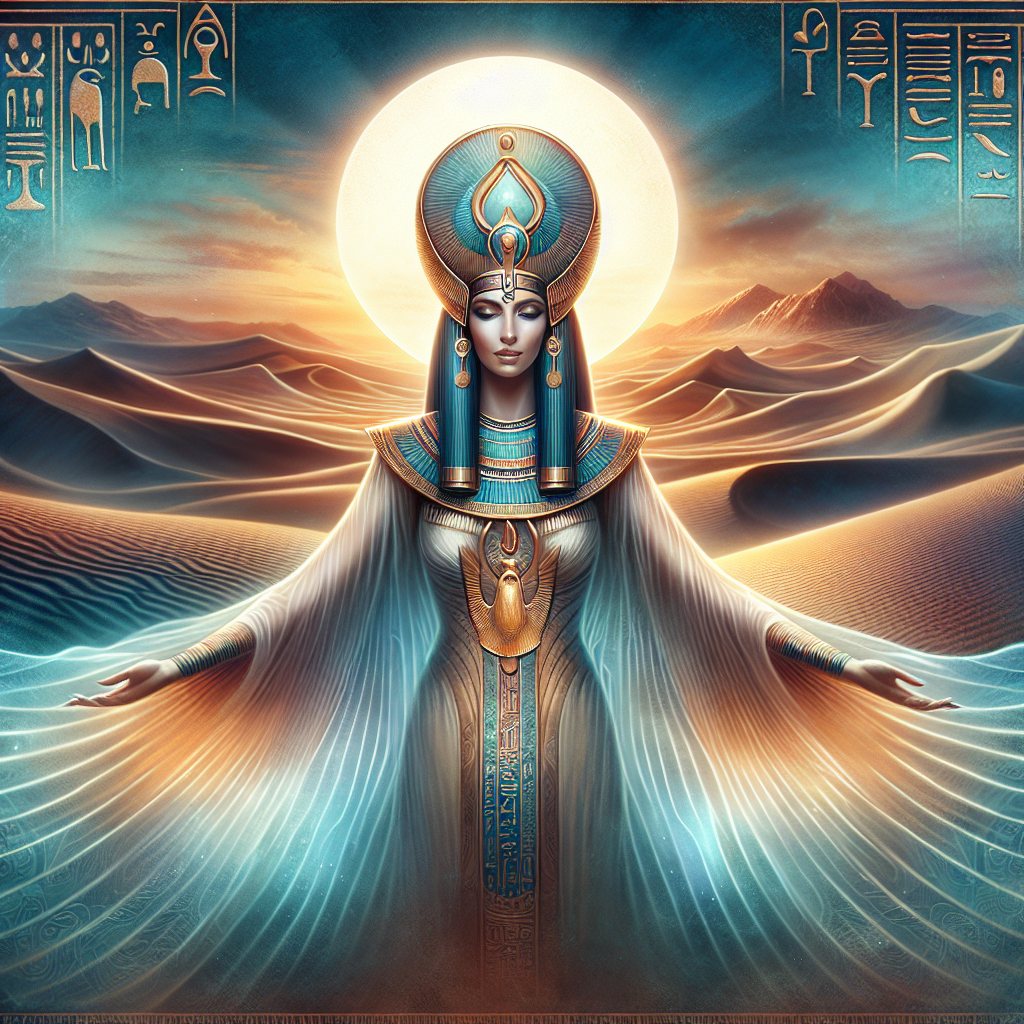
Amentet is often depicted as a woman with a throne on her head or sometimes as a woman seated with her back to the viewer, representing her association with the western horizon, where the sun sets. This imagery signifies both the end of the day—the end of life—and the transition into the afterlife. The term “Amentet” itself translates to “the hidden one,” reflecting her role in guiding souls to the afterlife and her connection with the mysteries beyond the mortal realm.
Amentet and the Afterlife
In ancient Egyptian belief, the journey to the afterlife was fraught with challenges and assessments, primarily symbolized by the weighing of the heart. This process determined the soul’s fate based on the purity of their actions during their lifetime. Amentet was often invoked during this critical transition. She acted as a comforting presence for souls journeying to the Duat, the Egyptian underworld. Her gentle guidance offered solace in a time of great uncertainty, as she accompanied the deceased through perilous landscapes and spiritual trials.
The role of Amentet extends beyond mere guidance. She embodies the spiritual sanctuary where the deceased could rest and receive the sustenance they needed for their journey. In this capacity, she provided a peaceful haven for souls who had crossed over, ensuring they had a place to reflect and rejuvenate before moving on.
Association with the West
Amentet’s connection with the West is deeply rooted in Egyptian cosmology. The West held a dual significance: it was both the place of sunsets and the realm of the dead. As the sun descended in the west, it symbolized the closing of life and the potential for rebirth—a cycle mirrored in the agricultural practices and spiritual beliefs of the Egyptians.
The western horizon was home to the Field of Reeds (Aaru), a paradise where the deceased could enjoy an eternal afterlife if they had lived a virtuous life. In this context, Amentet served not just as a guardian but as a symbol of hope—hope for a peaceful afterlife in the verdant expanses of Aaru, where they could continue to live in peace and plenty.
Mythological Context
Amentet is often associated with other deities who preside over life, death, and rebirth. She is sometimes linked with Osiris, the god of the afterlife, who presides over the judgment of souls. Together, they represent the duality of death, emphasizing that while death is an end, it is also a precursor to new beginnings.
Her story intertwines with the cycles of nature and the divine order maintained by the gods. Amentet was often depicted alongside deities like Anubis, the god of mummification and the afterlife, who prepared the deceased for their journey. While Anubis oversees the protective and transformative aspects of death, Amentet exemplifies the nurturing side, providing guidance and comfort.
Worship and Cult Practices
Though Amentet did not boast a massive following like Isis or Osiris, her worship was essential to the funerary customs of ancient Egyptians. She was revered in funerary texts and inscriptions, particularly in the “Book of the Dead,” where her name would invoke protection and assistance for souls embarking on their journeys.
In tombs, images of Amentet were created to provide a visual representation of her guiding and protective qualities. Offerings to her included food and drink, reflecting the Egyptians’ belief in the necessity of sustaining the deceased in the afterlife. Rituals focusing on her were integral to funerary ceremonies, ensuring that the deceased had the best chance of flourishing in their posthumous existence.
Amentet’s Legacy
Amentet’s influence extends beyond the ancient world and resonates with the fundamental human inquiries concerning death and what lies beyond. She represents not only a cultural figure but also an archetype of the bridge between life and afterlife—a reminder of humanity’s continuous fascination with mortality, legacy, and the quest for understanding.
As modern society grapples with questions around death, Amentet can serve as a soothing reminder of the traditions that sought to make sense of the unknown. Her imagery evokes a sense of peace in facing life’s inevitable conclusion and invites reflection on what lies beyond.
Conclusion
In the mosaic of Egyptian mythology, Amentet represents a unique fusion of protection, guidance, and nurturing as the goddess of the West and the afterlife. From her embodiment of the spiritual journeys that souls undertake after death to her essential role in funerary practices, Amentet captures the complex beliefs that ancient Egyptians held about life, death, and rebirth.
Her legacy continues to inspire an appreciation for the sacredness of life and the mysteries of the afterlife, reminding us of the cultural significance of honoring those who have passed. As a symbol of hope and comfort in the face of death, Amentet stands as a timeless figure in the pantheon of deities, inviting us to reflect on our own journeys across the horizon.