Astronomy and Myth: The Role of Celestial Bodies in Egyptian Religion

Egyptian civilization, with its monumental architecture, rich mythology, and advanced knowledge, is arguably one of the most fascinating in history. Central to this civilization was its understanding of the cosmos, where astronomical phenomena played a pivotal role in shaping mythology, religious practices, and cultural identity.
The Divine Order of the Cosmos
In ancient Egyptian belief systems, the universe was seen as a complex tapestry woven from both the celestial and terrestrial realms. The celestial bodies—primarily the sun, moon, and stars—were imbued with divine significance, each playing a role in the gods’ interactions with the world. The Egyptians believed that celestial phenomena were manifestations of divine will, and their patterns influenced earthly life.
The Sun God Ra
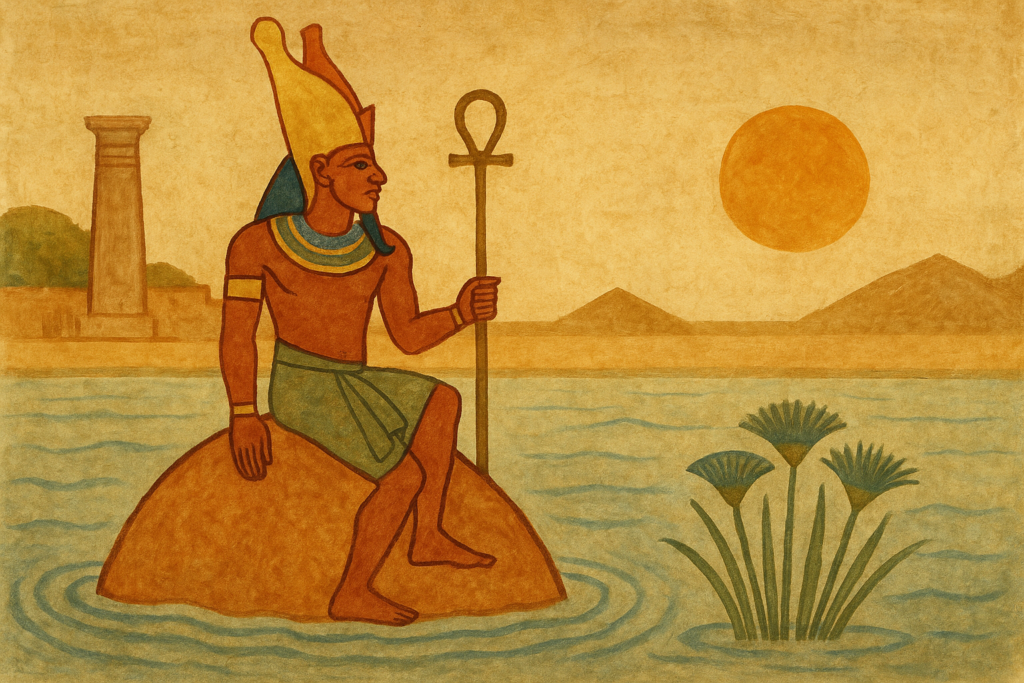
At the apex of the Egyptian pantheon was Ra, the sun god. Ra’s journey across the sky was a daily re-enactment of the cycle of life, death, and rebirth. He was believed to travel through the sky during the day and navigate the dangerous underworld at night, symbolizing the cycle of renewal. This duality in Ra’s journey inspired myths about light overcoming darkness, a central theme reflected in the rhythms of daily life.
The Great Temple of Karnak in Thebes contained precisely aligned obelisks that oriented not just toward religious significance but also aligned with solar events. The annual flooding of the Nile, regarded as a divine event tied to Ra’s cycles, was essential for agriculture and thus fundamental to Egyptian society. Festivals honoring Ra, such as the Wepet-Renpet (the opening of the year), were celebrated with great fanfare, signifying the start of the agricultural season.
The Moon and Its Mysteries
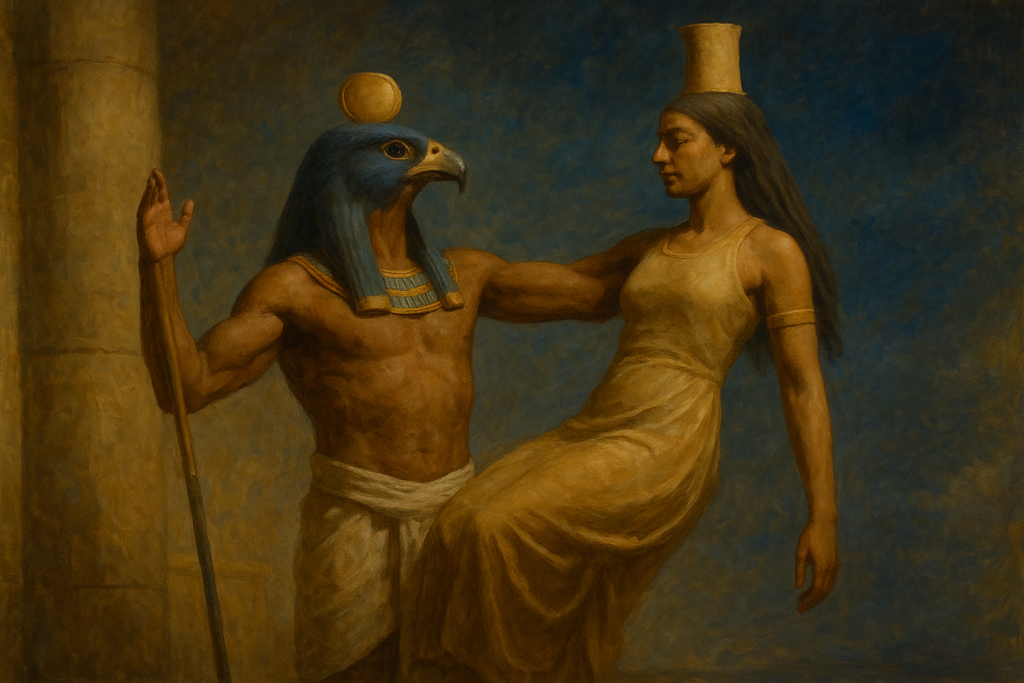
In contrast to the sun, the moon, personified by the god Thoth, represented wisdom, intuition, and the arts. Thoth was believed to govern time and writing, keeping track of the heavens and ensuring the proper order of the cosmos. The lunar cycles were significant in regulating the calendar, marking religious festivities, and establishing farming cycles.
Thoth’s counterpart, Khonsu, was associated with the moon’s youth and growth phases. He was often depicted as a youthful figure who, through the lunar phases, represented the human experiences of growth, development, and maturation. Many temples had deities dedicated to the moon, emphasizing its importance in the daily lives of Egyptians, from agriculture to navigation.
Stars and the Afterlife
The stars held a special significance in Egyptian cosmology, with the most prominent star, Sirius (known as Sopdet), heralding the inundation of the Nile. Sirius’s rise in the pre-dawn sky marked the start of the annual flooding, which was vital for agriculture. Its appearance was celebrated during the “Wepet-Renpet” festival, aligning the celestial with earthly cycles.
Moreover, the stars were critical in the beliefs surrounding the afterlife. The ancient Egyptians envisioned a celestial realm where the souls of the deceased traversed. The constellation Orion was associated with Osiris, the god of the afterlife, and served as a guide for souls seeking eternal life in the Field of Reeds, a reflection of the earthly paradise.
The pyramids themselves are marvels of astronomical alignment, particularly the Great Pyramid of Giza, which is aligned with the stars of Orion. This alignment reflects the Egyptians’ profound reverence for celestial bodies as pathways to the divine, merging the terrestrial with the celestial.
The Role of Astrology
Astrology had significant implications in ancient Egypt, as the movements of celestial bodies were believed to predict earthly events. Pharaohs, as divine representatives, relied on astrological interpretations to guide decisions, from warfare to agricultural planning. The Egyptians meticulously recorded the movement of stars and planets, creating advanced calendars that harmonized human activities with cosmic rhythms.
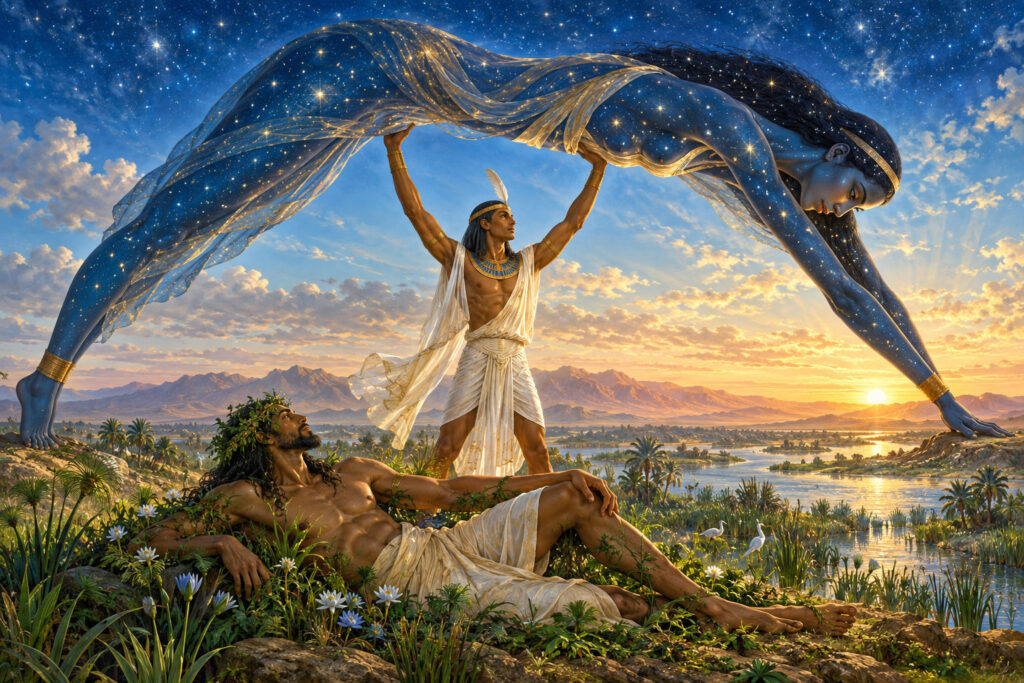
The Book of Nut, a text illustrating the goddess of the sky, depicts her arching over the earth with stars scattered across her body. This depiction underscores the idea that the cosmos is alive, an extension of the divine influencing everyday life on earth.
Art, Architecture, and the Celestial
The influence of astronomy on ancient Egyptian art and architecture is palpable. Temple constructions often included star maps and representations of celestial events that commemorated the gods and their heavenly journeys. Structures like the Temple of Dendera feature the zodiac, showcasing the Egyptians’ advanced understanding of astrology and their willingness to integrate it into their religious practices.
Artifacts such as the astronomical ceilings of temples and the precise alignments of structures with celestial events demonstrate the necessity of astronomy in daily worship. During rites and rituals, the alignment of these earthly structures with celestial events underscored the connection between humans and the divine.
Conclusion
The celestial bodies in ancient Egypt were not mere points of light in the sky; they were integral players in a grand narrative that governed every aspect of life. Through the interplay of astronomy and myth, the ancient Egyptians understood their place in the cosmos, built their societies around celestial phenomena, and laid the groundwork for a rich religious tradition that celebrated creation, renewal, and continuity.
As we look to the stars today, we find ourselves in a continuum that echoes the sentiments of the ancient Egyptians: the cosmos is not just a space to contemplate but a source of meaning, identity, and connection—elements that define what it means to be human. Through the lens of Egyptian religion and mythology, we gain deeper insights into how celestial bodies shaped a civilization and how they continue to inspire awe and reverence in cultures around the world.