
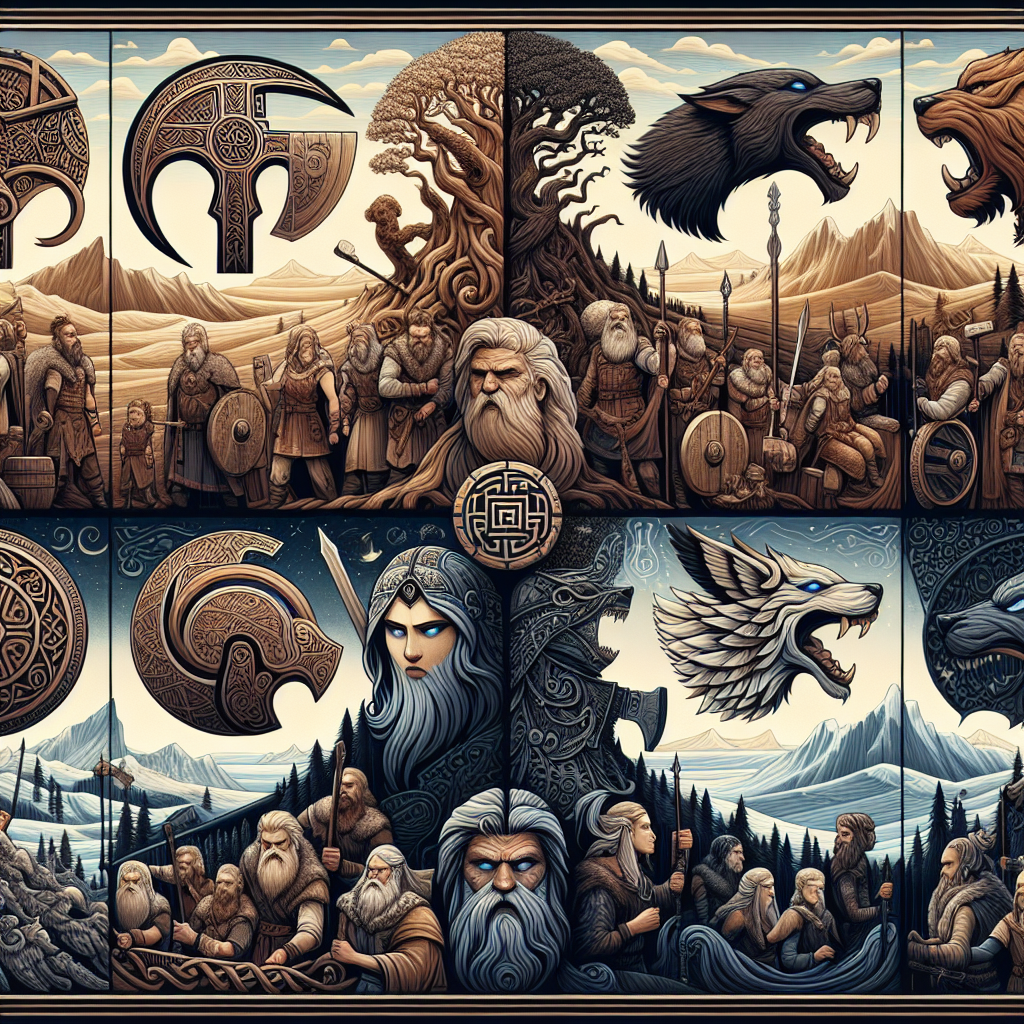
Norse Mythology Through Art: Representations Over the Ages
Norse mythology, a rich tapestry of stories woven with themes of heroism, fate, and the struggles between gods and giants, has captivated audiences for centuries. Beyond the epic sagas and poems, art has played a crucial role in depicting these mythological tales and ensuring their preservation and evolution through various cultures and time periods. This article explores the representation of Norse mythology through art across different ages, showcasing how interpretations have transformed while maintaining their core narratives.
Ancient Norse Art: The Viking Age (circa 793-1066 CE)
During the Viking Age, Norse mythology was primarily conveyed through artifacts and carvings, rich in symbolism and spirituality. The most significant expression of this mythology came through various art forms, including wood carvings, metalwork, and stone sculptures. One of the hallmark elements of Viking art was the use of intricate animal designs—known as “Urnes style”—which often featured serpents and dragons intertwined with figures of gods and mythical beasts, encapsulating the dynamic nature of Norse beliefs.
Runestones, often erected to commemorate the deceased, are another cornerstone of Viking artistry. These stones frequently bear inscriptions detailing mythological figures and heroic deeds, offering insights into the cultural importance of these deities. For instance, the Jelling stones, inscribed with intricately carved representations of gods and epic events, showcase the attempt to immortalize the legacy of both the individuals and the divine in community memory.
Medieval Manuscript Illuminations
The advent of the Middle Ages brought about significant changes in the representation of Norse mythology, primarily through illuminated manuscripts. With the consolidation of Christianity in Scandinavia, there was a shift in artistic focus. Nevertheless, many artists merged Christian themes with vestiges of Norse mythology, resulting in unique intertextual interpretations.
The “Codex Regius,” which houses the Poetic Edda, is one of the most significant sources detailing the Norse pantheon and exploits of gods like Odin, Thor, and Loki. Illuminated manuscripts from the medieval period often illustrated scenes from these sagas, featuring elaborate depictions of gods in battle or mythological creatures. These artworks served both as religious texts and cultural records, each illuminated page inviting readers into the intricate world of Norse cosmology.
The Renaissance and Neoclassical Resurgence
Renaissance artists in Europe drew inspiration from classical antiquity and, in the process, began to revisit Norse mythology. Figures like the painter Hans von Aachen created works blending classical styles with Norse themes, depicting gods in heroic poses and evoking the grandeur of ancient tales. Such artworks often reflected the humanistic ideals of the time, portraying mythical figures as archetypes of virtue and struggle.
Due to the increased interest in mythology during the Neoclassical period, Norse elements began appearing alongside Greco-Roman themes in sculptures, paintings, and literature. Artists like Edward Burne-Jones and Gustave Moreau illustrated scenes from Norse sagas, breathing new life into these ancient stories and situating them within a contemporary framework. The narrative depth of characters such as Freyja or Baldr was emphasized, portraying them not merely as deities but as complex beings with rich emotional arcs.
Romanticism and Symbolism
The Romantic era, marked by a strong emphasis on emotion, nature, and the sublime, saw a revival of interest in Norse mythology in the 19th century. Artists such as Caspar David Friedrich and Arnold Böcklin drew inspiration from Nordic themes, often using the backdrop of dramatic landscapes to emphasize the connection between humans and divine forces. Friedrich’s paintings, in particular, evoke a sense of the mystical, inviting the viewer into a world where nature and the supernatural intertwine.
Symbolist artists took this further by using Norse motifs to explore themes of existentialism and idealism. The works of poets like W.B. Yeats and painters such as Edvard Munch incorporated Norse symbols, effectively bridging literature and visual arts. Munch’s “The Dance of Life,” while focused on human experiences, draws upon the Nordic notion of fate and the inexorable passage of time—common themes in Norse lore.
Modern Adaptations and Popular Culture
The 20th and 21st centuries have seen a massive resurgence in the interest in Norse mythology, propelled notably by fantasy literature, films, and graphic arts. Artists and authors such as J.R.R. Tolkien and Neil Gaiman have drawn heavily from Norse sources, blending them into their narratives and expanding the mythology’s reach into contemporary culture.
Popular culture phenomena, including Marvel’s Thor and various video games like “God of War”, have reinterpreted Norse mythology for new generations. In comic books and films, particularly, characters are depicted with stunning visual styles that merge traditional iconography with modern aesthetics. The portrayal of Thor, Odin, and Loki, laden with contemporary motifs, serves to reinvigorate the mythology, attracting audiences worldwide and prompting further exploration of the original sagas.
Artistic interpretations have also expanded into digital media, with video games and animations bringing Norse myths to life in immersive environments. These adaptations challenge players and viewers to navigate complex narratives and moral questions, echoing the original sagas’ themes of fate and heroism.
Conclusion
From ancient carvings and manuscript illuminations to contemporary digital art and film, the journey of Norse mythology through art reflects a continuous dialogue between past and present. Each era, while adapting the imagery and themes to resonate with its own cultural context, has underscored the timelessness of these myths. As a result, Norse mythology transcends mere storytelling; it evolves through artistic expressions that remind us of our shared human experience—a quest for understanding in a world filled with enigmas and paradoxes. Through the lens of art, these ancient tales remain vibrant and alive, inviting us to ponder our own fates within the grand tapestry of existence.


