The Etruscan Influence on Roman Mythology
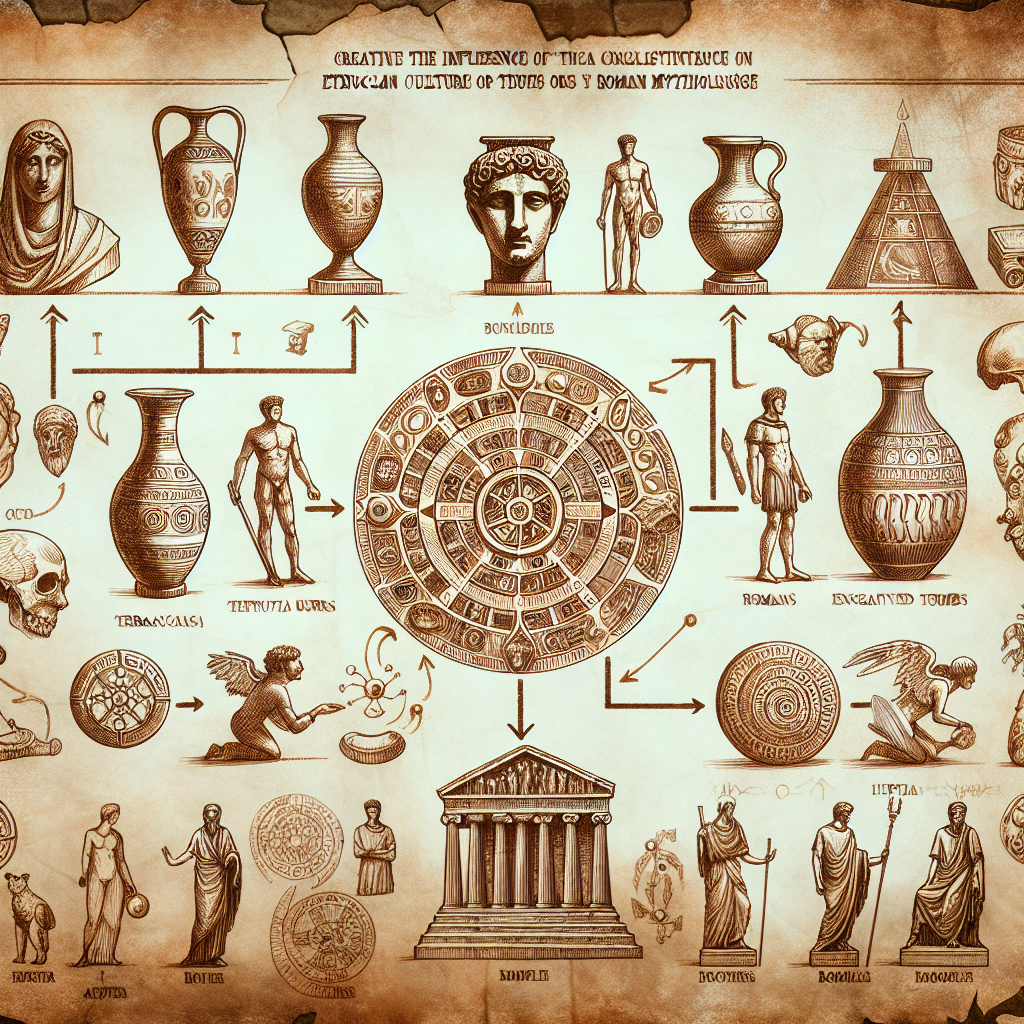
The ancient Etruscans, a civilization that thrived in central Italy from approximately the 8th century BC until their eventual assimilation into the Roman Republic in the 3rd century BC, played a pivotal role in shaping the foundations of Roman culture and religion. While the Etruscans themselves are often overshadowed by their more famous neighbor, Rome, their influence, particularly on Roman mythology, is profound, subtle, and lasting. This article delves into the dimensions of Etruscan influence on Roman mythology, examining deities, rituals, and the intertwining of cultural practices.
The Etruscan Pantheon and Its Integration
Etruscan religion was rich and complex, characterized by a pantheon of gods that merged elements from native beliefs, as well as influences from Greek and Near Eastern traditions. The early Romans encountered these deities and often adopted them, changing their names and attributes to better fit the Roman narrative.
One critical figure, many scholars argue, is Tinia, the Etruscan equivalent of the Greek god Zeus. Tinia was the god of the sky and thunder and was crucial to Etruscan worship. The Romans would later integrate Tinia’s attributes into their own pantheon through Jupiter, who represented similar roles and attributes.
The Etruscan goddess Uni, associated with maternal qualities and war, can be seen as a precursor to the Roman goddess Juno. Although Juno’s character expanded in Roman tradition, her origins and some attributes can be traced back to her Etruscan counterpart. This syncretism reveals a borrowing of traits that reflects the Romans’ respect for Etruscan culture and religion.
Other examples of this integration include Nortia, the goddess of fate, whose influence can be detected in the Roman representation of Fortuna. The Romans, recognizing the importance of luck and fortune in their own society, appropriated the concept of fate from the Etruscans, embedding it deeper into Roman customs and beliefs.
Etruscan Rituals and Myths
Ritual practices were also transferred from Etruscan to Roman culture. The Etruscans practiced divination techniques, notably the examination of the livers of sacrificed animals (extispicy), which the Romans would adopt and adapt through their priests, known as the Augurs. The Romans, influenced by Etruscan practices, placed great emphasis on interpreting omens and portents, believing that these signs were vital to securing divine favor in both public and private endeavors.
Another area of influence involves Etruscan burial customs and mythology concerning the afterlife. Etruscan tomb paintings often depicted mythological scenes that illustrated their beliefs about life after death. Romans, influenced by these portrayals, began to conceive of their own afterworld, replete with gods who guided souls, such as Charon, who ferried the dead across rivers. The characterization of afterlife figures owes much to Etruscan symbolism and aesthetics, demonstrating a rich sharing of religious iconography that permeated both cultures.
Artistic Expressions
Art and literature are two key areas where Etruscan influence is often underappreciated. Etruscan craftsmanship in metalwork, painting, and sculpture became a reference point for Roman artists. The mythological themes depicted in Etruscan art oftentimes translated seamlessly into Roman narratives. For example, the famous depiction of the Etruscan god Hercle (a precursor to the Roman Hercules) highlights the merging of mythologies through artistic expression.
Furthermore, Etruscan inscriptions in tombs and temples provided a model for Roman literature. The use of poetry and mythological references to illuminate societal values can be traced back to earlier Etruscan works. Romans would later boast poets such as Virgil and Ovid, who drew upon themes and stories that held Etruscan roots.
The Etruscan Influence on Roman Society and Governance
In addition to mythology, Etruscan influence penetrated Roman governance and social structure. The Etruscans were known for their advanced urban planning and governance models, which the Romans adapted to form their own city-states. The Etruscan League, a confederation of city-states, showcased collective governance—a practice that likely inspired the Roman Republic’s development of a structured political system. This foundational governance meant that mythology and religion were interwoven with civic duty and state interests, reinforcing the idea that the divine guided and protected the state, a belief that would become a cornerstone of Roman identity.
Theological Divergence and Continued Influence
As the Roman Empire evolved and expanded, the distinctions between Etruscan and Roman mythological practices began to fade, though Etruscan influences remained latent beneath the surface of Roman culture. The Roman interpretation would alter over time, especially with the rise of Christianity as the dominant religion in the empire. Many myths and practices would be reframed or replaced, but the core of many beliefs remained identifiable.
Interestingly, the works of later historians and theologians often sought to distance Roman mythology from Etruscan roots to construct a unique Roman identity. This political and cultural maneuvering has sometimes obscured how thoroughly the Etruscans shaped Roman mythological and religious thought.
Conclusion
The Etruscan civilization left an indelible mark on Roman mythology, religion, and culture. Through the adoption and adaptation of Etruscan deities, rituals, and artistic expressions, early Romans not only enriched their own mythological framework but also laid the groundwork for the complex, enduring traditions that would characterize Roman religion and statecraft. Understanding the Etruscan influence illuminates the intricate tapestry of cultural exchange central to the development of one of history’s most influential civilizations. Though the Etruscans may no longer occupy a prominent place in the annals of history, their contributions resonate through the ages, underscoring the interconnectedness of ancient cultures and their lasting legacies.