Legends of Aeneas: The Foundation of Rome

The story of Aeneas, a Trojan hero and a key figure in both ancient mythology and Roman history, is shrouded in layers of myth, history, and allegory. Often regarded as the founder of Rome, Aeneas’s journey from the ashes of Troy to the establishment of a new homeland in Italy represents themes of resilience, duty, and destiny. His epic tale is immortalized in Virgil’s “Aeneid,” a cornerstone of classical literature that ties the legendary past of Troy to the imperial present of Rome.
Origins of Aeneas
Aeneas is introduced to us as the son of Anchises, a Trojan noble, and the goddess Aphrodite (Venus in Roman mythology). His divine parentage already sets Aeneas apart as a figure of greatness, destined for monumental achievements. In the wake of the Trojan War, after the Greeks had laid waste to the once-great city, Aeneas emerges as a leader among the surviving Trojans. With the destruction of Troy as backdrop, he symbolizes the endurance of a culture in the face of overwhelming adversity.
The Journey from Troy to Italy
The crux of Aeneas’s saga is found in his arduous journey from Troy to the Italian peninsula. Following the fall of Troy, he carries with him the penates, or household gods, signifying the hope of preserving his people’s heritage. Guided by fate—an essential theme in the “Aeneid”—Aeneas sails across the Mediterranean, encountering various mythical beings and formidable challenges.
One of the most notable episodes involves a stop in Carthage, where Aeneas meets Queen Dido, a relationship that serves both to explore themes of love and duty and to foreshadow Aeneas’s ultimate fate. Though deeply in love with Dido, Aeneas remains steadfast in his mission to reach Italy, demonstrating the necessary sacrifices that destiny demands. The tragic nature of their love story highlights the tension between personal desire and public duty—one of the central conflicts that Aeneas faces.
The Role of the Gods
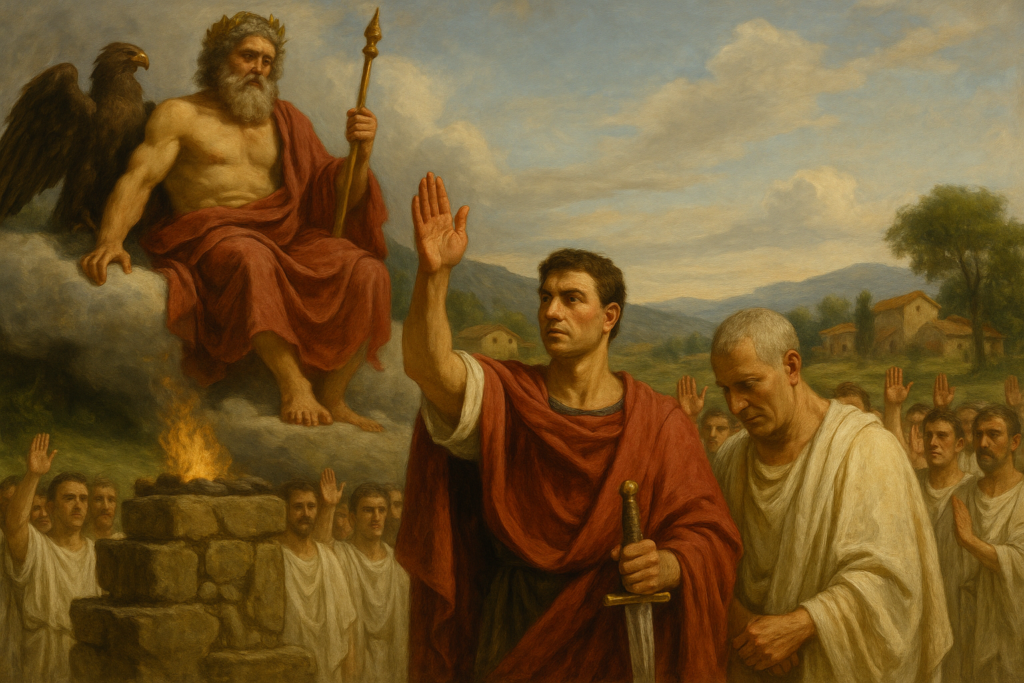
The influence of the gods plays a crucial role in Aeneas’s journey. Throughout the epic, deities such as Juno and Jupiter manipulate the fates of mortals for their own purposes. Juno, who harbors a deep-seated animosity toward the Trojans, attempts to thwart Aeneas’s efforts at every turn. In contrast, Venus supports him, showcasing the duality of divine intervention. The ongoing conflict between these divine forces not only accentuates Aeneas’s struggles but also illustrates the broader theme of fate versus free will, a topic that pervades both ancient and modern literature.
The Arrival in Italy
After enduring numerous trials, including confrontations with monsters and hostile tribes, Aeneas finally arrives in Italy, where he is met with both challenges and potential alliances. The local tribes, particularly the Latins, offer both threats and opportunities. Aeneas’s encounter with Latinus, the king of the Latins, leads to an important alliance through his intended marriage to Lavinia, the king’s daughter. However, this union ignites further conflict, primarily due to the wrath of Turnus, a local suitor.
The ensuing conflict between Aeneas and Turnus represents the struggles inherent in establishing a new order, mirroring the internal conflicts that arose during Rome’s own history. Aeneas’s eventual victory not only cements his role as a founding figure but serves as an allegorical commentary on the themes of conflict and resolution that would characterize Roman history.
The Founding of Rome
Aeneas’s saga culminates in the establishment of a new Trojan state in Italy, setting the precedence for what will become Rome. Through his bravery and leadership, Aeneas lays the groundwork for the future Roman Empire. The events surrounding Aeneas incarnate the idea that the foundation of greatness is often built on sacrifice, courage, and a firm adherence to duty.
The legacy of Aeneas is further amplified by his descendant, Romulus, who is credited with the actual founding of Rome. This connection serves to bolster Rome’s identity, linking its imperial destiny to the heroic past of Aeneas. The “Aeneid” operates not just as a mythological narrative but as a national epic that reflects the values, aspirations, and identity of Rome at its zenith.
Aeneas in Roman Culture
In Roman culture, Aeneas is often portrayed as the ideal Roman hero—pious, virtuous, and duty-bound. His character embodies the Roman values of gravitas (seriousness), pietas (devotion to family, country, and the gods), and virtus (valor). These ideal traits not only inspired contemporary Romans but also served as a model for future generations.
Art, literature, and later historical texts continued to celebrate Aeneas, solidifying his status in the collective memory of the Roman people. Over time, the tale of Aeneas became a symbol of Roman endurance—a metaphor for overcoming adversity in pursuit of greatness.
Conclusion
The legend of Aeneas, as presented in the “Aeneid” and reinforced by Roman history, encapsulates the essence of Rome’s identity. It tells a powerful story of survival, sacrifice, and the relentless pursuit of destiny. Through Aeneas’s journey from the ruins of Troy to the promise of a new homeland, ancient Romans saw reflected back their own struggles, victories, and the divine approval of their imperial legacy.
As both man and myth, Aeneas serves as a timeless figure, embodying the ideals of heroism and the complexities of fate. The narrative of Aeneas not only connects Rome to its legendary past but also offers a universal message about the human condition—resilience in the face of struggle and the quest for purpose, a storyline that transcends time and culture.