The Role of Myth in Roman Warfare Strategies

The Role of Myth in Roman Warfare Strategies
The ancient Romans were not only skilled engineers and administrators but also adept at integrating various cultural elements into their society. One of the intriguing aspects of Roman culture is how deeply myth influenced their approach to warfare. Myths provided the Romans with a shared sense of identity, a narrative framework for understanding their place in the world, and strategies that shaped their military operations. This article explores the role of myth in Roman warfare strategies, examining its influence on soldiers’ motivations, tactics, and overall military successes.
Understanding Roman Myths
Roman mythology, often a blend of influences from Greek and other Mediterranean cultures, provided the Roman populace with a rich tapestry of stories and characters that shaped their understanding of the world. Major gods and figures, such as Mars—the god of war—Jupiter, and Venus, were central to Roman identity. The epics of Romulus and Remus, the heroic founding of Rome, and tales of the Trojan War resonated deeply within the collective consciousness of Roman society.
Myth served several essential functions. It not only explained the natural order of the world but also established moral and ethical codes. Myths often emphasized virtues such as bravery, loyalty, and piety, qualities that were essential for soldiers on the battlefield. The deep-rooted belief in divine favor endowed Roman troops with a sense of invincibility, as they believed they were fighting under the protection of their gods.
Motivating the Troops
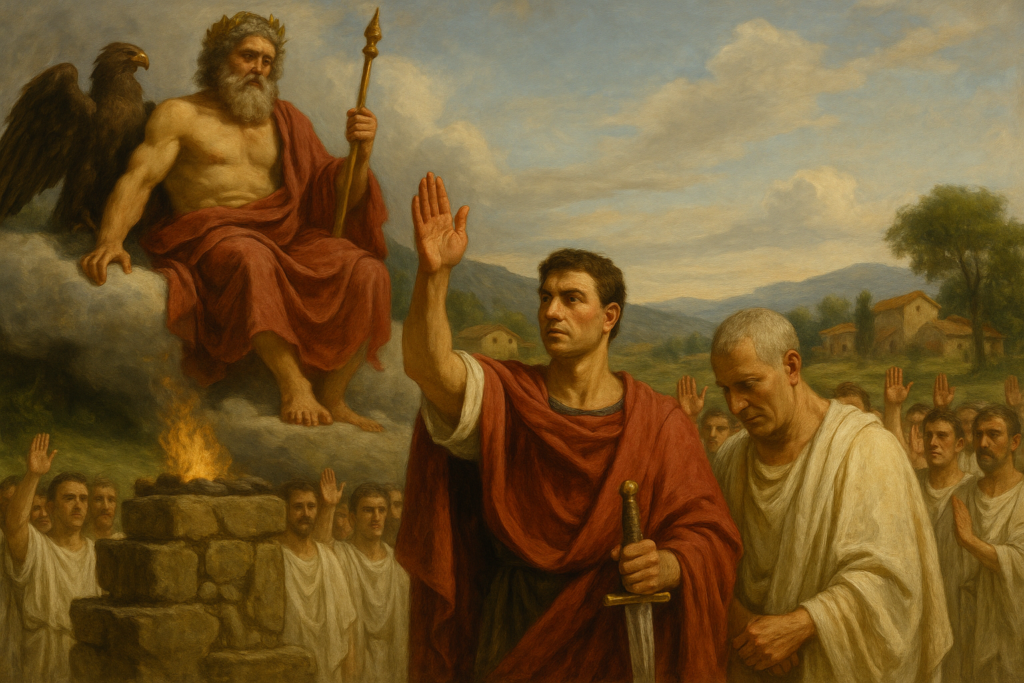
The psychological aspect of warfare is paramount, and Roman myths provided a powerful motivational tool for soldiers. The stories of divine warriors and heroic feats were used to stoke the emotions of Roman soldiers, instilling a fierce sense of pride and duty. For example, the figure of Mars was invoked before battles as a way to rally troops and boost morale. Roman commanders would often invoke the favor of the gods through sacrifices and prayers before engaging in military campaigns.
Moreover, the myths surrounding figures like Aeneas, the Trojan hero, were pivotal in galvanizing troops by reminding them of their storied past and destiny. Aeneas’s journey to found a new homeland was interpreted as a divine mandate that echoed the aspirations of Roman soldiers—they were not merely fighting for territory but for the glory of their lineage and the continuation of their sacred mission.
Strategic Applications of Myth
Beyond motivation, Roman myths influenced strategic thinking and decision-making in warfare. The foundation of Rome itself, rooted in the tale of Romulus and Remus, symbolized resilience and determination. Roman leaders could extract tactical lessons from these narratives. For example, the cunning and strategic prowess exhibited by various mythological figures were often mirrored in the military strategies devised by Roman generals.
The Romans frequently applied mythological ideas to justify their conquests and territorial expansions. Warfare was not merely a matter of territorial boundaries but a divine obligation. This rationale allowed Roman leaders to frame their campaigns in a context of justice, positioning themselves as the overseers of civilization in the face of barbarism. Myths of divine approval not only framed the military endeavors as honorable but also contributed to the legitimacy of their actions in the eyes of their soldiers and citizens.
Religious Rites and Warfare
The intertwining of myth and religion was foundational to the Roman approach to warfare. Rituals and ceremonies were integral in preparing for battle. Prior to significant engagements, rituals were performed to invoke the favor of the gods. This was more than superstition; it was a deeply ingrained aspect of Roman culture. The augurs, priests specializing in interpreting the will of the gods through the observation of omens, played a vital role in military strategy, advising commanders on when and how to engage the enemy.
The manipulation of myth helped solidify the social hierarchy of the Roman military and political spheres. Generals sought divine favor not just for victory but also to enhance their status and legitimacy. The belief in divine approval fostered a culture of collective responsibility and accountability that further unified the military ranks.
Lessons from Mythological Narratives
Several crucial battles and campaigns throughout Roman history highlight the strategic wisdom gleaned from myth. The Punic Wars, for instance, showcased the strategic parallels to epic tales. The Romans faced formidable challenges and threats from Hannibal, whose tactics evoked legendary resistance. Roman leaders drew from the tales of resilience found within their myths to motivate their soldiers during this tumultuous period.
Equally, many Roman leaders directly compared their military campaigns to those of mythological figures. Julius Caesar, for instance, sought to align himself with Aeneas and other heroes to legitimize his expansionist campaigns in Gaul and beyond. This not only served as propaganda but also as a means of fortifying the morale of the troops—reinforcing the idea that they were participating in a grand narrative consistent with their myths.
Conclusion
In conclusion, the role of myth in shaping Roman warfare strategies was multifaceted and profound. Myths provided soldiers with motivation, influenced strategic thinking, informed religious rites, and intertwined with the very identity of Roman society. The narratives of gods and heroes served both as a source of inspiration and as a means of legitimizing military actions. Through the integration of myth into military practices, the Romans were able to foster a culture that valorized bravery and loyalty, contributing to their enduring success as one of history’s greatest military powers. As modern readers and historians reflect on the complexities of warfare, understanding the role of myth offers invaluable insight into the motivations that drove the Romans to conquer, expand, and ultimately create one of the most influential civilizations in history.