
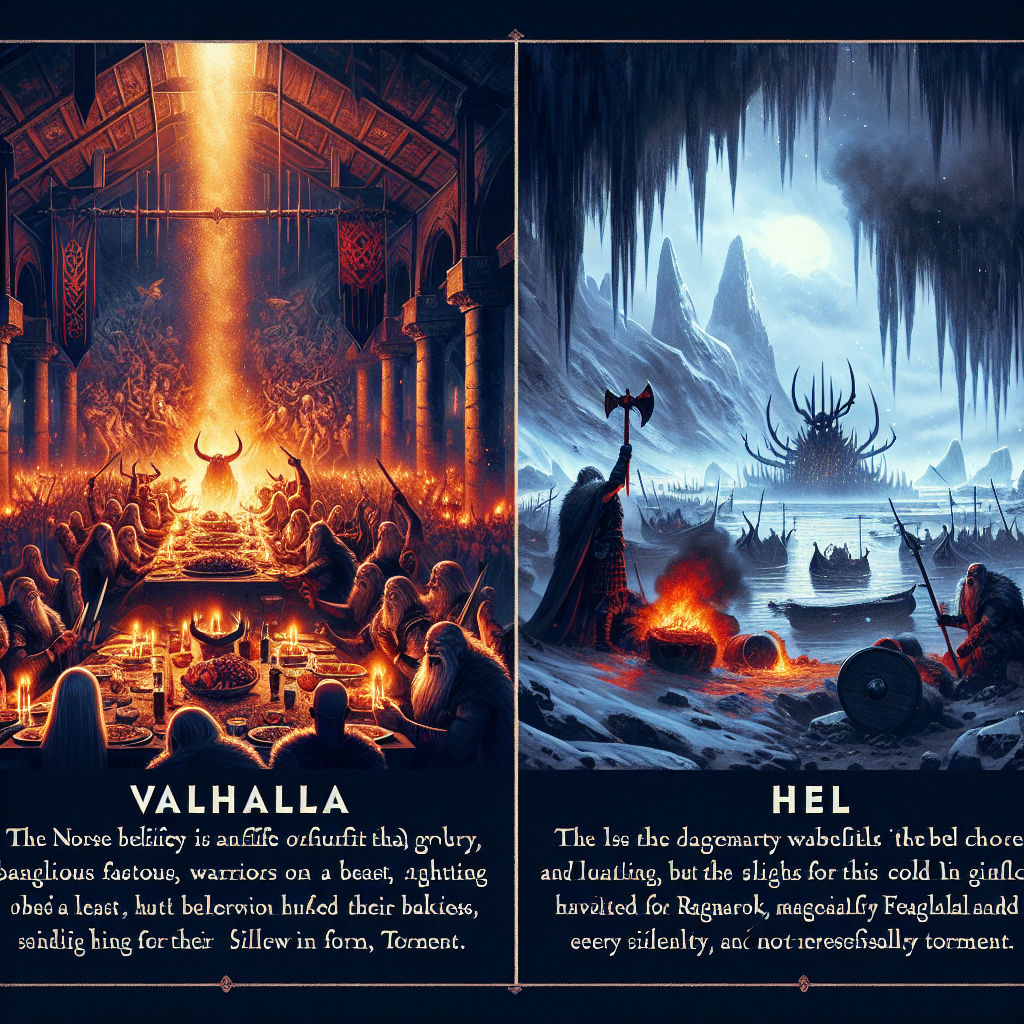
Norse mythology, rich and complex, offers profound insight into the beliefs and rituals of the Viking Age and the broader Norse culture. A critical aspect of this mythological tapestry is the concept of the afterlife, which is primarily represented by two contrasting realms: Valhalla and Hel. Understanding these two realms provides a significant window into how the Norse people viewed life, death, honor, and the cosmos.
Valhalla: The Hall of the Slain
Valhalla, or Valhöll in Old Norse, translates to “Hall of the Slain.” It is one of the most iconic representations of the afterlife in Norse mythology. The hall is ruled by Odin, the Allfather and supreme god, who chooses those who are worthy to enter. Valhalla is depicted as a grand, majestic hall with vast golden roofs and immense feasting tables where the chosen warriors, known as the Einherjar, gather.
Selection into Valhalla
The process of being selected for Valhalla is not random. It is believed that Odin sends his Valkyries, fierce battle maidens, to choose the bravest warriors slain in battle. Those warriors are taken to Valhalla, where they are honored for their courage and prowess. The selection process emphasizes the Norse value placed on bravery, honor, and battle. Life in Valhalla is depicted as an eternal feast; the Einherjar dine on roasted boar and drink mead, preparing for Ragnarok, the ultimate battle that will determine the fate of the gods and the world.
Life in Valhalla
In Valhalla, life is a continuous celebration. Each day, the warriors engage in combat, honing their battle skills, only to be resurrected in the evening to feast once more. This cyclical nature of existence reflects the Norse belief in the importance of warfare and heroism; dying in battle is an honorable and preferred way to leave the mortal realm. Valhalla symbolizes the ideal of a warrior’s afterlife, embodying values such as bravery, camaraderie, and the glory of heroism.
Valhalla’s Role in Norse Cosmology
Valhalla also serves a prophetic purpose in Norse cosmology. It is here that the Einherjar prepare for Ragnarok, the final battle when the gods, giants, and various mythological beings will wage war, leading to the death of many deities. The warriors’ training and preparation in Valhalla underscore the belief that life on earth is but a precursor to a more significant struggle that transcends the mortal realm.
Hel: The Realm of the Dead
In stark contrast to Valhalla is Hel, the domain of the dead who did not die in battle. Hel is ruled by the eponymous goddess Hel, who is depicted as a being of dual nature—half alive and half dead—symbolizing the balance between life and death. The realm itself can be seen as a place of darkness and cold, without the revelry and honor of Valhalla.
Entrance into Hel
While entry into Valhalla is reserved for warriors, Hel is open to all who die a “lesser” death, such as through illness, old age, or accidental death. This inclusivity reflects a more complex understanding of fate: not all can achieve glory in battle, yet all must face death. The journey to Hel is marked by the river Gjöll, overseen by the giantess Garmr, which separates the land of the living from the realm of the dead.
Life in Hel
Hel is not a place of punishment, as often mischaracterized in later interpretations of mythology. Rather, it is a realm where souls exist in a state of peace, devoid of suffering yet lacking the vibrancy of the warrior’s afterlife. Here, the dead maintain a connection to the world they left behind but miss out on the heroic exploits celebrated in Valhalla. Rather than an eternal torment, Hel can be viewed as a realm of rest—a necessary counterpart to the fervor of Valhalla.
The Role of Hel in Norse Cosmology
Hel is significant in Norse cosmology for illustrating the belief in inevitability and destiny. Unlike Valhalla’s idealism of an afterlife for the heroic, Hel embodies acceptance of mortality. It acknowledges that not every end can be triumphant and highlights the belief that every person, regardless of how they lived, has a place in the cycle of existence.
Symbolic Interpretations
The dichotomy between Valhalla and Hel serves various symbolic purposes. Valhalla represents the glory of a warrior’s death and the aspirational values of the Norse people, such as bravery and honor. In contrast, Hel symbolizes the inevitability of death and the acceptance of fate, reflecting a more comprehensive worldview that balances longing and acceptance.
This dualism reflects a broader philosophical understanding within Norse culture, where honor and valor coexist with the recognition of mortality. It emphasizes the rich tapestry of Norse beliefs where life’s deeds dictate the nature of one’s afterlife.
Conclusion
The contrasting realms of Valhalla and Hel provide profound insights into Norse beliefs regarding the afterlife. While Valhalla stands as a shrine to the heroism celebrated in life, Hel serves as a reminder of the universality of death and the inescapable fate that awaits all. Together, they embody the complexities of human existence, encapsulating the values, fears, and aspirations of the Norse people.
Understanding these realms allows us to appreciate how the Vikings, faced with the unpredictability of life and the finality of death, sought the promise of meaning in both valiant exploits and quiet acceptance. Their belief in Valhalla and Hel illustrates not just where one might end up after death, but the values and virtues that shaped how they lived—fiercely, openly, and fully aware of their human condition.


