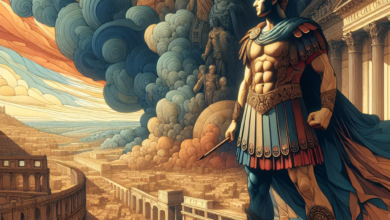

Celebrating the Gods: The Role of Music in Roman Rituals
The Roman Republic and later the Empire were times marked by a rich tapestry of cultural expression, none more vibrant than the ceremonial celebrations dedicated to the pantheon of gods revered by the Romans. Music, in particular, played an essential role in these rituals, intertwining with social, religious, and political dimensions, offering a social glue that bound the community together in reverence and festivity.
The Divine Connection: Music as a Medium
In Roman religious practices, music was not merely entertainment; it served as a vital instrument of communication with the divine. The Romans believed that the gods could be invoked through appropriate rituals, and music was a central feature in these sacred events. Various types of music were employed, ranging from flutes and lyres to larger ensembles featuring brass instruments and percussion.
Music was commonly performed during religious festivals such as Ludi Romani (Roman Games), Ludi Plebeii (Plebeian Games), and the numerous calendar festivals dedicated to specific deities. The choice of instruments and musical styles would often vary according to the god being honored. For example, the flutes might dominate during the worship of Apollo, the god of music and arts, while martial tunes would echo in ceremonies dedicated to Mars, the god of war.
Ritualistic Functions
The Roman understanding of music in rituals extended beyond mere entertainment. Music was believed to possess the power to enhance the spiritual atmosphere of ceremonial activities. There were specific occasions during which music was mandated by religious law, emphasizing its integral role in the Roman state religion.
For instance, during sacrifices, the striking of cymbals and the blowing of horns would not only mark the occasion but also serve to dispel malevolent spirits. The sacred hymns sung in praise of the deities would rise into the air, their melodies intertwined with prayers, effectively creating a bridge between the human and the divine.
The Liturgy of the Sacrifices serves as an excellent example of music’s ritualistic function. During a ritual sacrifice, trained priests, known as Flamines, would chant hymns that invoked the presence of the god being honored. These hymns were composed in fixed meters that emphasized the structure of the event, creating an almost hypnotic rhythm that resonated with both the participants and the spectators.
Social and Political Dimensions
Music in Roman rituals added a social dimension to worship. It was a collective act that fostered unity among participants, drawing individuals from various strata of society into a shared experience. Festivals often attracted thousands of participants, and the communal singing and dancing helped reinforce social bonds, reaffirm class structures, and cultivate civic pride.
Moreover, the political significance of music in religious observances cannot be overstated. Roman political leaders often used religious festivals to secure their power and legitimacy. By honoring the gods through music, they aligned themselves with divine favor. In turn, their successful celebrations could translate into greater political capital.
Music’s role was also evident in state-sponsored festivals like the Ludi Saeculares, or Secular Games, which were intended to invoke blessings for peace and prosperity. During these elaborate events, music served to enhance the grandeur of the occasion, reinforcing the state’s dedication to the gods and its commitment to the welfare of its citizenry.
Evolution of Musical Styles
The musical practices in Roman rituals evolved over time, influenced by cultural exchanges with other civilizations, especially the Greeks. As the Romans expanded their territory, they adopted and adapted Greek musical instruments and styles, refining them for their own rituals. The eclecticism in Roman musical practices is notable, showcasing a blend of indigenous and Hellenistic influences.
For example, the tuba, a brass instrument resembling the modern trumpet, played an increasingly vital role in military and state rituals, bringing a more martial sound to religious observances. Its deep, resonating tones evoked feelings of reverence and awe, suitable for both religious ceremonies and military parades. The harmonization of diverse musical forms symbolized the Romans’ ability to integrate various cultures while retaining a distinct identity.
The Decline of Musical Rituals
As Christianity began to rise in prominence in the later centuries of the Roman Empire, the role of music in traditional rituals began to decline. The early Christians viewed many pagan practices with suspicion, associating them with idolatry. Consequently, music in religious settings transformed, as hymns took the place of traditional Roman chants.
Despite this gradual decline, the legacy of music in Roman rituals is significant. With the synthesis of Christian liturgy and ancient musical practices, the foundations for Western musical traditions were laid, influencing church music that would flourish in the Middle Ages and beyond.
Conclusion
The role of music in Roman rituals stands as a testament to the intricate relationship between the sacred and the social. It served not only as an expression of reverence towards the gods but also as a means of reinforcing community ties and political authority. The evolution of musical styles within these rituals reflects the broader cultural exchanges of the time, highlighting the Romans’ adaptability and innovation.
Though the sounds of Roman ritual music have long faded, its impact endures in modern practices, reminding us of the timeless human desire to connect with the divine through the universal language of music. In celebrating the gods, the Romans crafted a legacy that continues to resonate, echoing through the corridors of history, enriching our understanding of identity, culture, and spirituality.