Yggdrasil: The Cosmic Tree and Its Significance

In the mythological tapestry of Norse cosmology, few symbols stand as prominently as Yggdrasil, the Cosmic Tree. Often depicted as a colossal ash tree, Yggdrasil serves as the axis mundi, connecting different realms and acting as a crucial part of the Norse understanding of the universe. Its roots dig deep into the earth, its trunk stretches toward the heavens, and its branches reach out to various realms, making it a profoundly significant element in Norse mythology and culture.
Origins and Description
The term “Yggdrasil” itself is derived from Old Norse, with “Yggr” often interpreted as a name for Odin, the chief god in Norse mythology. Thus, Yggdrasil can be understood as “Odin’s horse” or “Odin’s tree.” Descriptions of Yggdrasil can be found in several medieval texts, notably the Prose Edda and the Poetic Edda, which are among the most valuable sources of Norse mythology.
Yggdrasil is commonly described as an immense ash tree that stands at the center of the cosmos. Its vast branches reach out to every corner of the universe, creating a sense of interconnectedness among various realms. Influential beings inhabit Yggdrasil; for instance, it is home to a powerful eagle perched at its highest branches and a serpent, Níðhöggr, that gnaws at its roots. The tree’s roots extend into three significant wells: Hvergelmir, which nourishes the roots; Mímir’s Well, which grants wisdom; and the Well of Urd, associated with fate and destiny.
The Realms Connected by Yggdrasil
In Norse mythology, Yggdrasil connects nine distinct realms, each with its unique characteristics and inhabitants.
-
Asgard: The realm of the Aesir gods, including Odin and Thor, Asgard is often depicted as a majestic city with grand halls, where gods hold their councils and enjoy feasts.
-
Midgard: This is the realm of humans, situated in the middle of the cosmos. Midgard is connected to Asgard via the Bifröst, a rainbow bridge that serves as a passageway for the gods to interact with humanity.
-
Vanaheim: Home to the Vanir, gods associated with fertility and prosperity, Vanaheim represents the natural world and its cycles.
-
Alfheim: This light realm is inhabited by the Ljósálfar, or light elves, known for their beauty and artistry.
-
Svartálfheim: Conversely, Svartálfheim is home to the dwarves, skilled craftsmen who create some of the most powerful artifacts in Norse mythology.
-
Niflheim: A cold, misty realm that includes the Well of Hvergelmir and is often associated with ice and dark waters.
-
Muspelheim: The realm of fire, ruled by the fire giant Surtr, contrasting sharply with the icy expanse of Niflheim.
-
Helheim: The land of the dead, presided over by Hel, the goddess of death. This realm is not necessarily a place of punishment but rather a final resting ground for souls who do not die heroically in battle.
-
Jotunheim: The realm of the giants (jotnar), who often oppose the gods and symbolize chaos and nature’s wild aspects.
The Interconnection of Realms
Yggdrasil serves as a physical manifestation of the interconnectedness of these realms. The tree is not merely a backdrop but an active participant in the myths surrounding creation, life, death, and rebirth. It embodies the cyclical nature of existence in Norse cosmology.
The roots reaching into Niflheim signify the descent into the unknown, representing death and the mysteries that await beyond life. The branches stretching toward Asgard illustrate aspirations, knowledge, and divine influence. This duality of ascent and descent is central to understanding the Norse perspective on life’s journey.
Symbolism and Significance
Yggdrasil carries immense symbolic weight in Norse mythology, representing several core themes:
-
Interconnectedness: The concept that all aspects of existence are linked through Yggdrasil suggests a holistic view of life. The well-being of one realm affects the others; thus, actions reverberate across the entire cosmos.
-
Life, Death, and Rebirth: Yggdrasil personifies the cycle of life, capturing the idea that death is not an end but a transformative experience leading to renewal. This theme is prevalent in many cultures and highlights the importance of understanding and accepting mortality.
-
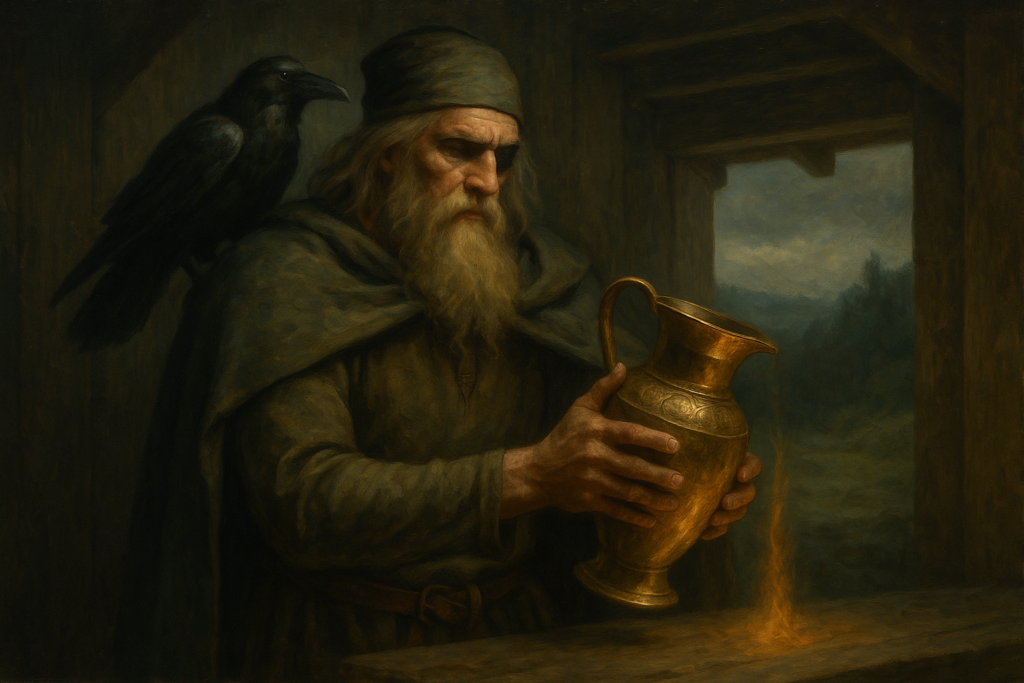
Wisdom and Knowledge: The wells residing at Yggdrasil’s roots emphasize the pursuit of wisdom. Mímir’s Well holds immense knowledge, taken from the sacrifices made by Odin, who hung from the tree for nine nights to gain insight into the mysteries of existence. This act of self-sacrifice underscores the idea that knowledge often comes at a great cost.
-
Fate and Destiny: The Well of Urd is critical to understanding fate in Norse mythology, where the Norns, female figures who govern destiny, weave the fates of both gods and humans. The presence of Yggdrasil underscores the interconnected web of fate that binds all beings.
Modern Interpretations
In contemporary culture, Yggdrasil continues to resonate, inspiring literature, art, and even video games. Many modern adaptations of Norse mythology reference Yggdrasil as a symbol of unity, life cycles, and the cosmic balance inherent in existence. This enduring appeal can be attributed to its deep philosophical implications, along with its striking imagery.
As a symbol in various forms of media—from fantasy novels to film franchises—it serves as a reminder of our shared human experience, inviting reflection on the interconnectedness of our lives and the roles we play in the world.
Conclusion
Yggdrasil, the Cosmic Tree, stands as a powerful emblem of the Norse worldview, encapsulating the themes of interconnectedness, life cycles, wisdom, and fate. Its presence in mythology is a testament to the complexity of the Norse understanding of the universe and its intricate interplay between the realms. As humanity continues to grapple with existential questions and seek meaning in a complex world, Yggdrasil remains a seminal symbol guiding the narrative of life, death, and rebirth. Its legacy endures, serving as a bridge between the ancient past and contemporary interpretations of existence.