The Cultural Exchange between Norse and Celtic Mythology
The Cultural Exchange between Norse and Celtic Mythology
The interplay between Norse and Celtic mythologies is a fascinating tapestry woven through centuries of migration, trade, and cultural exchange across Northern Europe. Both mythological traditions arose in regions that, while geographically distinct, shared common elements in their social structures, spiritual beliefs, and narratives. The Norse traditions originated primarily in Scandinavia, while Celtic myths spread across Ireland, Scotland, Wales, and parts of France and the Iberian Peninsula. Understanding the cultural exchange between these two rich mythologies provides insight into the shared human experience that transcends geographical and chronological boundaries.
Origins and Context
The Norse pantheon is often depicted as a structure of gods, goddesses, and supernatural beings, primarily influenced by the Viking Age (circa 793–1066 CE). The Celtic mythological landscape, in contrast, encompasses a broader range of folklore, including tales of legendary heroes, mythical creatures, and an inherent connection to nature. The Celts, with their numerous tribes spread over different territories, had diverse manifestations of their myths, each possessing unique local flavors while still maintaining their overarching themes.
In historical context, the Celts and Norse were not isolated from each other, particularly as Viking incursions into Celtic lands, specifically in Ireland and Scotland, introduced a mingling of cultures. This interaction spurred connections between the two mythological frameworks, leading to shared motifs, deities, and narrative structures.
Shared Themes and Motifs
One of the most striking aspects of Norse and Celtic mythology is the recurrent themes of heroism, the afterlife, and the interconnectedness of nature and humanity. For instance, the concept of a warrior’s afterlife appears prominently in both traditions. The Valkyries of Norse mythology, who guide slain warriors to Valhalla, find a parallel in the Celtic warrior spirit’s journey, often led by the goddess Brigid or other chthonic entities.
Both mythologies posit a deep reverence for nature, personified in various ways. The Norse gods, such as Freyr, embody agricultural abundance, while Celtic deities, like Cernunnos, reflect the sacredness of the natural world. This mutual acknowledgment of nature’s power and significance helped foster a degree of respect and assimilation between cultures.
Deities and Figures
Encounters between Norse and Celtic figures often resulted in syncretism, where gods or motifs began to blend. For example, Danu, a principal deity in Celtic mythology thought to be the mother of the Tuatha Dé Danann, finds echoes in the Norse goddess Njord, the god of the sea who has connections to fertility and wealth.
Moreover, the heroic figure of the warrior transcends both mythologies. In Norse tales, heroes like Sigurd (or Siegfried) and Beowulf exhibit traits of bravery and honor akin to those displayed by Celtic heroes like Cú Chulainn and Fionn mac Cumhail. This warrior archetype not only dominates the narrative landscape of both cultures but also accentuates the traits valued by societies under existential threat, namely loyalty, bravery, and honor.
Influence of Oral Traditions
The transmission of these mythologies was predominantly oral, which laid the groundwork for mutual influence. Storytellers, bards, and skalds—Celtic and Norse alike—served as cultural conduits, carrying tales across tribal boundaries. As tribes mingled through trade, marriage, and military encounters, they exchanged not only goods and land but also stories and religious beliefs.
One notable example is the tale of the “Táin Bó Cúailnge” from Irish mythology, where Cú Chulainn, a fierce warrior, embodies the ideals of martial skill and honors similar to those expressed in the heroic sagas of the Norse such as the “Saga of the Volsungs.” The merging of narratives paved the way for cross-cultural storytelling techniques, where allegory and symbolism were modified and adapted between the two traditions.
Artistic Representations
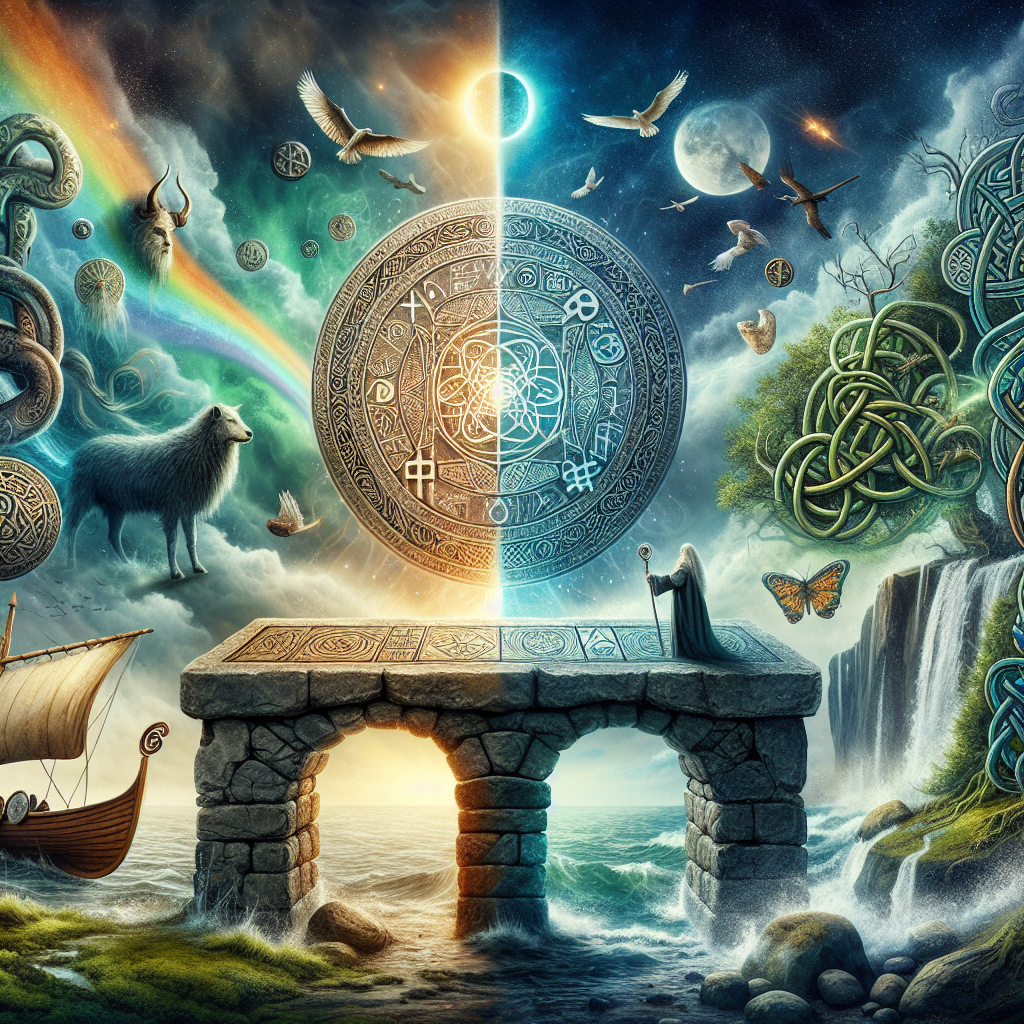
The artistic expressions of both Norse and Celtic cultures also reflect their mythological worlds and the cultural exchange that occurred between them. Viking art produced intricate knotwork and animal motifs reminiscent of Celtic designs, while Celtic artifacts reflect an awareness of Norse iconography. Items such as brooches, weapons, and various forms of decorative art display influences that illustrate the melding of cultural identities.
Runestones and metalwork from the Viking Age often incorporate both Norse runes and Celtic styles, signifying the cultural syncretism at play. The aesthetic blending reflects the transfer of ideas and themes—an embellishment of Norse sagas with Celtic artistic forms, as well as the adaptation of Celtic tales within a Norse context.
Modern Interpretations and Legacy
The legacy of Norse and Celtic mythologies continues to resonate today, influencing literature, film, and popular culture. Works like J.R.R. Tolkien’s “The Lord of the Rings” and Neil Gaiman’s “American Gods” draw significantly from these mythological frameworks. The hybridization of Norse and Celtic motifs delivers enchanting narratives that captivate contemporary audiences while paying homage to their historical underpinnings.
In modern neo-pagan and spiritual movements, the revival of interest in both Norse and Celtic practices has led to further cultural exchanges as practitioners merge various beliefs to create personalized spiritual systems. The ongoing fascination with these mythologies underscores a shared human instinct to explore questions of existence, morality, and the divine.
Conclusion
The cultural exchange between Norse and Celtic mythology illuminates the fundamental bonds of human experience—our relationships with nature, our ideals of heroism, and our desire to understand the cosmos. In recognizing the similarities and cross-pollination of stories, characters, and artistic expressions, we gain insight into the rich tapestry of human culture. This historical journey continues to inspire and inform our modern understanding of not only the past but the enduring narratives that shape our identities today. Whether through ancient texts, contemporary literature, or spiritual practices, the echoes of Norse and Celtic mythologies persist, a testament to the timeless quest for meaning that transcends ages and cultures.