The Art of Mythology: Sculptures and Pottery in Ancient Greece
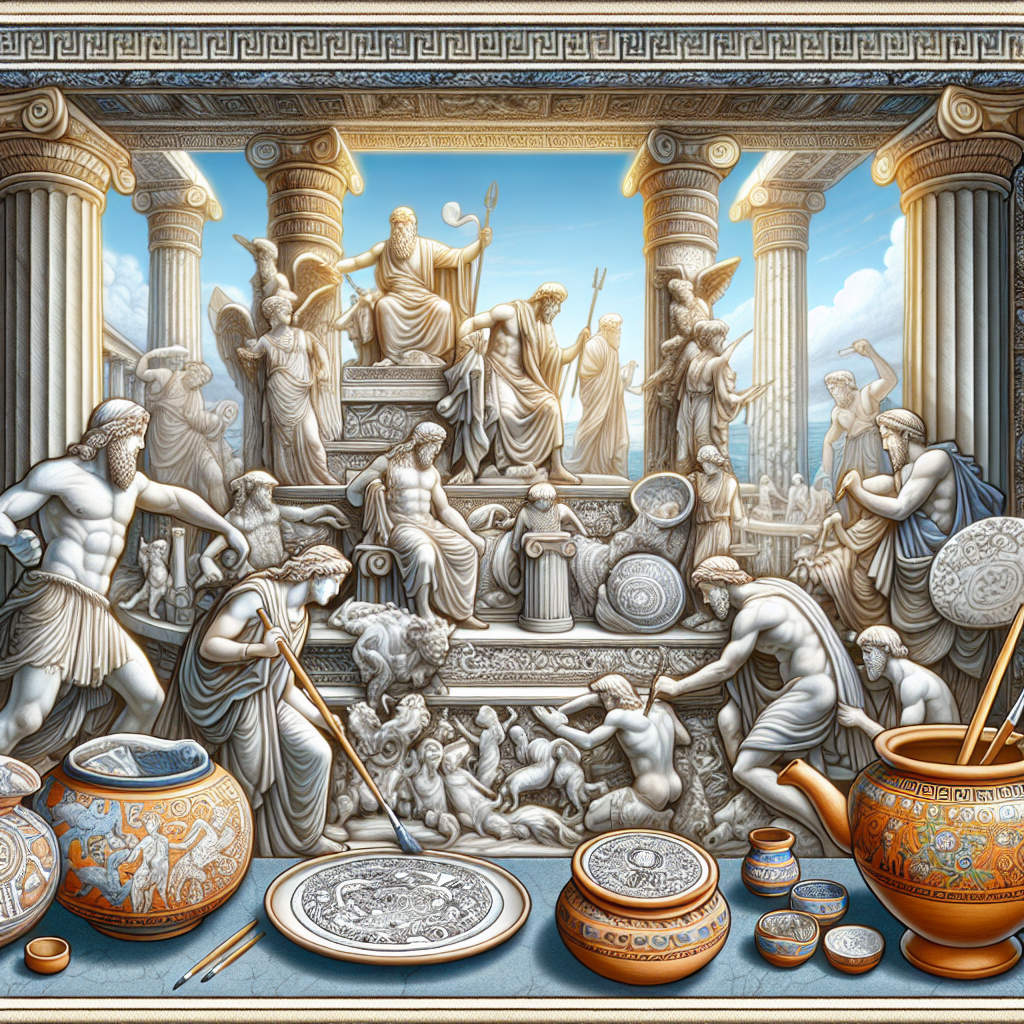
Ancient Greece is often celebrated not only for its philosophical advancements and political innovations but also for its incredible contributions to the arts, particularly in sculpture and pottery. These mediums were not merely forms of artistic expression; they served as vital cultural artifacts that conveyed the rich tapestry of Greek mythology, religion, and daily life. This article explores how Greek sculptures and pottery encapsulated mythical narratives and influenced the artistic conventions of subsequent civilizations.
The Role of Mythology in Ancient Greece
Mythology was integral to ancient Greek culture. The stories of gods, goddesses, heroes, and mythical creatures permeated every aspect of their lives, from religion to social norms. The pantheon of deities—including Zeus, Hera, Athena, Apollo, and many others—was worshipped through religious rituals, festivals, and artworks. This cultural milieu set the stage for an exceptional flowering of artistic expression, particularly in sculpture and pottery, which often depicted these stories.
Sculptures: Carving Myth into Stone
Sculpture in ancient Greece underwent significant evolution, reflecting both technical advancements and changing cultural values. The early phases of Greek sculpture, known as the Geometric Period (circa 900-700 BCE), focused primarily on these simplistic forms, with stylized figures and abstract motifs. However, as the Archaic Period approached (circa 700-480 BCE), artists began to include more realistic representations of the human body and, significantly, mythological narratives.
Archaic Period: The Kouros and Kore
One of the most well-known forms from the Archaic period is the kouros, a statue of a standing male youth, and the kore, a standing female figure. Although these figures were not directly representative of mythological characters, they carried a symbolic importance, representing ideals of beauty and heroism that were also central to Greek myths. The kouros figures often embodied the virtues associated with Apollo, the god of light and knowledge, while the kore figures were sometimes tied to the goddess Athena.
The Classical Period: Height of Realism
The Classical Period (480-323 BCE) marked the height of Greek sculpture, characterized by increased realism and intricate details. Artists like Phidias and Praxiteles became renowned for their ability to breathe life into marble and bronze. The Parthenon sculptures, also known as the Elgin Marbles, depict a range of mythological scenes, including the birth of Athena and various battles between gods and giants. These monumental works served not only as decorations but also as visceral narratives that connected the viewers with their myths and history.
Hellenistic Innovations
Emerging from the Classical Period, the Hellenistic era (323-31 BCE) pushed the boundaries of artistic expression even further. Artists began to experiment with emotion and dynamic movement, incorporating scenes that depicted struggle, agony, and triumph. A famous example is the statue “Laocoön and His Sons,” which vividly illustrates the legend of Laocoön, a Trojan priest who warned against bringing the wooden horse into Troy. The emotional depth and complexity of the figures reflect the tumultuous history of Greek city-states during this period.
Pottery: The Canvas of Myth
While sculptures are often regarded as the pinnacle of Greek artistic achievement, pottery was equally significant in conveying mythological themes. The sheer volume of pottery created—ranging from everyday utilitarian vessels to ornate ceremonial wares—meant that these artworks played a crucial role in disseminating cultures and stories among the populace.
The Geometric and Orientalizing Styles
Early Greek pottery, such as the Geometric style, featured simple patterns and shapes, but by the 8th century BCE, potters began to adopt motifs from the Near East, leading to the Orientalizing style. This period saw the emergence of human figures and mythological scenes. Bowls and amphorae would frequently illustrate tales from Homer’s epics, such as scenes from the “Iliad” and the “Odyssey.”
The Black-Figure and Red-Figure Techniques
The introduction of black-figure pottery in the late 7th century BCE marked a significant technical innovation. Artists would paint figures and scenes using a slip that turned black during firing, which allowed for intricate detailing. This style became famous for its mythological representations, including depictions of Theseus battling the Minotaur or Perseus rescuing Andromeda.
The red-figure technique emerged later, allowing for greater freedom of expression and detail in depicting the human form. Artists could create more dynamic poses and intricate narratives, making it easier to portray complex myths. A famous example of red-figure pottery is the “Panathenaic amphora,” awarded as a prize in the Panathenaic Games, which often featured mythological themes.
The Social Context of Pottery
Pottery in ancient Greece was not merely decorative; it served functional purposes as well. Vessels were used in everyday life, from dining to religious rituals. Thus, the imagery on these pots often held social significance, depicting the importance of mythology in communal experiences. For instance, kraters used for mixing wine often depicted symposium scenes, where stories from mythology would impart morals and cultural ideals.
Legacy and Influence
The lasting impact of Greek sculpture and pottery extends far beyond the borders of ancient Greece. The Renaissance artists, inspired by classical forms, revived the aesthetics and themes of Graeco-Roman art, bringing back mythological subjects as focal points in their works. Furthermore, these ancient objects continue to be studied by scholars and art historians, offering crucial insights into the cultural and social fabric of ancient Greek civilization.
Conclusion
Sculptures and pottery from ancient Greece remain unparalleled in their ability to capture the complexities of mythology and cultural identity. These artistic forms not only reflect the skill of their creators but also serve as cultural touchstones, weaving together narratives that have endured across millennia. As we explore these artifacts today, they remind us of the unifying power of art to convey humanity’s shared stories, aspirations, and ideals. In this way, the art of mythology, embodied in the sculptures and pottery of ancient Greece, continues to resonate deeply within our collective consciousness.
Recommended reading
These are affiliate links. If you buy through them, we may earn a commission at no extra cost to you.
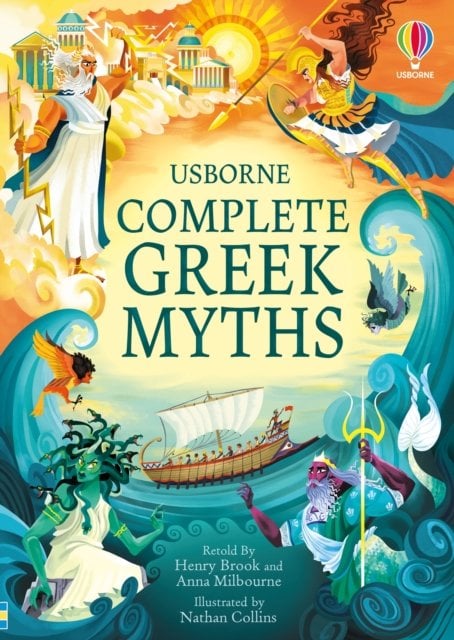
Complete Greek Myths: An Illustrated Book of Greek Myths
Featuring detailed retellings, beautiful character illustrations, and cultural background, this comprehensive volume brings the best-known and obscure Greek myths to life for readers of all ages. Complete with maps, a glossary, and a QR code for pronunciation guides and extra resources, it is an essential addition to any family bookshelf.
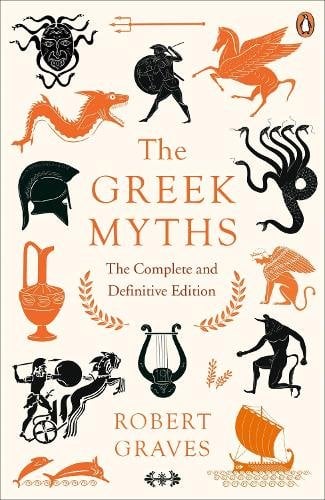
The Greek Myths: The Complete and Definitive Edition
Robert Graves’s definitive edition weaves the classic Greek myths, from the Labours of Hercules to the Trojan War, into one sweeping, authoritative narrative. Perfect for both first-time readers and classicists, this comprehensive volume combines engaging storytelling with detailed scholarly commentary and a complete index of names.
The Odyssey
Homer’s timeless epic The Odyssey follows the hero Odysseus on a perilous decade-long journey home from Troy, facing mythical monsters and divine wrath. Meanwhile, his wife Penelope and son Telemachus defend their kingdom against ruthless suitors in this classic tale of loyalty and endurance.