The Wisdom of Thoth: Myths Surrounding the God of Writing
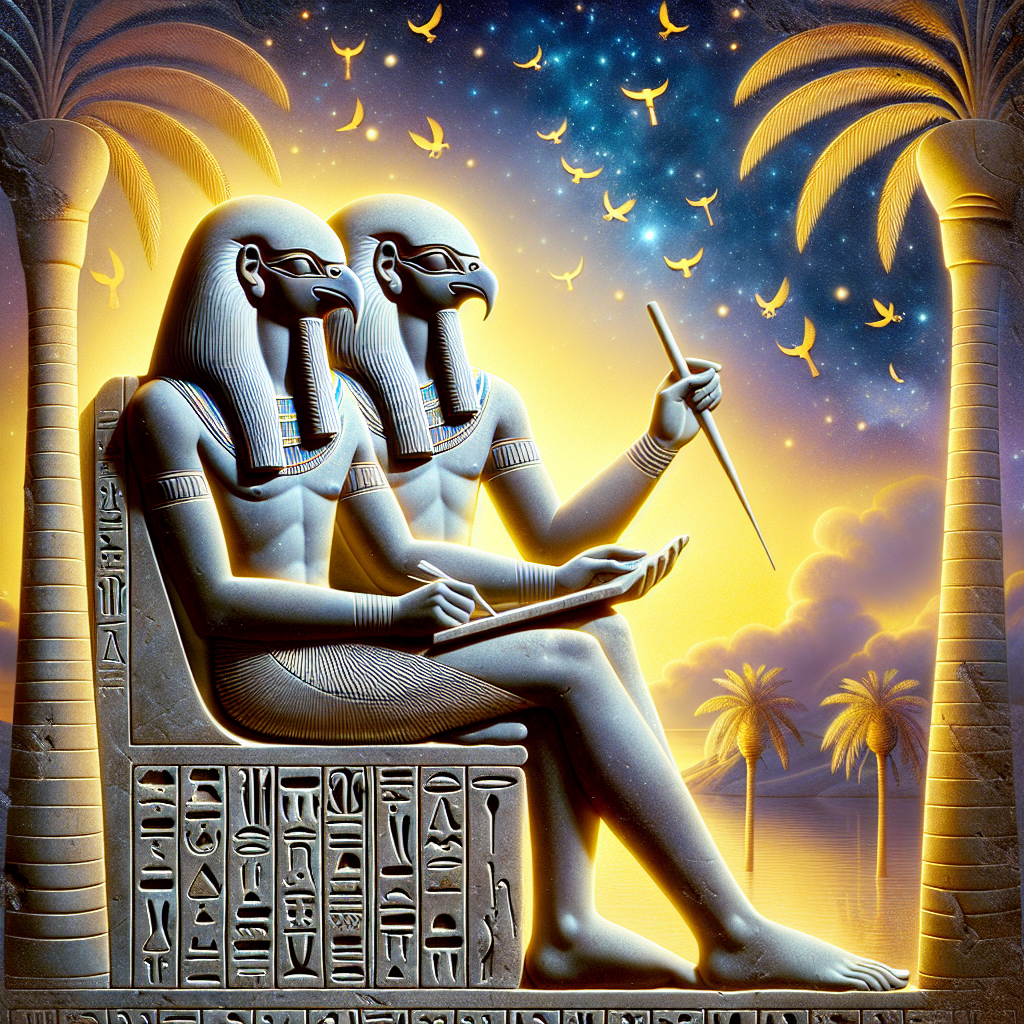
In the pantheon of ancient Egyptian deities, few figures capture the imagination as vividly as Thoth, the god of writing, knowledge, and wisdom. Often depicted as a man with the head of an ibis or a baboon, Thoth embodies a unique blend of intellect and mysticism. His attributes extend beyond mere writing; he is a deity of science, literature, and magic, as well as the messenger of the gods. This article delves into the myths and significance surrounding Thoth, illuminating his role in Egyptian mythology and his lasting legacy throughout history.
Origins and Attributes
Thoth’s origins are shrouded in the mists of time, with varying accounts of his creation. Some myths attribute his birth to the primordial waters of Nun, while others suggest he emerged from the lips of Ra, the sun god, during the creation of the world. In both narratives, Thoth is intrinsically connected to knowledge and the divine order.
As the god of writing, Thoth is credited with inventing hieroglyphics, the writing system that formed the backbone of Egyptian culture. He is often depicted holding a writing instrument and a palette, symbolizing his role as a scribe and a scholar. But Thoth’s significance transcends the written word; he is also seen as the god of time, overseeing the moon and its cycles. This lunar association further emphasizes his role in guiding humans through the darkness of ignorance and chaos.
The Role of Thoth in Egyptian Mythology
Thoth has a prominent place in many Egyptian myths, particularly those surrounding the afterlife. His most significant role is as the scribe of the dead, responsible for recording the deeds of souls during the weighing of the heart ceremony, which determines whether an individual is worthy of entering the afterlife. This ceremony takes place in the Hall of Ma’at, where Osiris, the god of the afterlife, presides over the judgment of souls. Thoth’s involvement underscores his function as a custodian of truth, justice, and divine order.
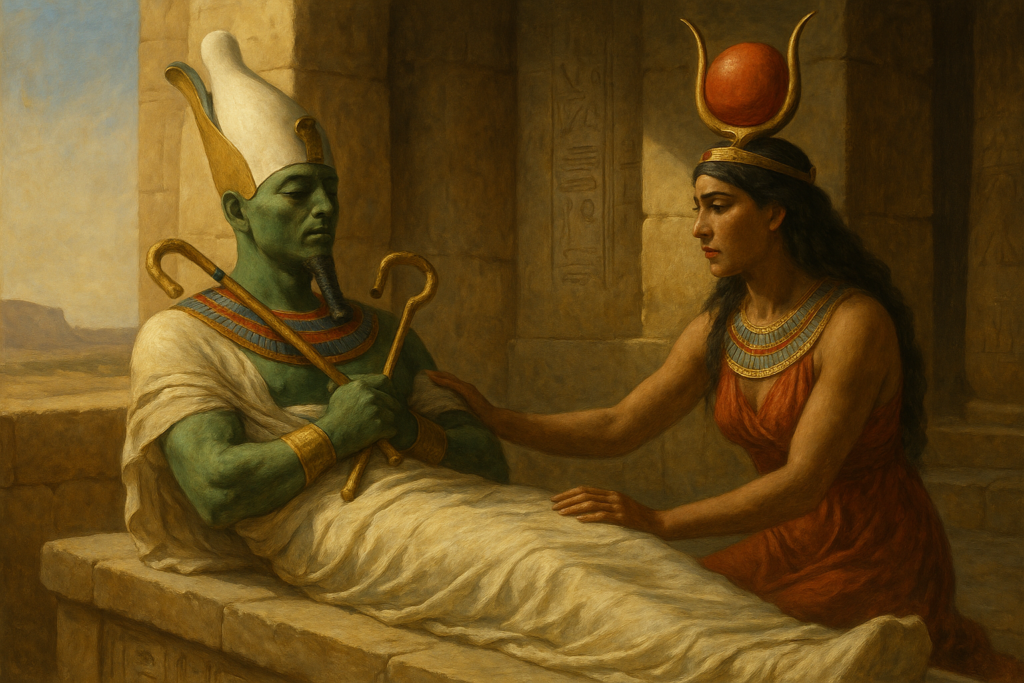
In the myth of Osiris, Thoth plays a critical role in reviving Osiris after he is murdered by his brother Set. Through his wisdom, Thoth provides Isis, the wife of Osiris, with the knowledge necessary to resurrect her husband. This portrayal emphasizes Thoth’s role not only as a god of knowledge but also as a mediator who intercedes in moments of chaos.
The Contest of Horus and Set
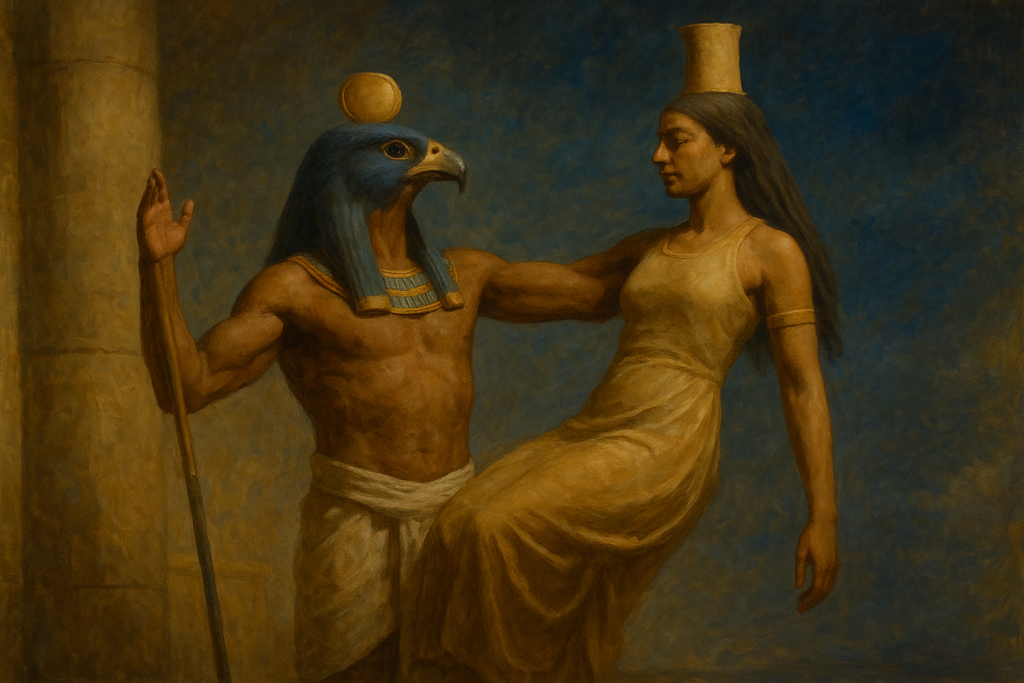
Thoth’s wisdom is also highlighted in the famous myth of the contest between Horus and Set for the throne of Egypt. The conflict between these two deities is a classic tale of order (Horus) versus chaos (Set). After numerous battles, the gods decide to settle the matter with a grand tribunal in which Thoth serves as the presiding judge. His fairness and dedication to truth are evident as he carefully listens to both sides before making his judgment. Ultimately, Thoth’s decision reinforces the cosmic order, supporting the rightful ruler and ensuring the balance of the universe.
Symbolism and Representations
Thoth’s iconography is rich and varied, featuring numerous symbols associated with his attributes. The ibis, often symbolizing wisdom and eloquence, is perhaps the most recognized representation of Thoth. The baboon, another of his animal forms, symbolizes the moon and the rhythms of time. Additionally, the crescent moon is frequently associated with Thoth, denoting his control over time and cycles.
Various texts further illustrate his multifaceted nature. The “Emerald Tablet,” attributed to Hermes Trismegistus (a syncretic combining of Thoth and Hermes, the Greek god), postulates that Thoth was an ancient teacher who shared universal truths about alchemy and the cosmos. This text underscores his significance not only in Egyptian mythology but also in later philosophical and mystical traditions.
Legacy and Influence
Thoth’s influence extends well beyond ancient Egypt’s geographical and temporal boundaries. As the embodiment of wisdom and writing, his legacy can be seen in the subsequent cultures that took inspiration from Egyptian mythology. The Greeks identified him with Hermes, leading to the fusion of their traits and myths. The Renaissance era, particularly among alchemists and philosophers, revered Thoth as a figure of ultimate wisdom, associating him with enlightenment and the pursuit of truth.
Thoth’s representation in modern times is often symbolic of the quest for knowledge, understanding, and creativity. As society becomes increasingly data-driven and digital, the essence of Thoth remains relevant. His narrative serves as a reminder of the power and responsibility of knowledge and how it shapes both individual lives and the broader world.
Conclusion
The myths surrounding Thoth, the god of writing and wisdom, weave a complex tapestry that reflects the values and beliefs of ancient Egyptian civilization. As a deity central to the concepts of knowledge, justice, and cosmic order, Thoth holds enduring significance. His embodiment of intellect and creativity transcends the boundaries of time, appealing to those who seek truth and understanding in an often chaotic world.
As we navigate the complexities of modern life, the wisdom of Thoth encourages us to embrace knowledge, to record our experiences, and to confront the challenges of existence with fairness and enlightenment. In doing so, we keep alive the legacy of a deity whose influence and teachings resonate even in today’s era, reminding us that the pursuit of wisdom is a lifelong journey—a journey that, much like Thoth himself, is marked by both illumination and mystery.