The Story of Hathor: Love, Joy, and Motherhood
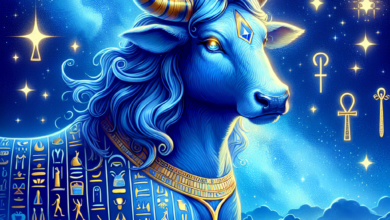
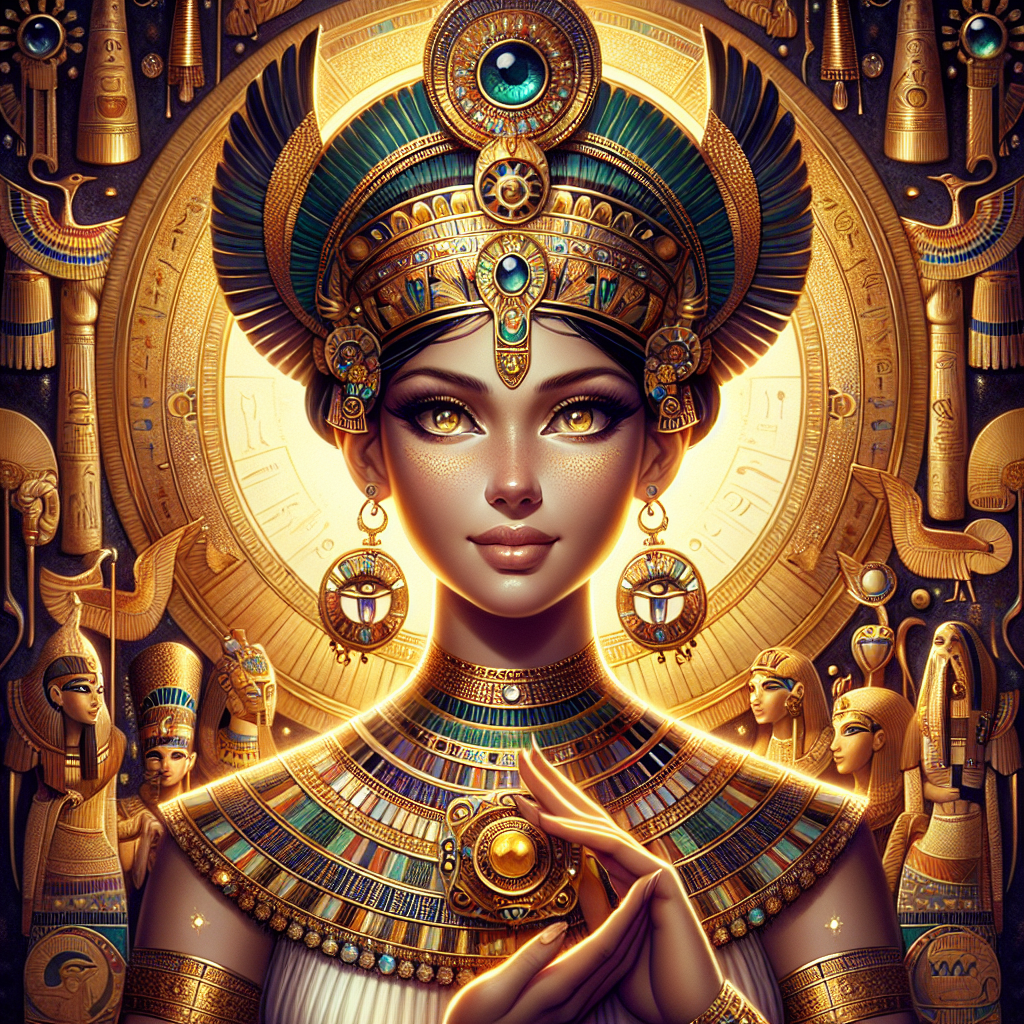
Hathor, one of the most celebrated deities in ancient Egyptian mythology, embodies the profound themes of love, joy, and motherhood. Frequently depicted as a cow, a woman with cow’s ears, or a woman adorned with a headdress featuring cow horns and a sun disk, Hathor was not merely a goddess; she was a complex symbol of the multifaceted nature of love and the nurturing qualities that define motherhood. Her influence permeated various aspects of life, from marital bliss to music, dance, and fertility.
Origins and Mythical Significance
Hathor’s story begins in the rich tapestry of Egyptian mythology, where she is considered the daughter of Ra, the sun god. In some accounts, she is said to be the wife or consort of Horus, the falcon-headed god of the sky. As the goddess of the sky, she oversees the nurturing qualities that are foundational to human existence. Her mythos often intertwines with the narratives of other deities, showcasing her nature as a unifying force.
The Cow as a Symbol of Nourishment
The cow, an integral part of Egyptian society, serves as a potent symbol for Hathor. Just as a cow provides nourishment through milk, Hathor embodies nurturing and fertility. Egyptian farmers revered her, praying for bountiful harvests and fertile livestock. This agrarian significance extends to her role as a goddess of motherhood, symbolizing not only physical nurturing but also emotional support.
The Duality of Hathor
Hathor’s character is encapsulated in her duality. While she is primarily associated with joy, love, and fertility, she also wields the power of destruction. This duality is beautifully illustrated in the “Myth of Hathor and Ra.” In this tale, Ra employs Hathor to punish humanity for its wickedness, transforming her into Sekhmet—a fierce lioness goddess of war. This transition highlights the complex layers of her personality, emphasizing that love can sometimes be intertwined with wrath and consequence. The story reinforces the idea that love is not merely a gentle force but, at times, a powerful and transformative one.
Celebrations of Love and Joy
In ancient Egypt, Hathor was celebrated through various festivals, particularly the Hathor Festival, held at Dendera, her principal cult center. These festivities involved music, dance, and merriment—showcasing her embodiment of joy and celebration. The connections between music, fertility, and love were evident in the reverence people bestowed upon her. In Egyptian society, her presence was invoked in marriages and childbirth, indicating that her influence was sought in some of life’s most significant and joyous events.
Patroness of Music and Dance
Hathor’s association with music and dance further amplifies her identity as a goddess of joy. Temples dedicated to her were places of celebration where both men and women participated in revelries to honor her. Instruments were played, including sistrums and harps, inviting the goddess’s blessings. Dance, an expression synonymous with joy and communal celebration, further connects to Hathor’s nurturing nature, reinforcing the idea of shared love within communities.
Maternal Aspects
As a goddess of motherhood, Hathor was revered as the patroness of mothers and children. Her nurturing qualities extend beyond physical care, delving deep into emotional and spiritual support. Women prayed to Hathor for safe deliveries and healthy infants, seeking her divine intervention during childbirth. Iconography often depicts her with an infant, emphasizing her role as a protective mother. She nurtured not only the physical aspects of motherhood but also the emotional dimensions—encouraging love, compassion, and bonding.
Hathor and Isis: The Mother Archetype
Hathor is sometimes linked with Isis, another significant mother goddess in Egyptian mythology. While Hathor embodied joy and fertility, Isis represented wisdom and healing. Together, they epitomized the rich tapestry of motherhood in ancient Egypt, showcasing the various dimensions a mother could embody. Isis often sought the protection of Hathor for her son, Horus, underscoring the collaborative spirit of motherhood present in Egyptian mythology.
Artistic Depictions and Temple Worship
The artistic representations of Hathor are as varied as her attributes. In temple murals, she is often shown seated on a throne, cradling a child or presenting symbols of life and fertility, such as the ankh. These depictions serve as visual affirmations of her nurturing spirit. The beauty of her iconography transcends mere aesthetics; it encapsulates the cultural sentiments surrounding femininity, motherhood, and love in ancient Egyptian society.
Rituals and Offerings
Devotees would often bring offerings to her temples, including food, flowers, and incense—items that represent love and sustenance. These rituals reinforced the beliefs in her nurturing powers, ensuring blessings in love, marriage, and fertility. The ancient Egyptians understood Hathor as an essential figure in their lives, both in joyous and challenging times.
Legacy of Hathor
The legacy of Hathor extends beyond ancient Egypt, influencing various aspects of cultural and spiritual practices throughout history. Her archetype has appeared in literature, art, and religious practices across different civilizations, emphasizing the universal themes of love, motherhood, and joy. The modern world continues to draw inspiration from her ethos, celebrating feminine power, nurturing love, and the complexities of motherhood.
As a deity that encompasses love, joy, and motherhood, Hathor remains a timeless symbol of what it means to nurture and protect. Her story is a reminder of the vital role that love plays in our lives, shaping societies and forming deep connections among individuals. Through her tales, ancient Egyptians found solace and strength, and her legacy continues to inspire future generations to embrace the power of love and the joy of motherhood. In a world that often overlooks the significance of these themes, Hathor’s story serves as a guiding light, urging us to celebrate love in all its forms.