Nefertiti and the Divine: The Queen in Myth and Reality
Introduction
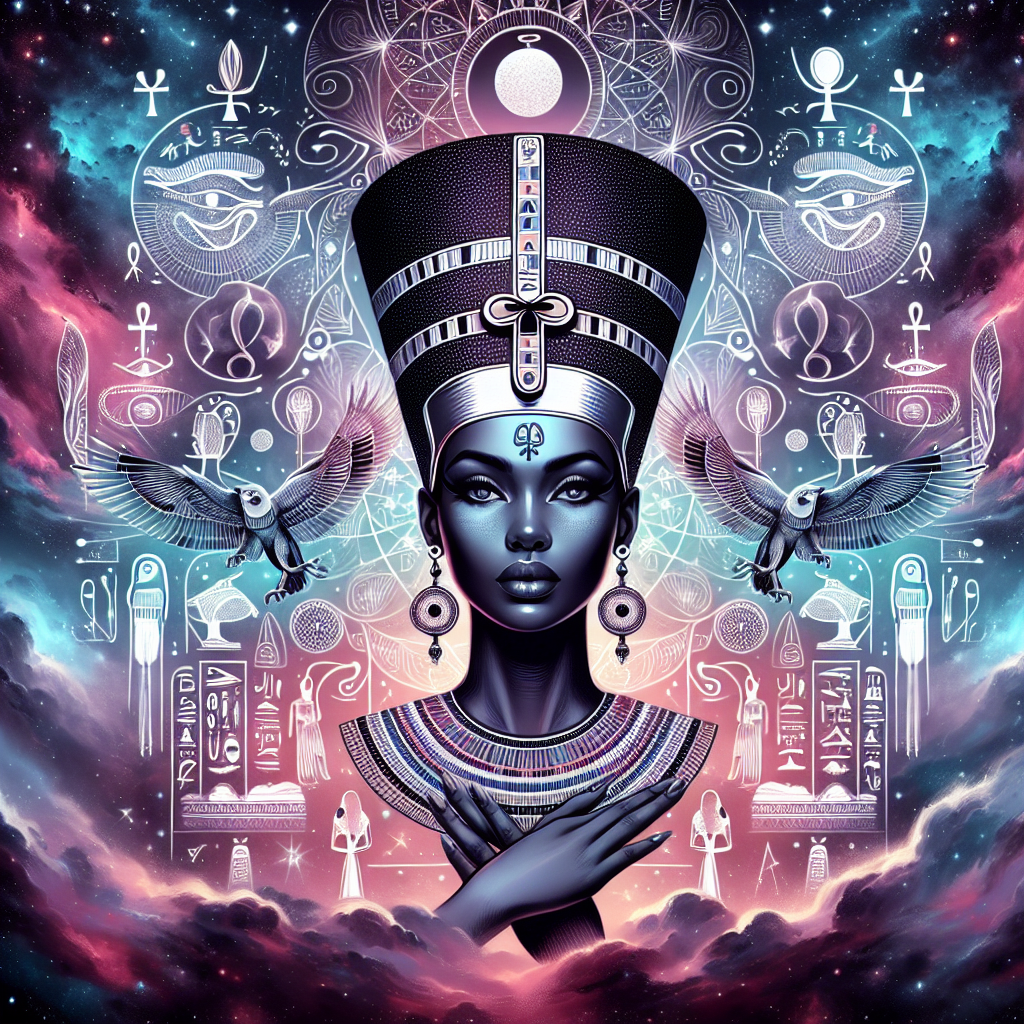
Nefertiti, the iconic queen of ancient Egypt, captivates the imagination of historians, archaeologists, and the public alike. Widely recognized for her striking beauty and her role as the wife of Pharaoh Akhenaten, Nefertiti’s story intertwines the historical and the mythical. This article delves into the complexities of her life and legacy, exploring her divine status and the cultural significance of her reign.
Historical Context
Nefertiti emerged during the 18th Dynasty of Egypt, a period marked by artistic innovation and religious revolution. As queen consort of Akhenaten, Nefertiti lived in an era renowned for the radical shift in worship from the traditional pantheon of gods to the singular worship of the sun disk, Aten. This change not only altered religious practices but also influenced the arts significantly, leading to unique representations of royal figures that conveyed both beauty and divinity.
The Amarna Period
The Amarna period, named after the modern site of Akhetaten (the city established by Akhenaten), is essential for understanding Nefertiti’s role. During this time, the representation of the royal family shifted dramatically. Art became more naturalistic, moving away from the traditional, formal depictions of Egyptians. Nefertiti was often portrayed alongside Akhenaten and their children in intimate and familial scenes, a stark contrast to the more hierarchical and distant representations seen in earlier periods.
The famous bust of Nefertiti, discovered in 1912 by German archaeologist Ludwig Borchardt, exemplifies this new artistic style. Carved from limestone and exquisitely painted, the bust showcases her beauty and elegance, reinforcing her place in the collective imagination as an icon of femininity and power.
Nefertiti’s Role and Influence
As queen, Nefertiti was not merely a consort but an influential figure in her own right. The titles she held, such as “Great Royal Wife” and “Lady of the Two Lands,” signify her elevated status. She is depicted in reliefs as a partner in Akhenaten’s religious reforms, often seen worshiping Aten alongside her husband. This imagery suggests that Nefertiti was not just an observer but an active participant in the spiritual life of Egypt.
Moreover, evidence of her involvement in the state’s affairs comes from inscriptions that hint at her political influence. Some scholars argue that she may have ruled as a co-regent after Akhenaten’s death, further solidifying her impact on Egyptian history.
The Divine Representation
Nefertiti’s divine status can be understood through both her relationship with the gods and the shifting portrayal of femininity during her reign. The Aten, as the new focal deity, was represented as a benevolent force, and Nefertiti was often seen as embodying the principles of this belief system. As a queen associated with the sun god, her image was imbued with spiritual significance.
In ancient Egyptian society, femininity was often linked to fertility and nurturing, qualities that Nefertiti visibly embodied. The family scenes in Amarna art depict her as a nurturing mother, engaging with her children and partaking in domestic life, reinforcing the idea of divine motherhood. Such portrayals contributed to an image of Nefertiti not only as a queen but as a goddess-like figure, revered for her beauty, wisdom, and benevolence.
Myth versus Reality
The relationship between Nefertiti’s historical presence and her almost mythic status is complex. While the artifacts and inscriptions provide glimpses into her life, they also create a narrative ripe for interpretation and speculation. For instance, theories abound regarding her disappearance from historical records and the subsequent myths that arose surrounding her legacy.
One popular theory suggests that Nefertiti may have changed her name and taken on a more masculine role during her later years, possibly as Pharaoh Neferneferuaten. This transformation, if true, complicates her narrative, presenting her as a figure of both feminine and masculine power.
Furthermore, the later reception of Nefertiti’s image, particularly during the 19th and 20th centuries, influenced how she has been mythologized. The fascination with her beauty and the allure of the so-called “drowning of Nefertiti,” or the mysteries surrounding her death, have led to various interpretations in literature, art, and popular culture, often emphasizing her as a tragic figure whose legacy transcended her time.
Cultural Legacy
Nefertiti remains a pivotal figure in the cultural imagination, serving as a symbol of beauty, strength, and femininity. Her image has inspired artists, writers, and feminists across generations, and her name is often invoked in discussions about women’s empowerment and representation.
In modern times, Nefertiti is common in fashion, art, and media, representing an ideal of beauty that transcends cultures. Yet, this contemporary interest often oversimplifies her narrative, reducing her to an archetype while obscuring the complexities of her life and role in Egyptian history.
Conclusion
Nefertiti stands as a testament to the intricate interplay between myth and reality in ancient Egypt. Her life, which blends historical facts with divine associations, paints a picture of a powerful queen who played a significant role in shaping the religious and cultural narratives of her time. As we continue to unearth new discoveries about her life and reign, Nefertiti will undoubtedly remain a vital figure in our understanding of ancient Egypt, illustrating how the past continually informs present identities and collective memories.