The Nine Gods of the Inner Eye: The Ennead of Heliopolis
The Nine Gods of the Inner Eye: The Ennead of Heliopolis
The Ennead of Heliopolis occupies a unique and essential place in ancient Egyptian mythology, involving a complex pantheon that embodies themes of creation, order, and divinity. This group of nine deities, revered mainly in Heliopolis (the city of the sun), is known for their intricate relationships and shared narratives that highlight the Egyptians’ understanding of the cosmos and their society.
The Genesis of the Ennead
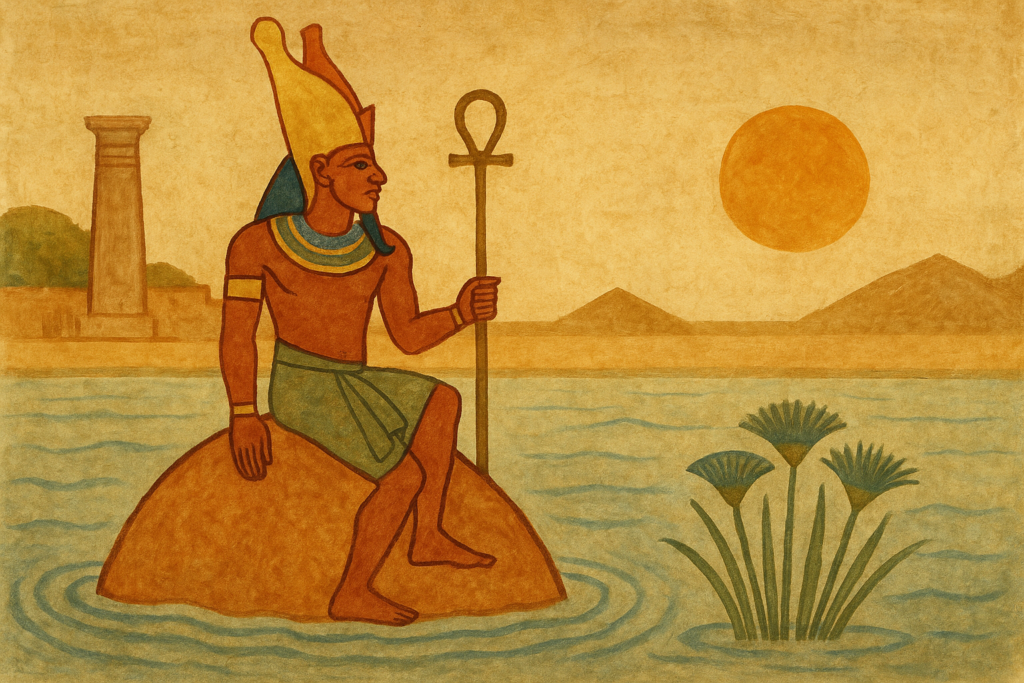
The term “Ennead” itself is derived from the Greek word “ennea,” meaning “nine,” which encapsulates the essence of this divine assembly. The Ennead was primarily associated with the Heliopolitan cosmogony, where the primordial deity Atum presided over the other gods. The mythological framework describes how Atum emerged from the primordial waters of Nu and created the first gods through a process of self-generation.
In this mythical schema, Atum’s significance is underscored; it was he who initiated the cycle of life and order in the universe. However, the birth of the nine other gods reveals the layered complexity of creation in Egyptian lore.
The Nine Deities
The Heliopolitan Ennead comprises the following gods:
-
Atum – The creator god who is both the source and the end of all things, commonly depicted in human form or as a serpent. His self-engendered existence stands as a metaphor for the cyclical nature of creation.
-
Shu – The god of air and light, born from Atum’s breath. Shu represents the duality of existence; he allows for the separation of the heavens and the earth, which is quintessential to Egyptian cosmology.
-
Tefnut – The goddess of moisture and rain, Tefnut is often depicted as a lioness or as a woman with a lioness’s head. Together with Shu, she symbolizes the balance between the elements necessary for life.
-
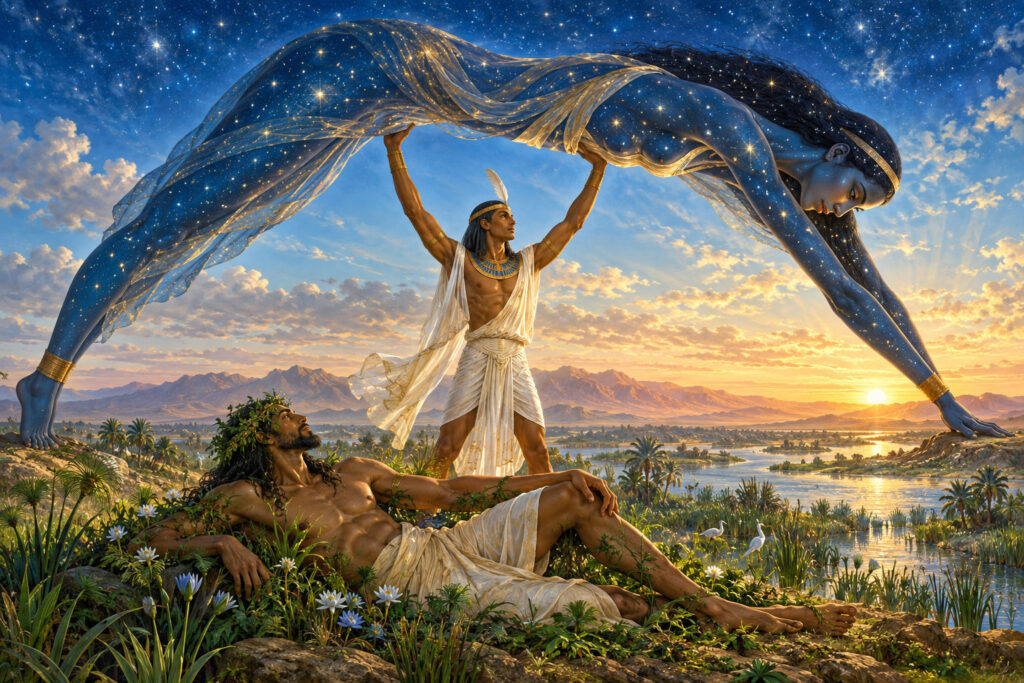
Geb – The earth god, Geb, is represented in the form of a man lying on his back, covered in green vegetation. His laughter was said to create earthquakes, and he is often associated with fertility and the harvest.
-
Nut – The sky goddess, Nut, adorned with stars, embodies the heavens that envelop the earth. She is Geb’s counterpart, representing the infinite and the vast.
-
Osiris – The god of the afterlife, Osiris, is often depicted as a mummified king. He signifies rebirth and resurrection, a vital aspect of Egyptian belief centered on the afterlife.
-
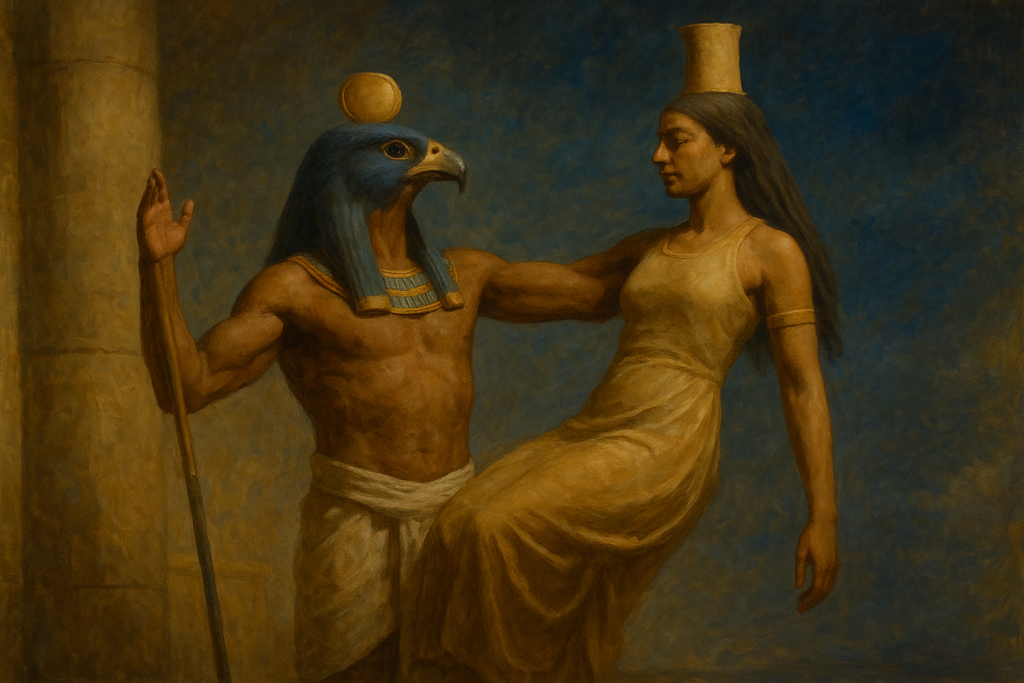
Isis – The wife of Osiris and a powerful goddess in her own right, Isis symbolizes motherhood, magic, and fertility. Her profound wisdom and protective nature made her a central figure in ancient Egyptian culture.
-
Set – Often portrayed as a chaotic force, Set is the god of storms and the desert. He embodies the struggle against chaos and represents the duality of nature—both destructive and essential.
-
Nephthys – The sister of Isis and wife of Set, Nephthys is associated with night and mourning. She plays a nurturing role in the myths surrounding Osiris and serves as a protector of the deceased.
The Interrelationships of the Ennead
The relationships between the nine gods of the Ennead reveal significant cultural and philosophical underpinnings of ancient Egyptian society. Atum’s role as the progenitor establishes a hierarchy where the relationships among the other deities reflect familial bonds, struggles, and alliances.
For instance, Osiris and Set’s rivalry serves as a fundamental narrative in Egyptian mythology, illustrating themes of order versus chaos. Their conflict not only shapes the mythological landscape but also influences the often brutal realities of human existence.
Isis’s role as the devoted wife who resurrects Osiris after his murder by Set symbolizes the strength of love, loyalty, and the triumph of life over death, rendering her one of the most venerated figures in the pantheon.
Cult Practices and Worship
The Ennead was celebrated in various temples across Egypt, yet the most significant rituals and worship took place in Heliopolis, the city dedicated to the sun god and the cradle of solar worship. The myth of the Ennead contributed to the priestly hierarchy, who facilitated rituals that linked the people with the divine through intricate ceremonies.
The temples not only served as religious centers but also economically and politically significant institutions in ancient Egyptian society. They were places of refuge, learning, and creativity, showcasing the architectural and artistic prowess of the civilization.
Theological Significance
The theological framework of the Ennead touches on many critical aspects of life and death, creation, and the universe. The cyclical nature represented by Atum, Osiris, and the overarching themes of death and rebirth underscore a deeply rooted belief in the afterlife and the importance of maintaining order in both the cosmic and earthly realms.
Furthermore, the Ennead was not static; it evolved as the needs and beliefs of the people changed. Different cities emphasized various deities, reflecting local traditions while maintaining the essential structure of the Ennead.
Legacy and Influence
The Ennead continues to captivate scholars and enthusiasts of mythology, illustrating the depth of ancient Egyptian religion and its influence on subsequent cultures. The themes of creation, morality, and the interplay of order and chaos resonate through history, impacting philosophical, religious, and artistic endeavors worldwide.
In contemporary times, the Ennead reminds us of the complexity of our interpretations of existence and the human condition. The pantheon not only serves as a collection of deities but also as a narrative vessel that encapsulates ancient wisdom, reflecting the universal quest for understanding life, death, and the forces that govern our world.
Conclusion
The nine gods of the Inner Eye—the Ennead of Heliopolis—share a deep mythology that unravels the complexities of existence. Through these deities, ancient Egyptians sought to comprehend the universe’s mysteries, celebrating the intertwining of life and death, good and evil, chaos and order. Their stories continue to echo across millennia, illustrating the timeless relevance of creation and the divine in human culture and spiritual exploration.