The Calendar of Ancient Egypt: Myth and Timekeeping
Introduction
The calendar of ancient Egypt was more than just a means to measure time; it was intricately tied to the culture, religion, and agriculture of one of history’s most fascinating civilizations. It provided a framework that governed daily life and religious practices and served as a reflection of the cyclical patterns of nature. This article delves into the structure of the ancient Egyptian calendar, its mythological underpinnings, and its practical applications in daily life.
The Structure of the Calendar
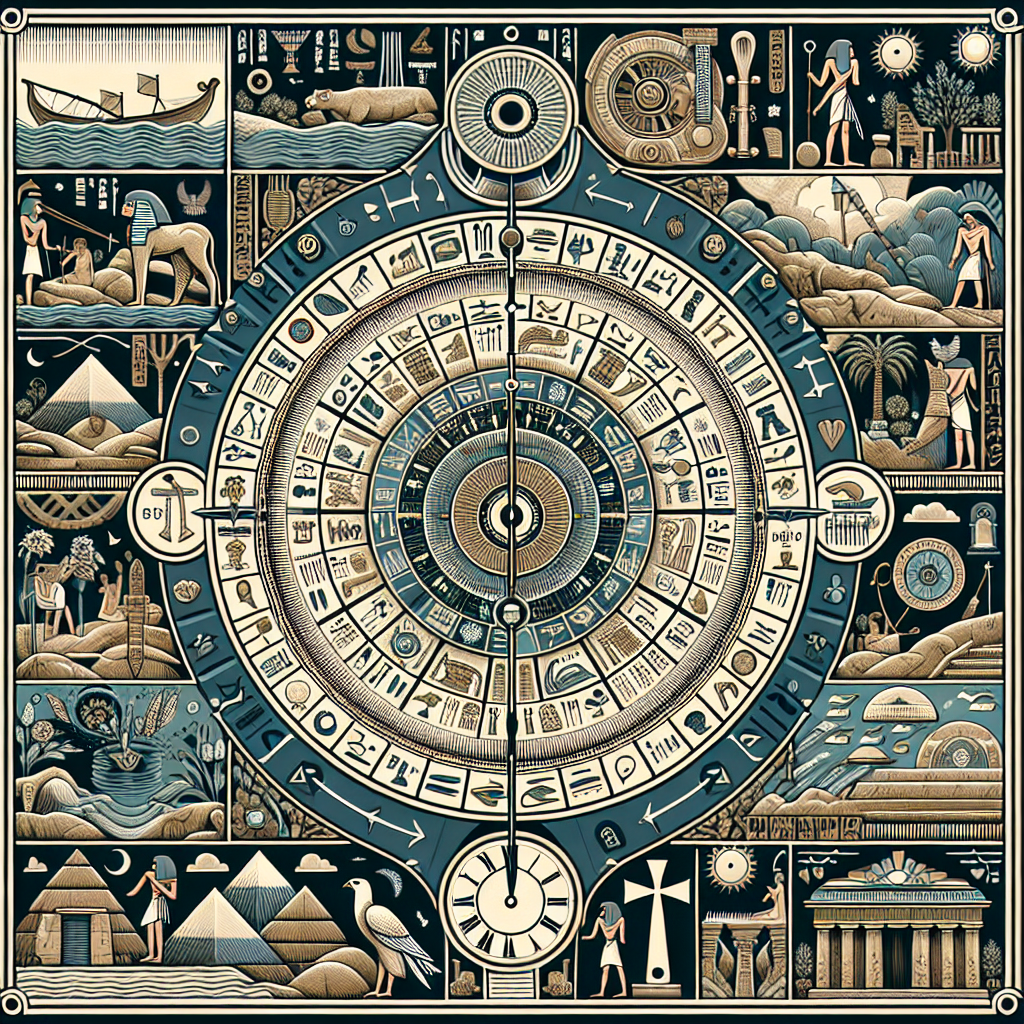
Ancient Egyptians utilized a lunisolar calendar, which combined both solar and lunar elements. The primary civil calendar was a solar calendar, consisting of 365 days divided into three seasons: Inundation (Akhet), Growing (Peret), and Harvest (Shemu). Each season was distinctly tied to agricultural activities, reflecting the cyclical nature of life in the Nile Valley.
-
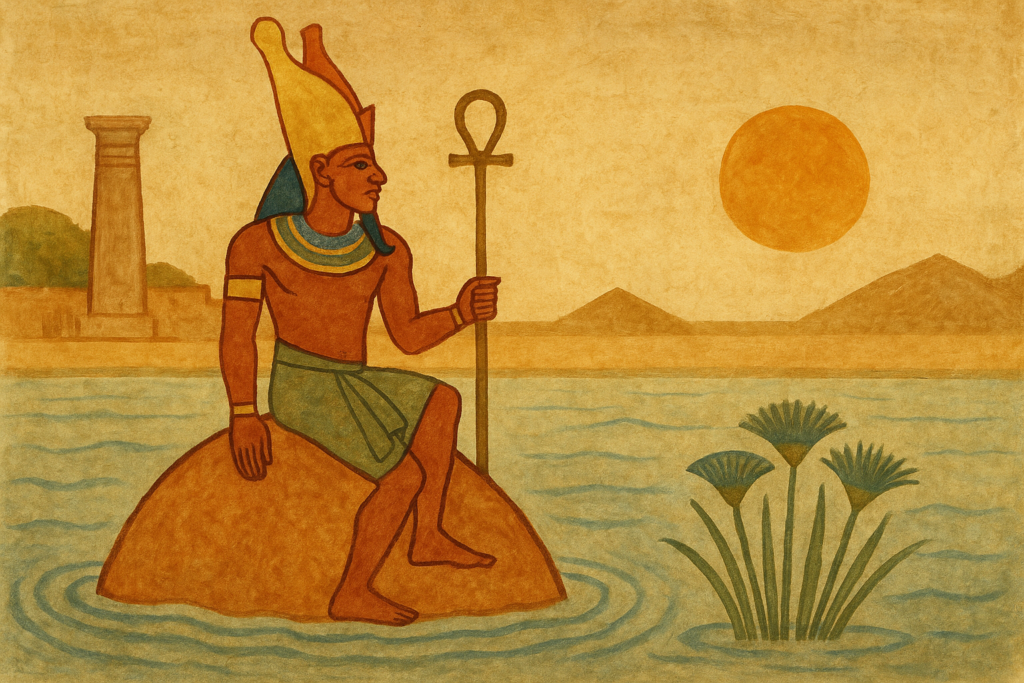
Inundation (Akhet): This season typically lasted from mid-July to mid-November. It coincided with the annual flooding of the Nile, which deposited nutrient-rich silt onto the farmland, making it fertile and ready for cultivation. The inundation was accompanied by rituals and offerings to the goddess Hapi, who presided over the flooding and fertility of the land.
-
Growth (Peret): Lasting from mid-November to mid-March, this season marked the time for planting and growing crops. It was characterized by agricultural labor as farmers worked to sow seeds in the newly irrigated fields.
-
Harvest (Shemu): From mid-March to mid-July, the harvest season was a crucial time for reaping the rewards of labor. This phase saw the gathering of crops and the preparation for the next cycle of inundation.
Mythological Influences
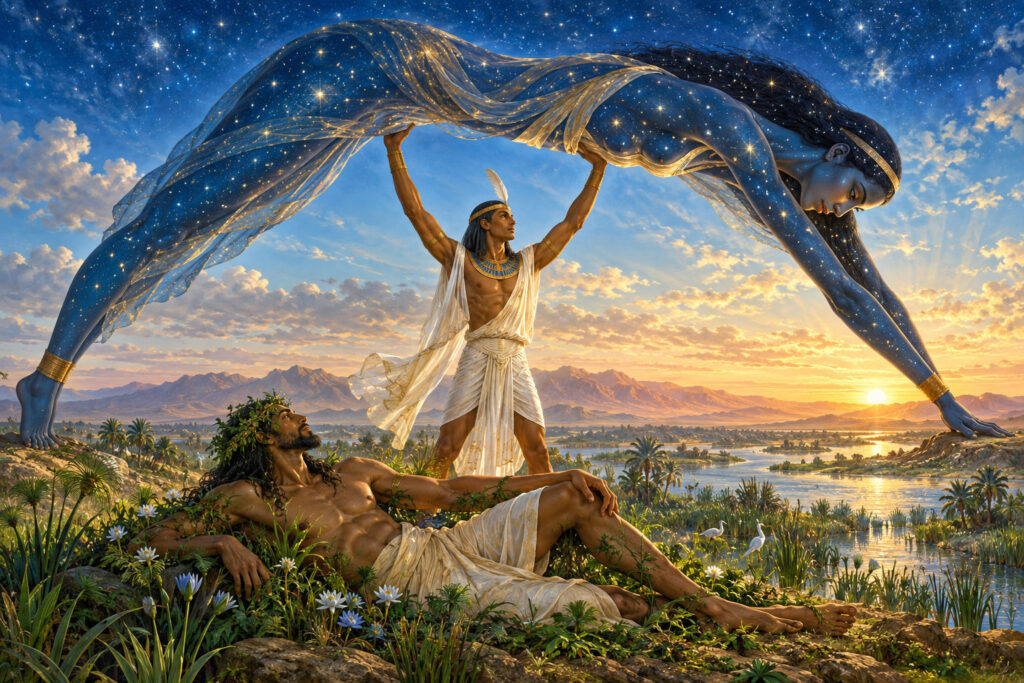
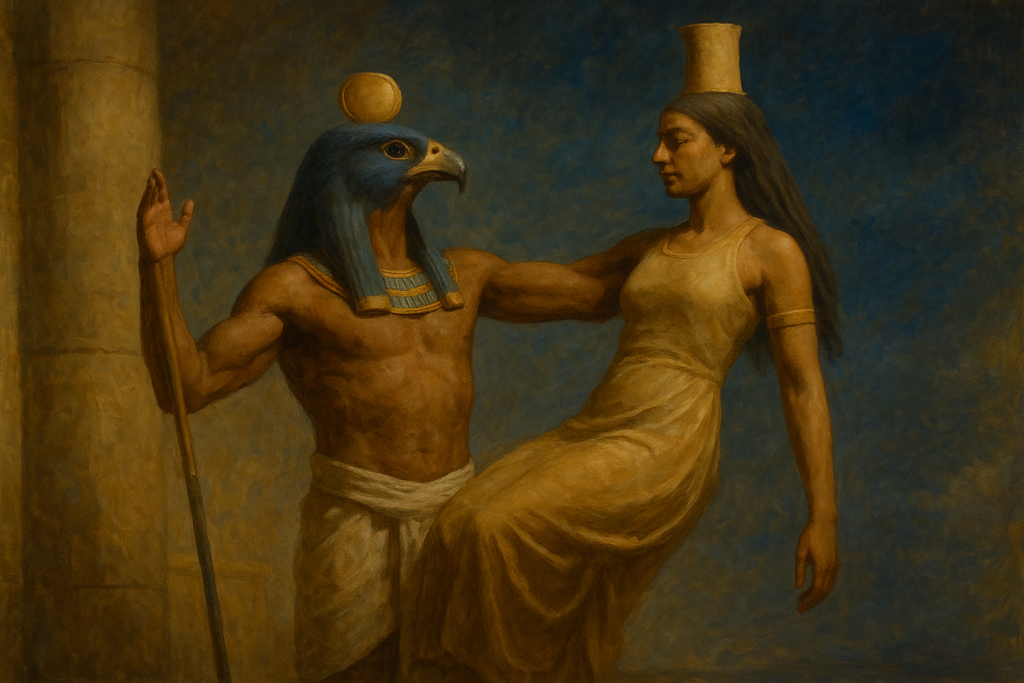
The ancient Egyptians’ understanding of time was closely intertwined with their mythology and religious beliefs. Their less formal lunar calendar, which consisted of 12 months of 30 days, was supplemented by an additional 5 days known as the “epagomenal days.” These days were dedicated to the “Five Gods of the Epagomenal,” representing crucial deities in Egyptian mythology—Osiris, Isis, Seth, Nephthys, and Horus. The observation of these days served both a practical purpose and a mythological significance, providing a way to commemorate the creation myths and the divine origins of the gods.
The annual cycle of flooding and harvesting was not merely a agricultural concern but also a spiritual one. It was believed that the cyclical nature of the seasons mirrored the cycle of life, death, and rebirth. In this sense, the Egyptian calendar served as a reminder of the eternal nature of existence, which was intimately connected to the myths surrounding creation and the afterlife.
The Calendar and Religious Observances
Ancient Egyptians marked their calendars with numerous festivals and religious observances that were integral to their culture. Each month was associated with specific deities, and many days were considered “lucky” or “unlucky,” influencing the timings of important events and activities. Festivals such as the Wepet Renpet, which celebrated the New Year, and the Opet Festival, honoring the god Amun, were critical moments in the calendar that combined agricultural importance with religious significance.
Religious practices were often dictated by the calendar. For instance, rites associated with the rise of the Nile were timed with great care, reinforcing the connection between the land and the divine. Priests and officials were responsible for maintaining a calendar that aligned with both agricultural needs and the rituals that punctuated the year, ensuring harmony between the natural and supernatural worlds.
The Calendar’s Legacy and Adaptation
The accuracy of the ancient Egyptian calendar was widely recognized, influencing subsequent calendar systems. Its structure, particularly the division into seasons and months, can be seen in various cultures that followed. However, the calendar also underwent refinements over the years. By combining observations of the lunar and solar cycles, the Egyptians laid the groundwork for future calendars and methods of timekeeping.
As Egypt came into contact with other cultures, particularly during the Hellenistic period and the Roman occupation, adaptations began to occur. The Julian calendar, introduced by Julius Caesar in 45 BCE, incorporated elements of the Egyptian calendar. This cross-cultural interaction enriched both Egypt and its neighbors, helping to shape the concept of timekeeping we recognize today.
Conclusion
The ancient Egyptian calendar was a complex system woven into the very fabric of society, steeped in myth and practical necessity. It reflected the interplay between agriculture, religion, and the cycles of nature, serving as a crucial framework for the ordering of life in ancient Egypt. As a testament to the Egyptians’ keen observations and profound understanding of the cosmos, their calendar continues to inspire and inform contemporary discussions about timekeeping and the enduring human desire to comprehend the passage of time.
In summary, the legacy of the ancient Egyptian calendar serves as a reminder that our understanding of time is not just about counting days or years; it is a reflection of our culture, beliefs, and relationship with the world around us. As we ponder calendars of the past, we see not just a method of scheduling but an intricate tapestry that connects humanity across ages and civilizations.