The Myth of Scylla and Charybdis in Roman Thought
The Myth of Scylla and Charybdis in Roman Thought
Introduction
The myth of Scylla and Charybdis, originating from ancient Greek literature, presents a captivating narrative that has transcended time and culture, profoundly influencing Roman thought and literature. Situated in the strait between the island of Sicily and the Italian mainland, these mythical monsters symbolize peril and dilemma, serving as metaphors for the human condition and the choices faced in life. In Roman culture, their significance was amplified, woven into the fabric of Roman mythology, philosophy, and literature, showcasing the interplay between myth and moral wisdom.
The Origins of Scylla and Charybdis
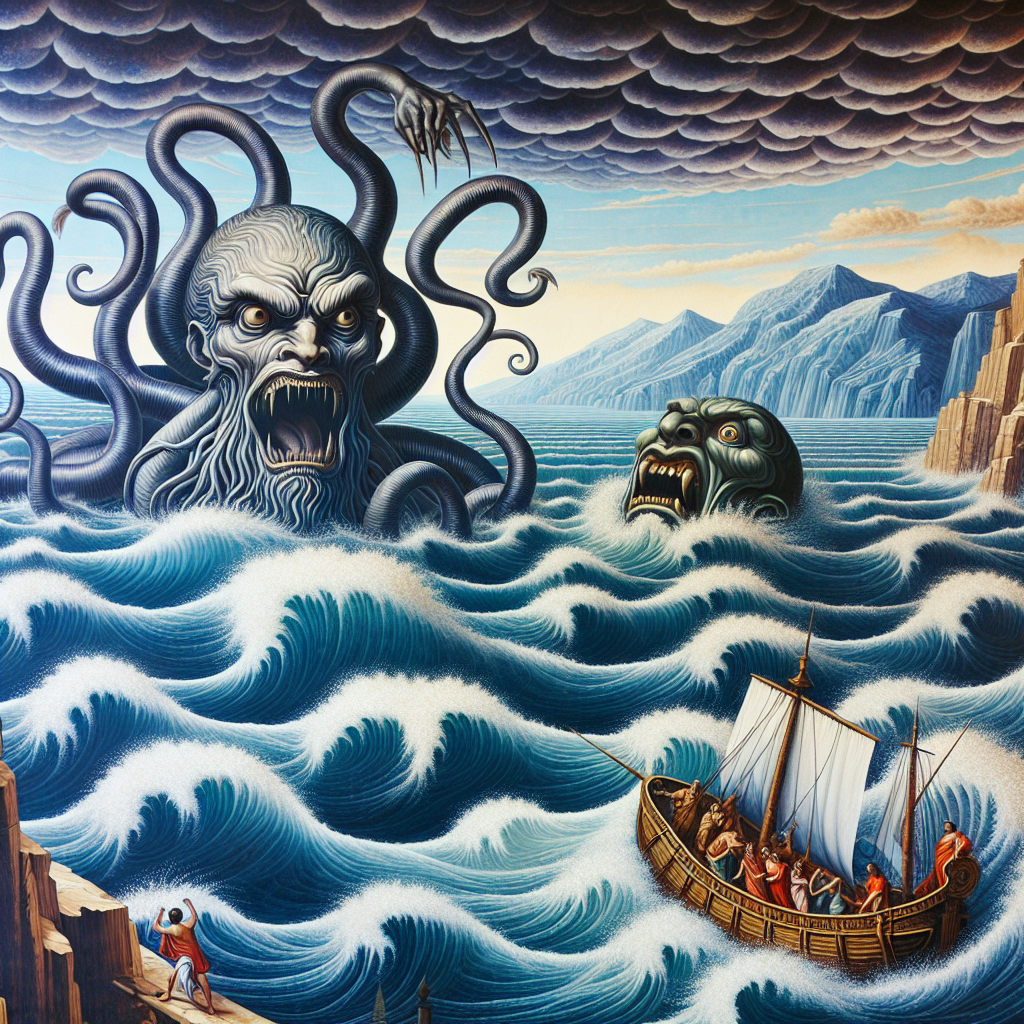
Scylla and Charybdis first appear in Homer’s Odyssey, where they are depicted as sea monsters that besiege sailors navigating the treacherous waters. Scylla, a once-beautiful nymph transformed into a fearsome creature with multiple heads, dwells on one side of the strait, while Charybdis, a voracious whirlpool, lurks on the opposite side. The myth serves as a cautionary tale, emphasizing the dangers of ambition and the necessity of wisdom in navigation, both literally and metaphorically.
In Greek mythology, the two figures represent contrasting forms of danger—Scylla embodies a predatory threat, while Charybdis symbolizes uncontrollable chaos. Together, they became emblematic of the idea that one must often navigate between two extreme dangers, which resonates with the Roman ethos of balance and moderation.
Roman Interpretations
The Romans, inheriting and adapting Greek myths, viewed Scylla and Charybdis through their own lens. The Roman poet Vergil, in his epic Aeneid, references the myth in the context of Aeneas’s tumultuous journey, reinforcing the idea of fate and divine intervention. Vergil often mirrors Homer’s themes but places a distinct emphasis on the struggle of the individual against cosmic forces. The encounter with Scylla and Charybdis in the Aeneid exemplifies the Roman ideal of duty and courage in the face of adversity.
Symbolism of Choices and Dilemmas
The duality of Scylla and Charybdis has been interpreted as a representation of personal and political dilemmas in Roman thought. Romans often faced critical decisions that could lead to dire consequences, reflecting the challenges of leadership and governance. The phrase “between Scylla and Charybdis” became a popular metaphor used by orators and writers, illustrating the concept of making difficult choices without perfect options.
In Cicero’s writings, for instance, we see the application of this metaphor in political discourse. He used the imagery of the two monsters to articulate the challenges faced by statesmen—caught between dangerous extremes where missteps could lead to catastrophe. This metaphor serves not only to describe the volatility of political life but also the moral weight of decision-making. Romans believed that navigating these treacherous waters required wisdom, prudence, and an understanding of one’s limitations.
Philosophical Underpinnings
Roman philosophers, influenced by Stoicism and Epicureanism, elaborated on the idea of choosing the lesser evil, a theme mirrored in the narrative of Scylla and Charybdis. Stoic philosophy emphasized the acceptance of fate and the importance of virtue, suggesting that individuals should strive to maintain their moral integrity even when faced with perilous decisions.
Seneca, a prominent Stoic philosopher, often reflected on the complexities of human existence, emphasizing the necessity of resilience in the face of adversity. In his letters and essays, he draws parallels between myth and everyday life, suggesting that just as Odysseus must navigate between monsters, individuals in Rome must navigate their own moral dilemmas. Thus, the myth became a valuable tool for philosophical discourse, encouraging Romans to contemplate ethical decision-making.
Literary Adaptations
The myth of Scylla and Charybdis found expression in various Roman literary forms. Poets, playwrights, and historians utilized the story to explore themes of struggle, chance, and the unpredictable nature of fate. The writings of Ovid, for instance, illustrate transformation and identity, weaving the myth into his larger themes of change and consequence. In Metamorphoses, he reinterprets the characters, shedding light on their motivations and the inherent tragedy of their situations.
In addition to poetry, the myth informed Roman dramatists, such as Plautus and Terrence, who incorporated its motifs into their comedic and tragic works. The landscape of Roman drama often mirrors the challenges presented by the monsters, emphasizing choice, consequence, and human folly.
Legacy and Relevance
The myth of Scylla and Charybdis continues to resonate in contemporary thought, serving as a timeless metaphor for the dilemmas faced in personal and societal contexts. In literature, politics, and philosophy, the allegorical representation of navigating between two threats can be found in various modern narratives, illustrating the enduring impact of Roman adaptations of this myth.
Furthermore, the myth fosters discussions about the nature of choice and consequence, urging individuals to reflect on their own journeys. Whether in personal relationships, professional aspirations, or societal challenges, the symbolism of Scylla and Charybdis encourages resilience and insight in the face of adversity.
Conclusion
The myth of Scylla and Charybdis, while rooted in ancient Greek literature, found profound resonance within Roman thought and culture. Through the lens of philosophy, literature, and political discourse, the duality of these monsters came to represent the complex nature of human choice in the face of danger and uncertainty. As Romans navigated their own “straits,” they embodied the struggles encapsulated in this ancient myth, affirming its legacy as a timeless exploration of the challenges inherent in the human condition. Thus, the enduring themes of navigation, choice, and moral integrity continue to speak to us, reminding us that even in perilous waters, wisdom and courage can guide us through the greatest of storms.