From Myth to Reality: Legends of Roman Engineering
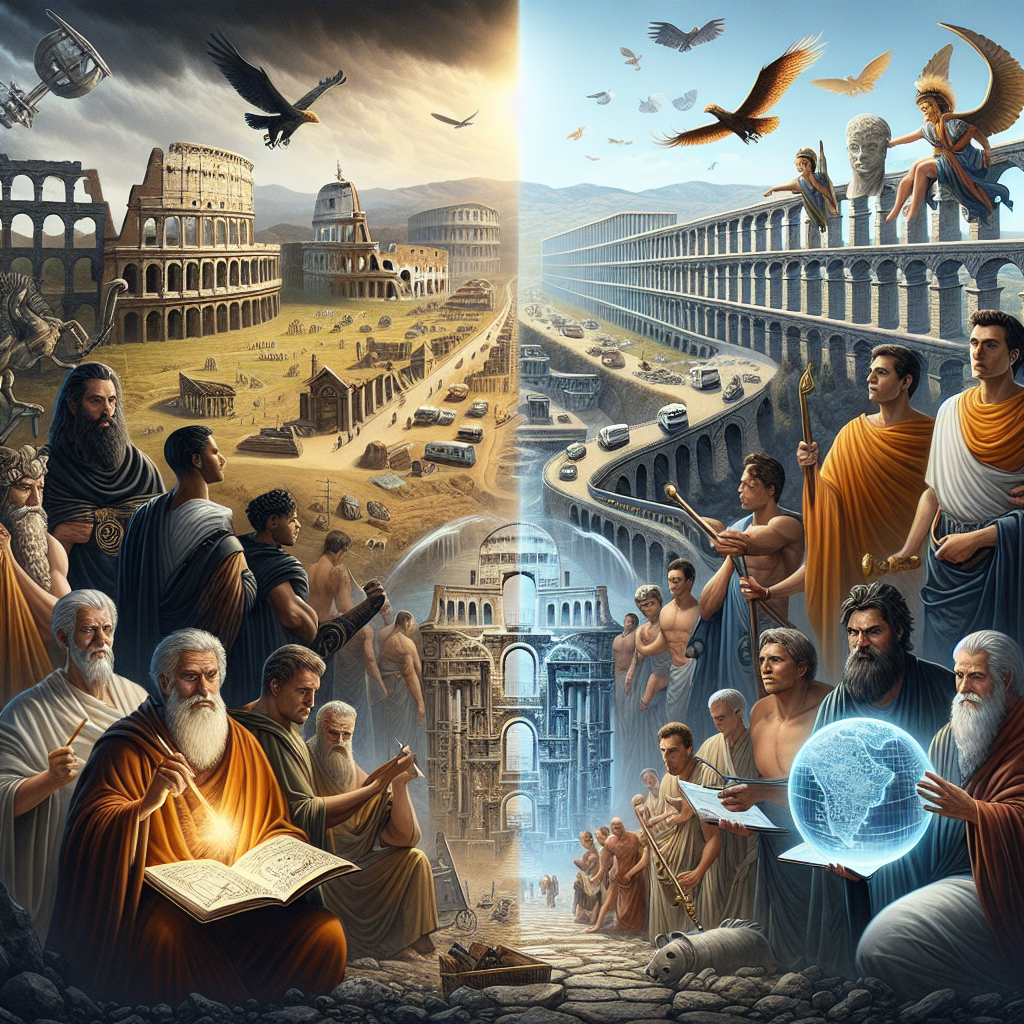
The Roman Empire, at its zenith, was a captivating tapestry woven from history, innovation, and a rich collection of myths and legends. Its engineering marvels not only transformed the landscape of the ancient world but also laid the foundation for modern infrastructure. This article explores the legends of Roman engineering, examining how myth and reality intertwined to produce innovations that still influence contemporary architecture and construction.
The Legacy of Roman Engineering
Roman engineering is legendary for its sophistication, functionality, and beauty. The empire produced an array of structures, including roads, aqueducts, bridges, and public buildings that were not only practical but also designed with aesthetic intent. Roman engineers were pioneers of techniques and materials that shaped their society and continue to resonate through history.
Roads: The Pathways of Empire
One of the most significant achievements and perhaps the most romanticized aspect of Roman engineering is their extensive network of roads. Legends tell of the Roman general and statesman Gaius Julius Caesar, who allegedly proclaimed, “All roads lead to Rome.” While this is a hyperbolic statement, it symbolizes the vast, interconnected road system that facilitated trade, military mobilization, and cultural exchange.
The Roman roads were constructed with meticulous precision, featuring layers of materials including gravel, sand, and large stones stabilized by a cambered surface that allowed for efficient water drainage. The Via Appia, known as the Appian Way, is a prime example, stretching more than 350 miles from Rome to the southern regions of Italy. Mythology surrounding this road often highlights its role in historic military conquests and the spread of Roman culture.
Aqueducts: The Waterways of Civilization
The story of Roman aqueducts is another realm where myth seamlessly transitions into reality. Legends of vast underground reservoirs and elaborate conduits fueled the imagination of the public. The Aqua Appia, the first aqueduct built in Rome in 312 B.C.E., was a remarkable feat that tapped into surrounding hills to bring water to the city.
Roman engineers employed a precise gradient in construction that spanned miles, often using arches to maintain the water flow across valleys. The Pont du Gard, constructed in the first century C.E., is an iconic example, standing as a testament to the prowess of Roman engineering. This structure’s three tiers of arches not only display strength and functionality but also a sense of grandeur that symbolizes Roman ingenuity.
The Arch: The Keystone of Design
The arch is one of the most enduring symbols of Roman engineering. While the arch was not invented by the Romans, they perfected its design and application, allowing for the construction of larger and more ambitious structures. From the Colosseum to the Pantheon, the use of the arch enabled the support of massive weights while creating expansive interior spaces.
Legend has it that Roman engineers believed the arch’s design was inspired by the natural forms found in nature. There are narratives suggesting that the shape of the rainbow provided the inspiration for its structure, leading to the incorporation of aesthetics with engineering practicality. The substantial variant known as the “true arch,” formed by wedge-shaped stones (voussoirs) that distribute weight evenly, demonstrated a breakthrough in architectural design.
The Colosseum: An Icon of Architectural Might
The Colosseum, or the Flavian Amphitheatre, stands as one of the supreme legacies of Roman engineering and a monument to human ingenuity. Completed in 80 C.E., it was the largest amphitheater in the Roman world, capable of seating thousands of spectators. According to legend, its construction involved not only skillful engineering but also the labor of thousands, erratically drawing on the species of a formidable, far-reaching power.
Beyond its grand scale, the Colosseum incorporated numerous innovations, including retractable awnings, a complex system of tunnels for gladiators and animals, and the sophisticated use of the arch and concrete that ensured its stability. Myths surrounding the Colosseum often touch on the dramatic events that took place within its walls, including epic gladiatorial battles, reenactments of famous sieges, and exotic animal displays.
Baths and Urban Planning: The Heart of Roman Life
Roman baths serve both as a cultural and engineering masterpiece. Legend has it that Emperor Trajan’s Baths utilized advanced technology not only for their structure but also for sophisticated heating systems, such as the hypocaust, which circulated warm air beneath the floors. This engineering feat allowed for opulent public baths that embodied the Roman concept of hygiene, relaxation, and social interaction.
Moreover, the design of cities during the Roman Empire was meticulously planned. Urban legends speak of ideal cities that followed specific designs, emphasizing public spaces, forums, and temples alongside residential buildings. Roman planners incorporated grid layouts, advanced sewage systems, and public health measures, reflecting their understanding of urban sustainability long before these concepts became modern priorities.
Conclusion: The Enduring Influence of Roman Engineering
The myths surrounding Roman engineering illustrate not only the marvels of their time but also the enduring legacy that these accomplishments continue to exert on contemporary society. Through remarkable stories of ingenuity and ambition, the Romans have inspired generations of engineers, architects, and city planners.
As we traverse the remnants of Roman structures, we are reminded that their feats were not merely the product of human skill but also of a deep-seated belief in the possibility of shaping the world. From roads that led to the heart of an empire to aqueducts that carried life-giving water, the legends of Roman engineering are stories of dreams made tangible, where myth becomes an elegant reality.
In this era of technological advancement and reconstruction, revisiting these legends provides not only a historical perspective but also a blueprint for future innovations. The Romans masterfully blended myth and reality, leaving a profound imprint that remains woven into the very fabric of our civilization today.