
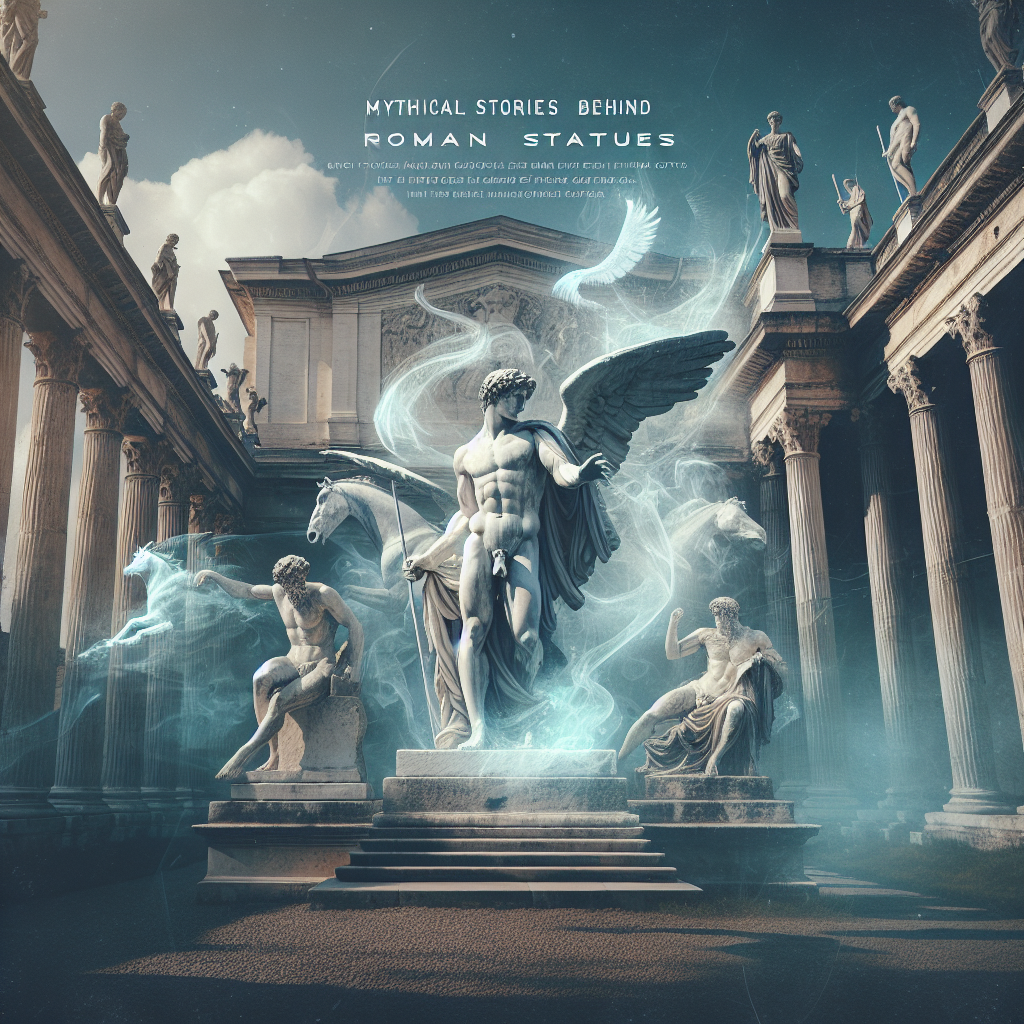
Roman statues are more than mere expressions of art; they encapsulate the vibrant tapestry of myth, history, and culture of ancient Rome. These stone and marble figures, often depicting gods, emperors, and mythical creatures, carry within them tales of creation, conquest, and divinity, offering a glimpse into the values and beliefs that shaped Roman society.
The Origins of Roman Sculpture
To understand the significance of Roman statues, one must first explore their origins. While Rome borrowed extensively from the Greeks, adopting their artistic techniques and mythologies, Roman sculptors infused their works with uniquely Roman attributes—a focus on realism and individualism. This melding of styles resulted in a distinct art form that captured human emotions and stories with a vibrancy that resonates to this day.
Divine Inspirations: Gods and Goddesses
Many statues in Rome were dedicated to the pantheon of gods and goddesses. Of particular significance was Venus, the goddess of love and beauty. The Venus Pudica, a common representation of Venus, depicts her modestly covering herself, embodying the Roman ideals of beauty and virtue. In legend, Venus was born from the sea foam and continuously represented femininity and attraction. Statues like the famous Venus de Milo, although Greek in origin, were indicative of how the Romans revered her.
Jupiter, the king of the gods, found his own illustrious representations as well. Statues depicting him often showcase his thunderbolt, symbolizing his role as the ruler of the skies. The image of Jupiter not only honored the divine but also reinforced the authority of Roman leaders who sought to connect themselves with the supreme deity.
The Legendary Heroes of Rome
Roman statues often portrayed historical and mythical heroes, eternalizing their stories and deeds. One of the most iconic figures is Aeneas, a Trojan hero who became a symbol of Roman virtue and destiny. According to Virgil’s “Aeneid,” Aeneas fled the ruins of Troy, embarking on a journey that ultimately led to the founding of Rome. Statues of Aeneas often depict him carrying his father Anchises, illustrating themes of duty, familial loyalty, and perseverance.
Another legendary figure is Romulus, the founder of Rome. Statues depicting Romulus often emphasize his warrior attributes, showcasing him alongside his twin brother, Remus. The famous statue of the she-wolf suckling the twin brothers represents both the nurturing of Rome and the fierce protector, marking the city’s origins steeped in myth and valor.
The Role of Emperors and their Myths
Roman emperors, too, leveraged the power of statues to craft their own narratives. Statues such as Emperor Augustus, often shown in heroic poses reminiscent of the gods, were aimed at aligning their reigns with divine favor. Augustus’ statue in the guise of a general, complete with armor and an outstretched arm, communicated strength and benevolence while echoing the myths of divine guidance in his rise to power.
Claudius, another Roman emperor, was often depicted in princely attire, symbolizing the might of the Empire. Statues of emperors not only celebrated their rule but created an immortalized narrative—each portrayal telling a story of power, divine right, and the historical impact they sought to establish.
The Mythical Beasts
Roman mythology is populated with mythical creatures that symbolize various natural and human traits. Statues of griffins, centaurs, and mermaids reflected the Romans’ attempts to connect with the mystical. The griffin, a creature with the body of a lion and the head of an eagle, represented strength and vigilance. These statues often adorned temples and public spaces, providing protection to the beholders while showcasing the awe-inspiring world of mythology.
Mermaids, or sirens, were believed to lure sailors with their enchanting voices. Statues depicting these creatures served as warnings against temptation and the perils of the sea, representing both beauty and danger in their alluring forms.
The Message Carried in Craftsmanship
The artistry behind Roman statues speaks volumes about the cultures’ values. The detailed carving methods and realistic portrayals were not purely aesthetic; they were intentionally designed to convey messages. For instance, the wrinkles and age lines etched into the faces of certain emperors were a reflection of wisdom and experience, a stark contrast to the youthful ideal often depicted in Greek sculptures.
Moreover, many Roman statues conveyed moral lessons or societal ideals. For example, statues of gods were not just religious symbols; they represented qualities such as justice, duty, and self-control, serving as visual reminders of virtues that Romans aspired to uphold in daily life.
Preservation and Legacy
The continuity of Roman mythology through its statues is evident in modern history, influencing art, literature, and culture across centuries. These works of art have survived the ravages of time, conflict, and cultural shifts, preserving the stories they encapsulate. Statues from ancient Rome inspire countless artists and writers, echoing the legends they were built to narrate.
Today, museums across the world display these statues, allowing us to embrace the stories of gods, heroes, and the Roman Empire’s legacy. They prompt us to reflect on our own narrative, suggesting that myths—be they ancient or modern—continue to shape our understandings of identity, morality, and community.
Conclusion
The mythical stories behind Roman statues are rich, layered, and profoundly influential. From gods and goddesses to heroic figures and mythical beasts, each statue serves as a storyteller, transmitting the beliefs, aspirations, and artistic genius of ancient Rome. As we gaze upon these remarkable works of art today, we are invited not only to marvel at their beauty but also to engage with the timeless tales of love, valor, and the human condition that they preserve. In doing so, we connect with a past that is still very much alive, resonating through the ages in the human experience.


