
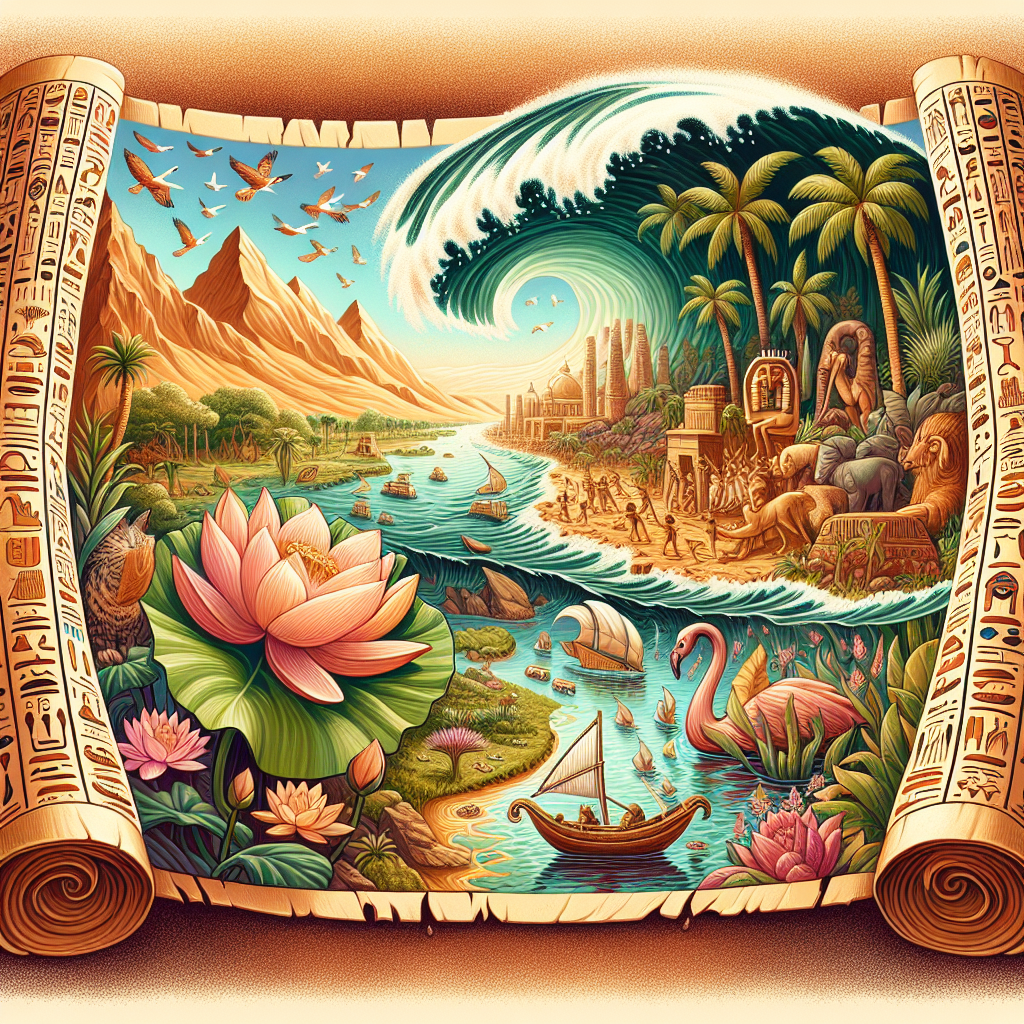
The Nile River, often regarded as the lifeline of ancient Egypt, has been central to the civilization’s agricultural practices, cultural narratives, and religious beliefs. This ancient river, stretching over 4,000 miles, has shaped the lives of millions who have inhabited its banks for millennia. Yet, intertwined with its significance are numerous myths and legends that speak to its character, influence, and the people’s relationship with it. These myths illustrate a deep understanding of nature’s rhythms, encapsulating the connection between flooding, fertility, and the essence of life itself.
The Power of the Nile
Historically, the Nile is remarkable not just for its length but for its seasonal flooding. Unlike many rivers that tend to have predictable patterns, the Nile’s flooding was largely influenced by the seasonal rains in Ethiopia and equatorial Africa. When the river overflowed its banks each year, it would deposit nutrient-rich silt across the floodplains, creating fertile ground ideal for agriculture. This bounty laid the foundations of the Egyptian economy yet also gave rise to myths portraying the Nile as a divine entity that bore the gifts of fertility and life.
Myths of Fertility
In ancient Egyptian mythology, the Nile was often personified as the god Hapi, depicted as a plump, bearded man holding a jug from which the river flowed. Hapi symbolized the fertility of the land and was revered as the bringer of abundance. Egyptians celebrated the inundation of the Nile, marking it with festivals that included offerings and prayers to ensure the river’s blessing.
Stories of Hapi’s origins tell how he emerged from the chaotic waters of Nun, the primordial waters of creation. This narrative underscores the view that the Nile, as part of the cycle of life and renewal, was intrinsically linked to the divine. It wasn’t merely a river; it was a life-giving force that sustained agriculture, allowing civilizations to flourish.
Life and Agriculture
The fertile lands surrounding the Nile produced crops such as wheat, barley, and flax, fundamental staples that supported the growing population. The importance of agriculture was not lost on the Egyptians, who utilized various methods of irrigation and farming to enhance their yields. The seasonal flooding created a cycle — after inundation, farmers would plant their crops on the freshly enriched soil, reaping the benefits during harvest time.
Ancient Egyptians recognized that life depended heavily on this cyclical flooding of the Nile. They developed a calendar based on the Nile’s rhythm, closely aligning agricultural practices with natural events. The flooding was not just a phenomenon; it was the foundation upon which their civilization was built.
The Myth of the Flood: Balance and Order
Yet the Nile’s gifts were not without challenges. While the flooding brought fecundity, it also threatened to overwhelm the land if it became excessive. Myths surrounding the river often depicted its duality — a nurturing source of life but also a potential harbinger of chaos and destruction.
The Egyptians believed in Ma’at, the concept of balance and order that permeated their worldview, acting as a guiding principle for societal and cosmic harmony. Hapi, as a representation of the Nile, embodied this principle. The careful balance of the river’s floodwaters was seen as an embodiment of Ma’at; too little water brought drought, while too much resulted in devastation.
To maintain this harmony, Egyptians conducted rituals and offered prayers, emphasizing their belief in a reciprocative relationship with the river. The myth that addressing the whims of the Nile through respectful offerings could coax it into proper behavior showcases the deep-rooted belief that humanity and nature were interconnected, reliant upon each other for existence.
The River as a Path to the Afterlife
The Nile’s significance didn’t end with agricultural fertility. It was also seen as a pathway to the afterlife. In their beliefs, the river became a metaphorical route for the deceased, providing them access to the realm of the gods. The Book of the Dead, a collection of spells and texts designed to guide the deceased through the afterlife, often mentioned the Nile, signifying its importance in both life and death.
The imagery of the river in funerary rites – where the deceased was adorned with symbols of fertility and abundance – underscores the unwavering connection Egyptians had with the Nile. This not only reflected their hopes for eternal life but also their reliance on the river as a divine network connecting the living and the spirits of the deceased.
Interpretation Through Art and Literature
Myths of the Nile transcended practical agricultural needs, inspiring art and literature that conveyed the deep-seated emotions and beliefs surrounding this mighty river. Hieroglyphs, sculptures, and elaborate tomb paintings celebrated the annual inundation, while poetry paid homage to Hapi and the life-sustaining aspects of the Nile.
Art often illustrated the blessings from the river, with scenes depicting bountiful harvests, joyous celebrations, and ritualistic offerings. These works served not only as commemorations of everyday life but as expressions of gratitude towards the divine forces believed to govern the Nile’s behavior.
Legacy and Modern Understanding
Fast forward to contemporary times, and the myths surrounding the Nile continue to hold significance. Although modern science has shed light on the river’s flooding patterns through meteorological studies and technological advancements, the ancient stories still resonate. They remind us of humanity’s age-old struggle to coexist with nature, to seek balance, and to understand the forces beyond our control.
Today, the Nile faces challenges such as climate change, population growth, and geopolitical tensions over its waters. The myths that once embodied reverence and respect remind us of the importance of maintaining a harmonious relationship with this vital resource.
Conclusion
The myths of the Nile are more than just stories; they represent the very essence of life in ancient Egypt. They highlight the river’s role in agriculture, fertility, and the cycles of existence. As we explore these narratives, we uncover a deeper understanding of how ancient cultures interpreted their world, revealing a legacy that continues to inspire reverence for nature’s power and the delicate balance that sustains life. In a time when environmental concerns persist, the resonance of these myths invites reflection on our relationship with natural resources, urging us to honor the lessons of the past as we navigate the challenges of the present and future.


