Hades vs. Pluto: A Comparative Study of Underworld Gods
The mythologies of ancient Greece and Rome are rich with deities that embody various aspects of life, nature, and human experience. Among these deities, Hades and Pluto stand out as the personifications of the afterlife and the realms beyond death. While their roles in their respective mythologies share similarities, they are also marked by substantial differences that reflect the cultural values and beliefs of the societies that venerated them. This article offers a comparative analysis of Hades and Pluto, examining their origins, attributes, symbols, and cultural significance.
Origins and Cultural Context
Hades
In Greek mythology, Hades is one of the three sons of the Titans Cronus and Rhea, alongside his brothers Zeus and Poseidon. After the defeat of their father, the brothers divided the world among themselves. Hades received dominion over the Underworld, a realm that included both the deceased and the riches buried within the Earth. Hades’ role is primarily functional; he is not considered evil but is more a keeper of balance, ensuring the dead remain in his realm rather than returning to the living.
In Greek culture, Hades was often feared and revered. While he ruled over the dead, he was not the cause of death nor did he have control over life itself. His underworld, often depicted as a grim but necessary part of the cycle of life, was believed to be where all souls eventually journeyed, irrespective of their actions in life.
Pluto
In contrast, Pluto emerges from Roman mythology as a counterpart to the Greek Hades. His name is derived from the Latin “Pluto,” meaning wealth, reflecting the ancient Roman belief that the Underworld was also a source of material riches. Pluto was adopted into Roman culture during the expansion of the Roman Empire, blending various aspects of conquered cultures’ underworld deities into his characterization.
Unlike his Greek counterpart, Pluto was sometimes portrayed with a more benevolent nature. While still associated with death, he also represented the fertility of the earth and the riches that lie beneath the surface. This dualistic portrayal suggests a more integrated role of death and life within the Roman worldview compared to the Greek approach.
Attributes and Symbols
Hades
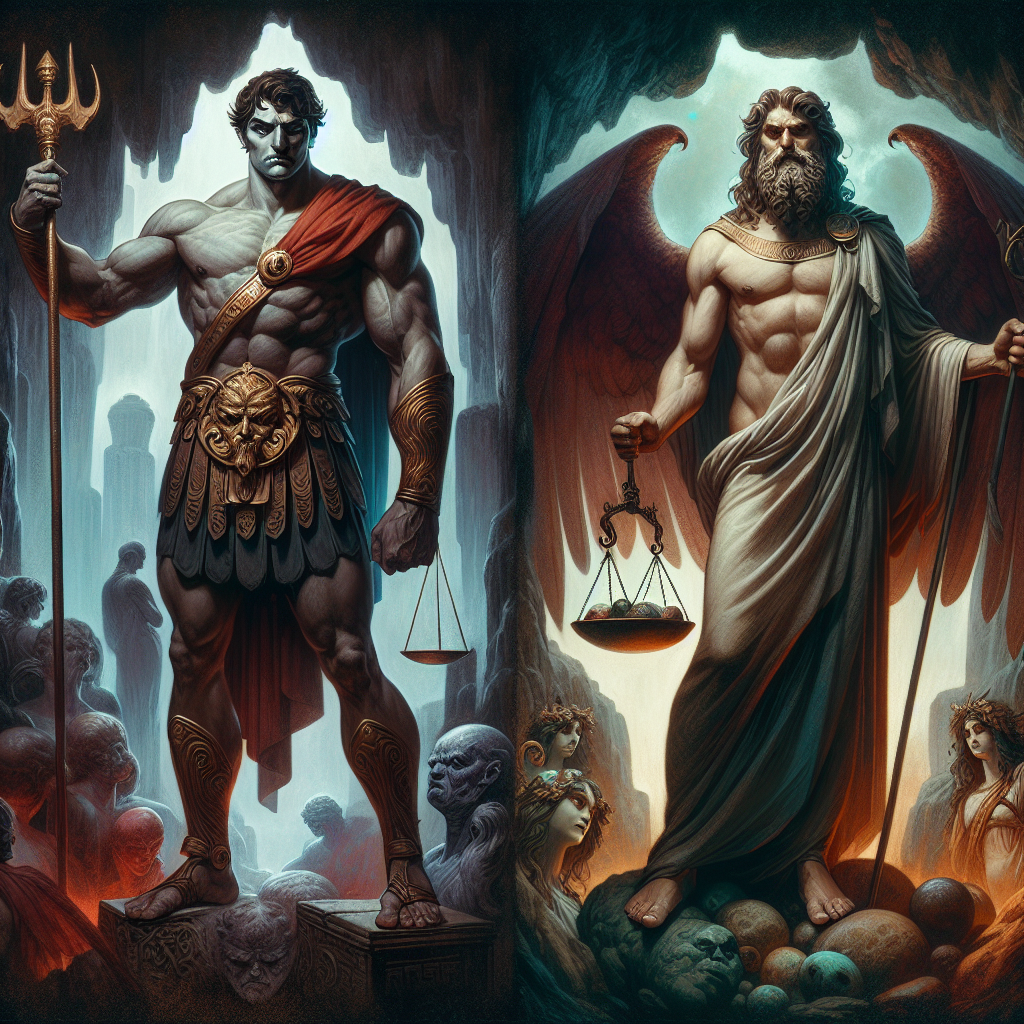
Hades is often depicted as a stern, bearded man, usually dressed in dark or black robes. His most famous symbol is the “Cypress tree,” a plant associated with mourning in ancient Greece. Accompanying Hades is the three-headed dog, Cerberus, a guardian of the gates of the Underworld. The presence of Cerberus underscores Hades’ role as the ruler of the dead and a keeper of order in the afterlife.
Another symbol associated with Hades is the “Helmet of Darkness” or the “Cap of Invisibility,” which grants him the ability to move unseen among the living and the dead. This attribute symbolizes both fear and control, as Hades oversees souls without the interference of the living.
Pluto
Pluto, on the other hand, is frequently represented with a more approachable demeanor. He is often depicted as a more youthful figure, sometimes crowned with a wreath of grain. His primary symbols include the “Cornucopia,” a symbol of abundance and prosperity, and the “Scepter,” indicating his authority over the Underworld and its treasures.
The depiction of Pluto often reflects the Roman belief in reincarnation, emphasizing the cycle of life and death as a natural part of existence. He is also commonly associated with Proserpina (Persephone in Greek), the goddess of spring, symbolizing the cycle of seasons and the interconnectedness of life and death.
Themes and Cultural Significance
The dualities between Hades and Pluto reflect deeper cultural themes prevalent in Greek and Roman societies.
Hades and the Greek Ethos
In Greek thought, death was often considered an extension of life, but it was also viewed with a sense of dread. Hades embodies the acceptance of death as a natural part of existence, yet his realm was often seen as a dark, foreboding place. As a result, Hades served as a reminder of morality and the inevitability of death, reinforcing societal norms about the behavior of the living. Polytheism, in particular, allowed for a variety of interpretations of life after death, leading to a complexity that encourages both reverence and fear.
Pluto and the Roman Outlook
Pluto, rooted in Roman traditions, reflects a more pragmatic view of life and death. The Romans tended to focus on the material aspects of existence, which is evident in Pluto’s connotations of wealth and agriculture. In Roman culture, cultivating the land and ensuring its fertility was of paramount importance, linking the dead to their contributions to the living world. This perspective highlights a more harmonious view of life, death, and rebirth.
Conclusion
Though Hades and Pluto represent similar concepts—rulership over the dead and the Underworld—cultural nuances shape their portrayals and significance. Hades encapsulates the Greek ethos of morality and the fear of the inevitable, while Pluto reflects the Roman attitude of practicality and interconnectedness between life and the afterlife. Both deities serve as reminders of different cultural approaches to mortality and the mysteries of what lies beyond, offering a lens through which we can examine the beliefs and values of ancient civilizations.
In navigating the tales of these underworld gods, we explore more than mere mythology; we uncover the human condition’s complexities, as interpreted through the ages. The narratives of Hades and Pluto continue to resonate today, shaping modern understandings of death, the afterlife, and our attitudes towards both.
Recommended reading
These are affiliate links. If you buy through them, we may earn a commission at no extra cost to you.
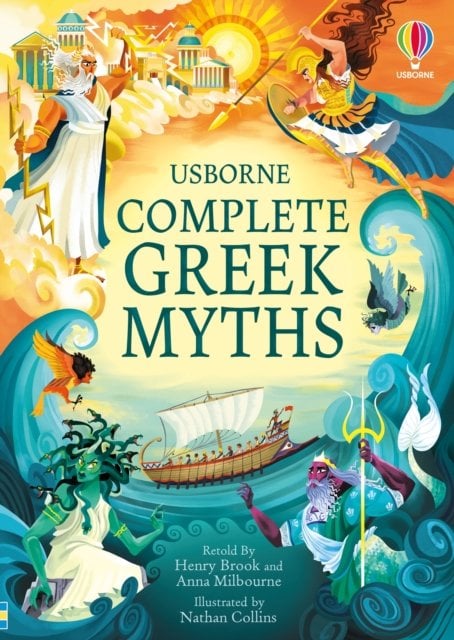
Complete Greek Myths: An Illustrated Book of Greek Myths
Featuring detailed retellings, beautiful character illustrations, and cultural background, this comprehensive volume brings the best-known and obscure Greek myths to life for readers of all ages. Complete with maps, a glossary, and a QR code for pronunciation guides and extra resources, it is an essential addition to any family bookshelf.
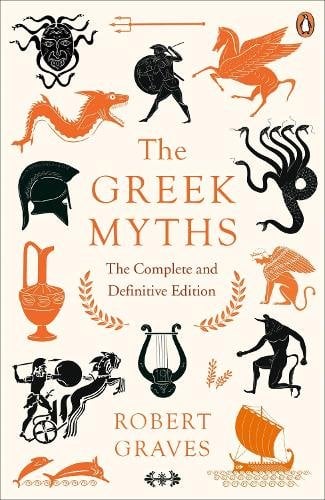
The Greek Myths: The Complete and Definitive Edition
Robert Graves’s definitive edition weaves the classic Greek myths, from the Labours of Hercules to the Trojan War, into one sweeping, authoritative narrative. Perfect for both first-time readers and classicists, this comprehensive volume combines engaging storytelling with detailed scholarly commentary and a complete index of names.
The Odyssey
Homer’s timeless epic The Odyssey follows the hero Odysseus on a perilous decade-long journey home from Troy, facing mythical monsters and divine wrath. Meanwhile, his wife Penelope and son Telemachus defend their kingdom against ruthless suitors in this classic tale of loyalty and endurance.