Taming Chaos: The Role of Order in Norse Cosmogony
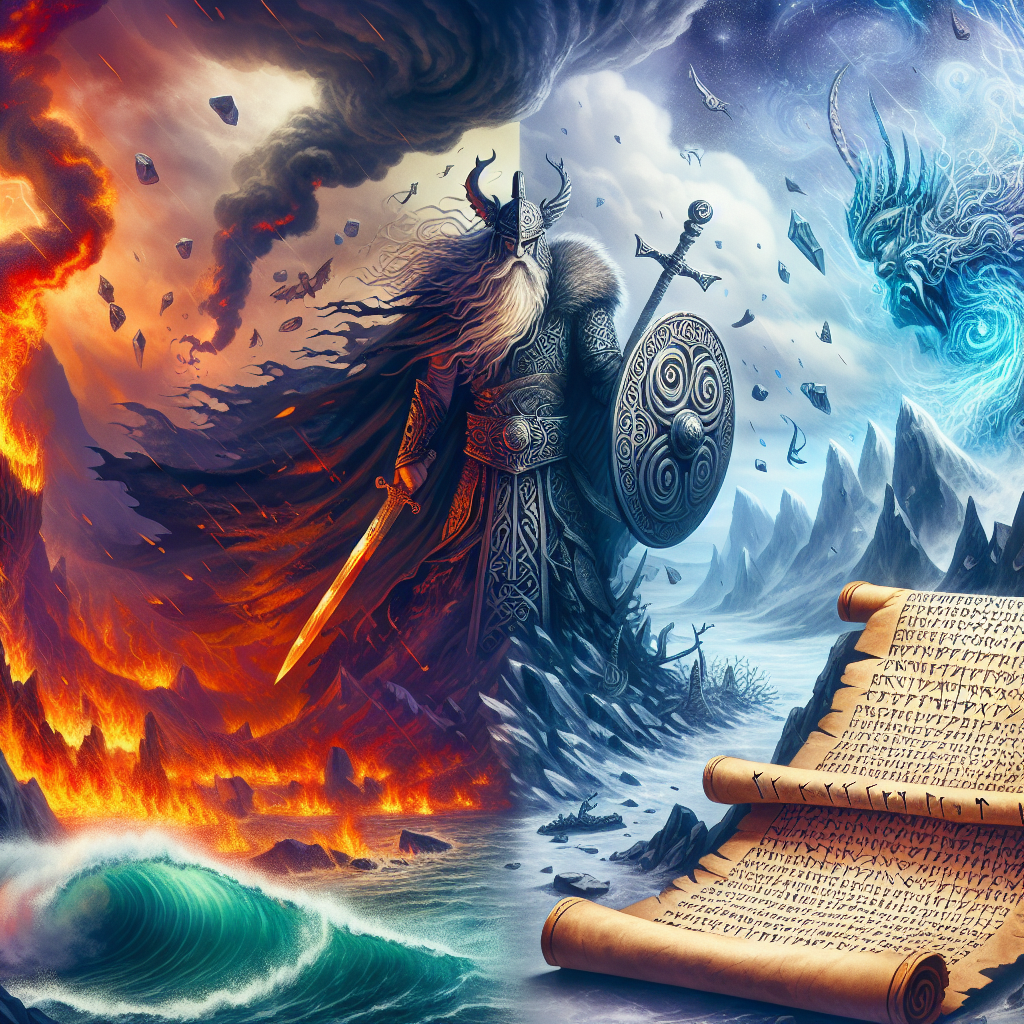
The Norse cosmos is a rich tapestry woven from threads of myth, culture, and philosophy. At its core lies a dynamic portrayal of order and chaos, reflecting the intricate relationships between these opposing forces. Norse cosmogony—origin stories that detail the creation of the universe—provides profound insights into how the ancient Norse understood the nature of existence, the interplay of forces that govern life, and the paramount importance of order.
The Origins of Chaos
In Norse mythology, chaos is represented primarily by the primordial void known as Ginnungagap, a vast emptiness leaping into existence before the cosmos was formed. On one side of Ginnungagap lies Niflheim, the realm of ice and mist, and on the other is Muspelheim, the realm of fire. The interaction between these two elemental states in the void gives rise to creation, symbolizing the idea that chaos is not merely a destructive force but also a necessary precursor to order.
The primordial giant Ymir, born from the mingling ice and fire, embodies this chaotic state. As a personification of raw, untamed nature, his existence is marked by unpredictability and violence. The gods, notably Odin and his brothers Vili and Vé, recognize a critical need to establish order amidst this chaos. Their decision to slay Ymir marks the foundational moment in Norse cosmogony—his body becomes the world, with his flesh transforming into land, his blood the seas, and his bones the mountains. This act of creation exemplifies the necessity of transitioning from chaos to order.
The Emergence of Order
The Norse gods’ victory over Ymir is more than a mere conquest; it signifies the establishment of a structured universe. After vanquishing Ymir, Odin and his brothers create Midgard (the world of humans), envisioning a realm where existence can thrive. This creation reflects the belief that order must be imposed to facilitate life and civilization. The division of realms—Midgard for humans, Asgard for gods, and Hel for the dead—is an essential aspect of this orderly universe.
In Norse mythology, the concept of order extends beyond physical realms into moral and social dimensions. The pantheon of gods, including Odin, Thor, and Freyja, embodies different aspects of order, including wisdom, strength, and fertility. Their actions often illustrate the delicate balance between chaos and order—heroic acts against giants, representations of chaos, often restore balance to the universe. Thor’s battles against the Jotnar (giants) exemplify the ongoing struggle to maintain order against chaotic forces.
The Role of Runes and Fate
Central to the Norse understanding of order is the significance of runes. According to mythology, runes were gifted to humanity by Odin, who hung on the world tree Yggdrasil for nine nights, sacrificing himself to attain knowledge. Runes symbolize the written language that brings structure and comprehension to the chaotic world. They serve as powerful tools for divination, protection, and communication.
Moreover, the concept of wyrd, or fate, is crucial in Norse cosmology. The Norns, three colossal female figures, weave the threads of fate, representing both the inevitable structure imposed on life and the unpredictability that chaos introduces. The acknowledgment of wyrd reflects an understanding that while some aspects of life may seem random or chaotic, there exists an overarching order and destiny that bind all beings. This duality—the intertwining of fate and choice—underscores the Norse ethos where individuals navigate between the deterministic paths laid down by fate and the chaos of existence.
Ragnarok: The Ultimate Battle of Order and Chaos
In the Norse mythological narrative, the ultimate confrontation between order and chaos is epitomized in Ragnarok, the apocalypse. During Ragnarok, the carefully established order of the universe collapses as the giants rise to challenge the gods. This cataclysmic event signifies the cyclical nature of existence within Norse belief; chaos will eventually overwhelm the order.
However, it is through this destruction that a new cycle of creation emerges, asserting that chaos and order are not opposing forces but interconnected aspects of the universe. The world is reborn, symbolizing renewal, hope, and the persistence of order in the face of chaos. New gods rise, and life flourishes again, indicating that order ultimately contains within it the seeds of chaos and vice versa.
The Lessons of Norse Cosmogony
The interplay between chaos and order in Norse cosmogony provides valuable lessons applicable to contemporary life. It underscores the necessity of balance in all aspects of existence, such as personal, social, and environmental. The battle against chaos, represented by Ymir and the Jotnar, reminds us of the importance of standing against forces that threaten societal order and cohesion.
Additionally, the respect for the chaotic elements embodied in the stories of the giants invites a reconceptualization of chaos as a catalyst for growth and transformation. It teaches that from disorder can emerge new forms of creativity and understanding. The cyclic nature of creation and destruction reminds us that each end brings a new beginning, encouraging adaptability and resilience.
Conclusion
The Norse cosmogony, with its vivid characters and dramatic narratives, serves as a compelling reflection on the relationship between chaos and order. The transition from the primordial emptiness of Ginnungagap to the intricate realms of gods and mortals illustrates humanity’s eternal quest to impose order on chaos. Each story within this mythological framework underscores the belief that while chaos is an inherent aspect of existence, a structured approach to life, ethics, and the universe is crucial for harmony and progress.
By examining these ancient myths, we can gain profound insights into the nature of our realities, navigating the inherent chaos while striving to create and maintain order in our lives. Ultimately, the tales of Norse cosmogony remind us that order is not merely a static state but a continuous journey—one that requires vigilance, courage, and an awareness of both the chaotic and orderly forces at play in the ever-evolving human experience.