
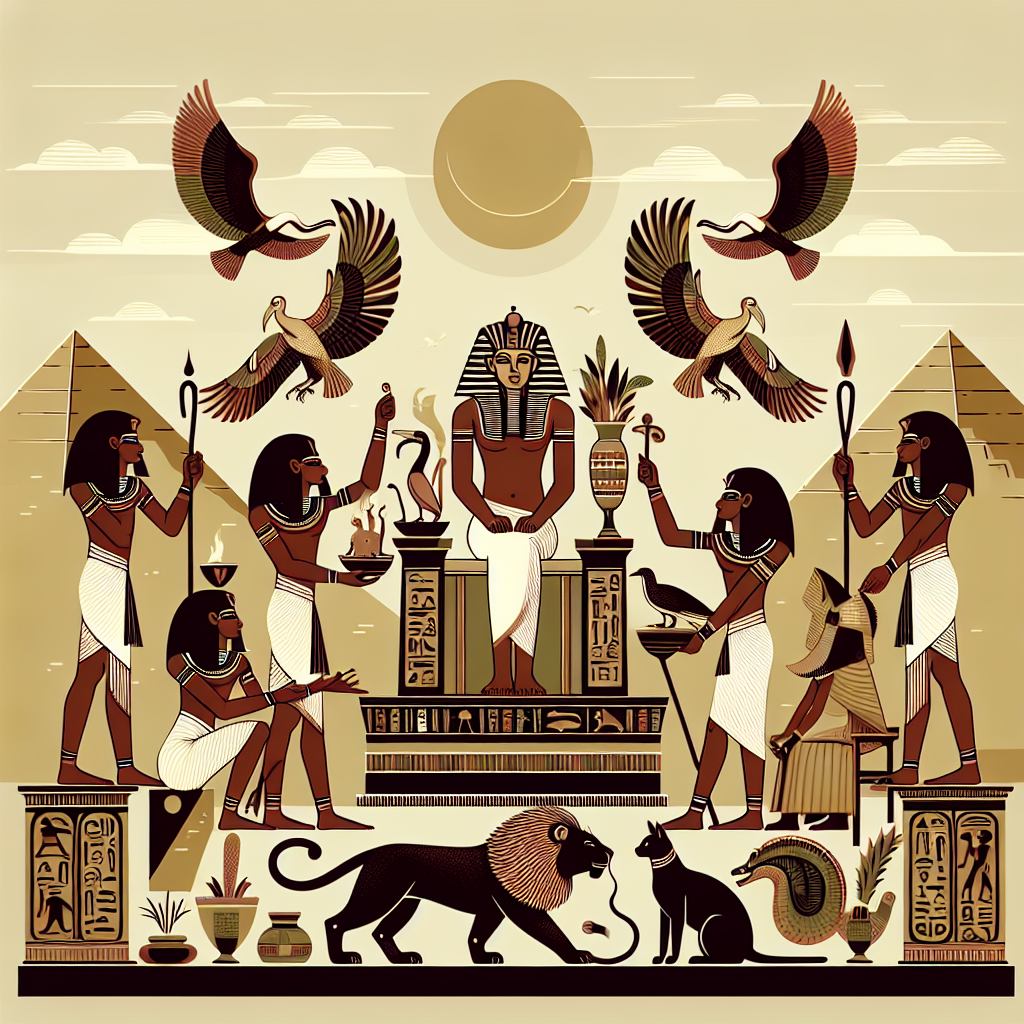
Ancient Egyptian religion, one of the most complex belief systems of the ancient world, intricately interwoven with daily life, governance, and cosmology, placed significant emphasis on animals. These creatures were more than mere reflections of the natural world; they were embodiments of gods, symbols of power, and agents of protection. The connection between animals and the divine illustrated a profound understanding of the balance between humanity and nature. This article delves into the symbolism and significance of various animals in the rich tapestry of ancient Egyptian religion.
The Lion: Majesty and Protection
Among the most revered of animals was the lion, a symbol of strength and protection. The goddess Sekhmet, often depicted as a lioness or as a woman with a lioness’s head, represented war, healing, and the fierce protection of the pharaoh. Her dual nature symbolized the glory of the sun and the destructive force of its heat. To the Egyptians, Sekhmet embodied the balance between destruction and creation, which resonated with their understanding of the cyclical nature of life.
Lions also adorned the thrones of pharaohs, representing their royal power and the legitimacy of their rule. The presence of lions in tomb art and monuments illustrated the deep-seated belief that these creatures could provide protection in the afterlife, lending strength to the dead in their journey through the underworld.
The Nile Crocodile: Fear and Fertility
The Nile crocodile, with its fierce demeanor and formidable presence, played a prominent role in ancient Egyptian mythology as the embodiment of the god Sobek. Sobek, often depicted as a crocodile or as a man with a crocodile head, was associated with the Nile, fertility, and protection. The crocodile’s presence was a reminder of the duality in nature – it was both a fearsome predator and a crucial element in the ecosystem that supported agricultural life.
Worship of Sobek included rituals designed to appease this potent deity, as the Nile’s seasonal flooding was essential for agriculture, ensuring both sustenance and prosperity. Despite the crocodile’s danger, its closer examination revealed a deep reverence for its role in maintaining the balance of life, indicative of the Egyptians’ understanding of nature’s complexities.
The Jackal: Guardians of the Underworld
The jackal, symbolized by the god Anubis, epitomized protection and the complex relationship between life and death. Anubis was depicted as a black jackal or a man with a jackal’s head and served as the god of mummification and the afterlife. His role was crucial, as he guided souls through the underworld, weighing their hearts against the feather of Ma’at, the goddess of truth and justice.
Anubis’s connection to the jackal stemmed from the animal’s scavenging habits, often seen in burial sites. This association transformed the jackal into a guardian of the dead, engendering respect rather than fear. Rituals involving Anubis reinforced the belief that the afterlife could be a continuation of life on Earth, with divine guidance and protection available during the transition.
The Cat: Fertility and Protection
Cats, often associated with fertility and motherhood, were revered for their hunting prowess and grace. The goddess Bastet, depicted as a lioness or a woman with the head of a lioness, symbolized home, fertility, and domesticity. The presence of cats in Egyptian households reflected their treasured status; they kept vermin at bay and provided companionship and warmth.
Killing a cat, even accidentally, was considered a grave offense, and families mourned their feline companions with elaborate funerals. Cats’ spiritual significance ran deep, with houses often adorned with images of Bastet to protect the family. The reverence for cats underscored the connection between domestic life and the divine, highlighting the Egyptians’ understanding that the two realms were interdependent.
The Hawk: The Sky and the Pharaoh
The hawk, often linked to the god Horus, embodied the concepts of kingship, sky, and war. Horus, typically depicted as a falcon or a man with a falcon’s head, represented the pharaoh’s divine right to rule. The pharaohs associated themselves with Horus, reinforcing their position as mediators between the gods and the people.
Horus’s mythology was rich in symbolism; he battled Set, the god of chaos, to restore order. This struggle reflected the Egyptians’ ongoing battle against chaos in their lives, underscoring the belief that order, represented by Horus, must be maintained. The significance of the hawk extended to the realm of funerary practices; images and carvings of Horus adorned tombs, signifying protection in the afterlife.
Sacred Ibis: Knowledge and Balance
The sacred ibis, closely associated with Thoth, the god of wisdom, writing, and knowledge, played an essential role in the religious and intellectual life of the Egyptians. Thoth, depicted with the head of an ibis, represented the balance of the universe and the importance of knowledge and communication. The ibis’s natural behavior of foraging in muddy waters symbolized the search for wisdom within uncertainty.
Each year, the Egyptians engaged in rituals honoring Thoth to ensure the stability of the Nile and the agricultural cycles that depended on its waters. The reverence for the sacred ibis showcased the Egyptians’ understanding that intellectual pursuits were just as vital for sustaining civilization as physical or military power.
Conclusion: Animals’ Integral Role
Animals held an unparalleled significance in ancient Egyptian religion, representing divine attributes and embodying the natural world’s intricacies. Each creature, from the lion to the sacred ibis, told a story of power, protection, and balance, reflecting a belief system that permeated daily life and guided the spiritual and temporal realms. The interplay between humans and animals in this ancient society illustrated a profound respect for nature and an understanding of its role in the divine order, leaving a lasting legacy that echoes through the ages.
Through their reverence for these creatures, ancient Egyptians carved a rich narrative that intertwined their rituals, beliefs, and the environment, forming a unique tapestry of worship that continues to fascinate historians, archaeologists, and enthusiasts of ancient cultures today.


