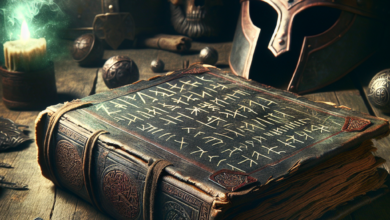

Dreams and omens have held a significant place in many cultures throughout history, and Norse mythology offers a particularly rich tapestry regarding the interpretation of these phenomena. For the Norse people, dreams and omens were not merely subconscious rebellions or random brain activity during sleep; they were vital components of their spiritual and cultural landscape. Often seen as messages from the divine or reflections of fate, they played crucial roles in daily life, decision-making, and understanding the world.
The Nature of Dreams in Norse Tradition
In Norse culture, dreams were closely linked to the concept of fate and destiny, something the Norse referred to as “wyrd.” Wyrd is often depicted as a tapestry woven by the Norns—three female figures who control the destinies of gods and humans alike. Because of this connection, dreams were viewed as glimpses into one’s personal wyrd; they provided insight into the course of one’s life, navigating the intricate interplay of fate and free will.
Notably, the Norse god Odin, the Allfather and chief of the Aesir, had a particular affinity for dreams. According to the Eddas, sacred texts of Norse mythology, Odin sought knowledge and wisdom through dreams, often visiting the realm of the dead or communing with the spirits to gain insight into the future. He was known to send dreams to mortals as a form of guidance or prophecy. For the Norse, the act of dreaming was a sacred experience; it was a time when the veil between the mortal and divine realms was thin, allowing for communication and insight.
Types of Dreams and Their Interpretations
Norse beliefs classified dreams into various types, each carrying distinct meanings. One category was prophetic dreams, which were believed to foretell future events or reveal truths about a person’s life. Dreaming of an impending battle, for example, could indicate an upcoming journey or a significant change in one’s life.
Another kind of dream was more personal and introspective. These dreams often carried emotional weight, revealing the dreamer’s fears, desires, and internal struggles. Norse individuals might interpret such dreams as calls to confront their subconscious issues, thereby aligning their actions with their personal wyrd.
Moreover, some dreams were considered dreams of the dead, where the spirits of deceased loved ones would offer guidance or warnings. These dreams were often viewed as particularly significant, with detailed interpretations carried out by those skilled in the art of dream interpretation, known as seers or völvas.
Omens as Prophesies
Alongside dreams, omens were another essential aspect of Norse belief systems. Unlike dreams, which came from individual experience, omens were often viewed as universally applicable signs that carried broader meanings. These could manifest through various channels, such as natural phenomena, animal behavior, or even specific occurrences within human life.
For the Norse people, a range of occurrences could be interpreted as omens, with each symbol carrying its own cultural weight. For example, the sighting of a raven, particularly in relation to a journey or combat, was often taken as a sign from Odin. Similarly, the behavior of animals like horses—considered sacred by some tribes—could portend success or failure in battle.
The Role of Female Figures
The role of women in the interpretation of dreams and omens was particularly significant in Norse culture. Figures like the Norns—not only responsible for controlling fate but also representing the past, present, and future—embodied the intersection of feminine wisdom and spiritual insight.
Seers or völvas were highly regarded individuals within Norse society, often female, who were believed to possess the ability to interpret dreams and omens. Their insights could influence crucial decisions, from matters of war to personal relationships. Such women were seen as bridges between the mortal world and the divine realms.
Practical Applications of Dreams and Omens
The practical implications of dreams and omens were profound in Norse society. Leaders and warriors often sought guidance before embarking on journeys or engaging in battles. Interpreting a dream that indicated danger could sway a leader to delay plans or adopt specific strategies in conflict.
Even within agricultural contexts, omens manifesting through weather patterns or animal behavior could dictate planting times or harvest decisions. The Norse closely observed nature and its rhythms, using these signs to align their actions with a greater cosmic order.
Influence on Literature and Art
Norse literature is replete with references to dreams and omens. The poetic Edda and the prose Edda contain numerous accounts of prophetic dreams experienced by gods, heroes, and everyday individuals. The dramatic representations of these dreams often carry lessons about morality, the nature of fate, and the interconnectedness of all beings.
Artistic expressions, too, reflected the importance of dreams and omens. Viking Age artifacts showcase symbols associated with dreams, divination, and the spiritual journeys that were believed to occur in dreams. This artistic language serves to highlight how deeply ingrained these beliefs were in the Norse worldview.
Conclusion
Dreams and omens played a multifaceted role in Norse beliefs, serving as essential tools for understanding the complexities of life, fate, and the divine. For the Norse, these phenomena were not simply random occurrences; they were profound reflections of a spiritual framework that shaped both daily existence and long-term decision-making. The intricate tapestry of dreams, omens, and the guiding presence of figures like Odin and the Norns reveals a deep respect for the unseen forces at play in the world. As modern interest in ancient belief systems continues to grow, the importance of dreams and omens in Norse culture invites contemporary individuals to explore the layers of meaning found within their own nocturnal experiences and natural surroundings.