Norse mythology, rich in symbolism and narrative complexity, has captivated artists, writers, and scholars for centuries. From epic tales of gods and goddesses to the intricate connections between humanity and the cosmos, Norse lore presents a vibrant tapestry of stories that continue to inspire artistic expression. This article will explore the various ways in which color has been used as a tool for interpretation in Norse mythology, drawing connections between historical contexts, artistic styles, and the deeper meanings imbued in the myths themselves.
The Palette of the Ancients
In examining Norse mythology, color often serves as a narrative device, enriching character traits and emotional landscapes. The ancient Scandinavians used a limited palette in material culture, but the symbolism amplified the meaning behind colors. The significance of colors in ancient Germanic culture can be seen in their artistic depictions, from Viking Age artifacts to contemporary representations.
-
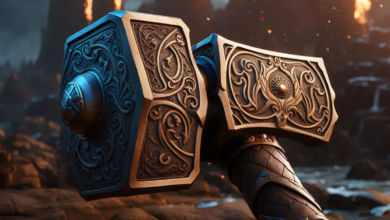
Red: Often associated with war, passion, and sacrifice, red has profound connections to figures such as Odin and Thor. Artists have utilized this hue to depict martial prowess and virility. In many interpretations, Thor, the thunder god, is often portrayed with a red beard, representing not just his tempestuous nature, but also the blood of his enemies and the vibrancy of life.
-
Black: A color of mystery and the unknown, black often symbolizes the grave, the void, and the underworld in Norse mythology. Hela, the goddess of the underworld, is frequently rendered in dark tones to reflect her domain. Modern artists invoke black as a reminder of mortality, the cyclical nature of existence, and the shadows that permeate our lives.
-
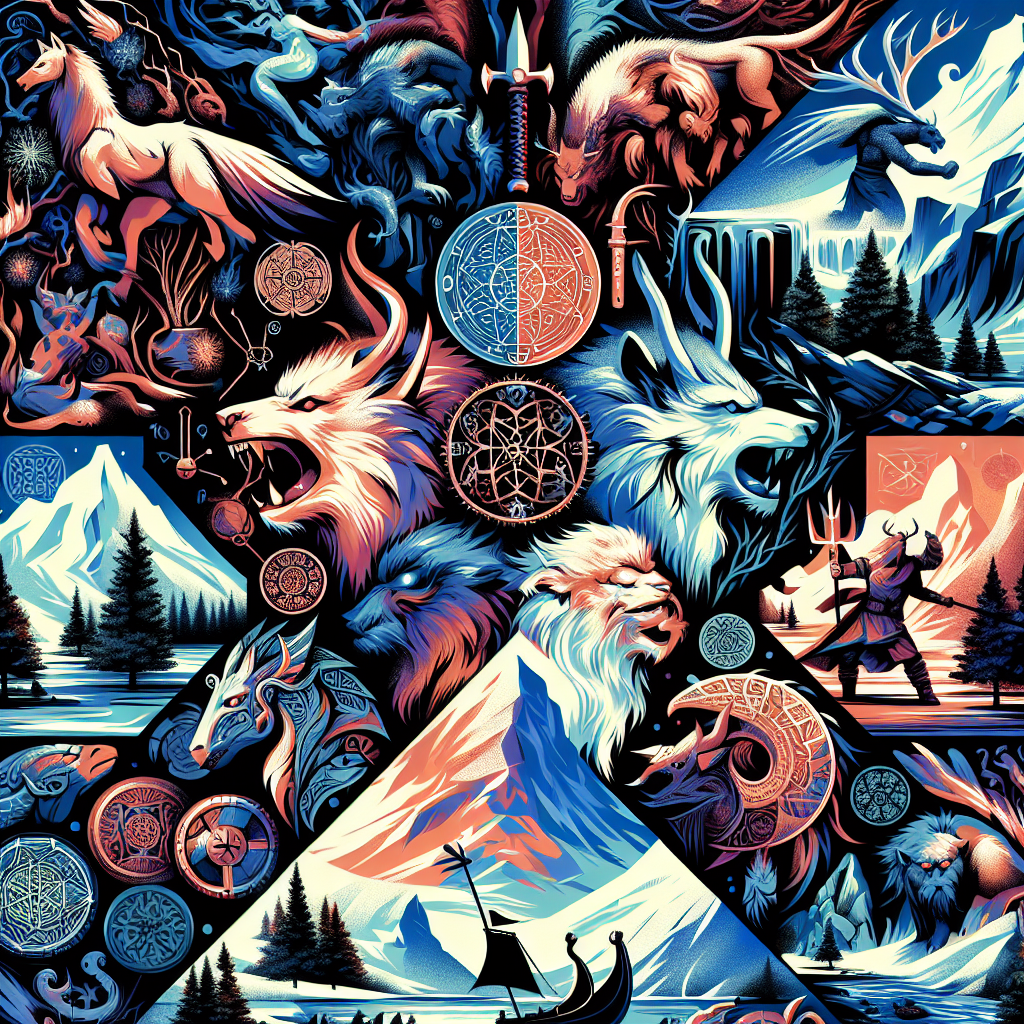
Blue and Green: Representing the natural world, blue and green hues evoke peace, renewal, and the beauty of Midgard, the realm of humans. The oceans, forests, and mountains, integral to Norse life, find aesthetic representation in these colors. In many contemporary artworks, these tones are used to connect the viewer to the elemental forces of the universe, highlighting the Norse belief in interconnectedness.
-
Gold and Yellow: Often linked with divinity and the otherworldly, gold signifies wealth, prosperity, and the favor of the gods. In depictions of Valhalla, the hall of the slain, artists often employ a gold backdrop to reflect the glory and the grandeur of Odin’s abode. This use of color emphasizes the aspirational qualities associated with becoming a part of the divine narrative.
The Symbolic Spectrum
The colors that dominate the artistic interpretations of Norse mythology are not merely aesthetic choices; they resonate deeply with the narrative themes embedded within the myths. For instance, the story of Ragnarok, the end of the world, is one of chaos and destruction, but it is also colored with notions of rebirth and renewal. As artists illustrate the twilight of the gods, they often juxtapose dark, fiery colors with bursts of light, symbolizing the cyclical nature of time.
Vibrant Visuals: Graphic Novels and Contemporary Art
In modern artistic interpretations, particularly in graphic novels, there has been a resurgence in the exploration of Norse mythology. One prominent example is the graphic novel series “Norse Mythology” by Neil Gaiman, which visually encapsulates these ancient tales. The bold use of color in such adaptations serves to energize the narratives and provides an accessible entry point into the complex themes of Norse lore.
Contemporary artists, like the Norwegian painter Målfrid Mørk, embrace vibrant colors to reinterpret traditional myths, often aiming to explore the emotional landscapes in a more abstract manner. Through her dramatic use of colors, Mørk delves into feelings of nostalgia, identity, and transformation, inviting viewers to connect with the myths on a sensory level.
Animated Interpretations
Animation, too, has evolved into a medium that captures the essence of Norse myths, using color as an essential narrative tool. Works like Marvel’s “Thor” franchise showcase not only colorful spectacles but also deeper symbolic meanings: the stark contrasts between light and darkness, for instance, can represent the eternal struggle between order and chaos, good and evil, encapsulated in the myth of Odin and the Frost Giants.
Color as Emotion
Artists know that color can evoke emotional responses, and many delve into this technique when illustrating Norse tales. The story of Freyja, the goddess of love, war, and fertility, is marked by shades of red and pink, not only reflecting her beauty but also the tumultuous nature of love itself. Similarly, the sorrowful stories of tragic figures like Baldr, who is associated with light but meets a dreadful fate, utilize contrasting colors to portray the loss and the fragility of life.
Cultural and Historical Context
The exploration of color in Norse mythology also opens a dialogue about the historical and cultural context in which these myths were created and interpreted. The vibrant use of colors in Viking art, from textiles to wood carvings, demonstrates the ancient Norse priority on storytelling, communication, and identity. As Christianity spread through Scandinavia, many artists began blending these two worlds, leading to an evolution of color use and symbolism.
The transition to Christian iconography brought new hues and meanings into the artistic representation of Norse myths. Sacred colors like white became associated with purity and divinity, contrasting the more chaotic themes present in the old pagan myths. This blending of cultures further enriched the palette of Norse artistic interpretations, infusing them with layers of meaning that resonate through time.
Conclusion: The Timeless Nature of Norse Mythology
The color of myth in Norse lore is not simply an artistic choice; it is a profound method of communication that conveys complex narratives and deep emotions. As we explore the various interpretations of these myths through the lens of color, we uncover a world that is as vibrant as it is intricate.
The continued fascination with Norse mythology reflects its timeless relevance, and the role of color in artistic representations helps bridge the gap between the ancient and the modern. It invites new generations to explore these age-old stories, allowing the myths to live on in the vibrant spectrum of human creativity. Whether through literature, visual arts, or digital media, the colors of Norse mythology continue to inspire and evoke emotions, ensuring that these ancient tales remain a vital part of the human experience.