The Myth of the Solar Boat: Ra’s Journey through the Night

The Myth of the Solar Boat: Ra’s Journey through the Night
In the rich tapestry of ancient Egyptian mythology, few stories resonate as deeply as that of Ra, the sun god. As the embodiment of the sun’s life-giving energy, he not only illuminated the world during the day but also played a crucial role in the cosmos as he journeyed through the night. Central to this celestial saga is Ra’s mythical solar boat, a vessel that underscores themes of rebirth, eternal struggle, and the interplay between light and darkness.
The Symbolism of Ra
Ra, revered as the supreme deity of the ancient Egyptians, symbolizes creation, sustenance, and the cyclical nature of life. each dawn, he is said to rise from the eastern horizon, bringing light to the world and banishing darkness. However, the narrative of Ra extends beyond the day; it delves into the challenges he faces during his nocturnal voyage.
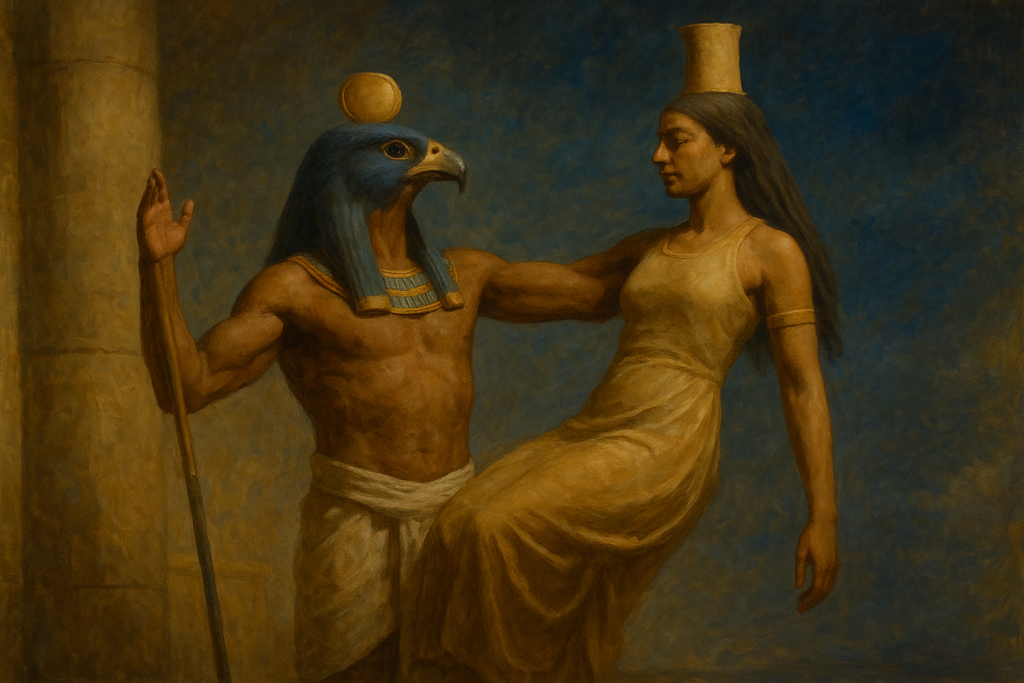
In ancient Egyptian culture, the sun was not merely a celestial body; it was a symbol of divine authority and order. Ra, with his falcon head crowned by a solar disk, represented not only the physical sun but also a governing force of the universe. His daily journey was seen as a crucial mechanism that maintained Ma’at, the principle of harmony and balance.
The Solar Boat: A Vessel of Power
Ra’s solar boat, often referred to as “Mandjet” or “Barque of Millions of Years,” serves as a central motif in this myth. Depictions of Ra gliding through the heavens in his radiant vessel were commonly found in temples and tombs, capturing the essence of his daily triumph over darkness. The boat symbolizes not only the passage of time but also the journey of the soul in the afterlife.
Crafted by divine artisans, the solar boat was imbued with magical properties. It allowed Ra to traverse the sky by day, with sails that could harness the wind and oars that could navigate the celestial waters. This vessel was also double-hulled, representing duality—a key concept in Egyptian belief systems where opposites coexist, such as life and death, chaos and order.
The Night Journey: Struggles and Triumphs
As night falls, Ra’s journey takes a perilous turn. The mythology recounts that each evening, as the sun sets, Ra descends into the underworld, known as Duat. This dark, mysterious realm is home to various deities, spirits, and, crucially, a host of challenges that Ra must face to ensure his rebirth at dawn.
Central to this narrative is the serpent Apophis (Apep), the embodiment of chaos and destruction. Each night, Apophis lies in wait to devour Ra, representing the ever-present threat of darkness overtaking light. The battle between Ra and Apophis is symbolic of the struggle against chaos. In this nightly confrontation, Ra is not alone; he is accompanied by a retinue of gods and departed souls, showcasing the collective nature of this struggle.
The Cycle of Rebirth
Ra’s nightly journey culminates in his resurrection each dawn. This cyclical rebirth is a powerful metaphor for resilience and renewal—one of the foundational tenets of Egyptian spirituality. By overcoming the darkness of Duat and defeating Apophis, Ra symbolizes the continuous triumph of life over death, light over darkness.
The concept of rebirth extends beyond Ra himself. It reflects the journey of every individual’s soul, transitioning through the trials of life and ultimately seeking a return to the light. This belief is encapsulated in the Egyptian practice of burial and the emphasis placed on the afterlife, where the soul’s journey mirrored that of Ra’s solar boat. Just as Ra was reborn each day, the ancient Egyptians hoped for a similar rebirth in the afterlife, embodying the cyclical nature of existence.
Cultural Significance
The myth of Ra and his solar boat held profound significance in ancient Egyptian culture and religion. Temples dedicated to Ra, such as the one at Heliopolis, served as centers for worship and connection with the divine. The rituals conducted there mirrored the astronomical phenomena, emphasizing the deep intertwining of spirituality and the natural world.
Moreover, the solar boat mythological narrative influenced Egyptian art, literature, and cosmology. Artists depicted scenes of Ra’s journey on walls of tombs and temples, encapsulating the essence of his reign and the hope for immortality. Hymns, prayers, and spells also sought to invoke Ra’s favor, underscoring the importance of solar worship in daily life.
Legacy and Modern Interpretation
As we delve into the myth of Ra and his solar boat, it’s essential to recognize its lasting impact beyond ancient Egypt. The duality of light and darkness, the struggle against chaos, and the promise of rebirth resonate in contemporary storytelling, art, and spirituality. The solar boat myth serves as a powerful metaphor for personal journeys, encapsulating the universal themes of adversity, resilience, and renewal.
Modern interpretations of the myth often draw parallels to contemporary struggles against oppression and chaos. Just as Ra battles Apophis in the underworld, individuals today confront their challenges, seeking their own rebirth and transformation. The solar boat, a symbol of hope and perseverance, transcends time, resonating with anyone navigating their own path through darkness.
Conclusion
The myth of the solar boat and Ra’s journey through the night encapsulates the intricate relationship between light and dark, life and death, creation and chaos. It serves as a reminder of the eternal struggle that defines existence, ultimately leading to rebirth and renewal. In celebrating this ancient narrative, we recognize the timeless human quest for meaning, resilience, and the light that guides us through the shadows. As we navigate our own paths, we can draw inspiration from Ra, embracing the journey with determination, faith, and an unwavering belief in the power of renewal.