Myths and Symbols in Roman Funeral Practices
Funeral practices in ancient Rome were rich in symbolism and intertwined with myths that reflected the beliefs, values, and social structures of Roman society. The way the Romans understood death, the afterlife, and the rituals surrounding them tell us much about their spirituality, cultural heritage, and societal norms. This article explores the key myths and symbols associated with Roman funeral practices and how they shaped the Roman approach to death.
The Mythology of Death
Roman funerary customs were heavily influenced by mythology, with various gods and myths shaping their understanding of life after death. The most significant deity associated with the underworld was Pluto, the god of the dead. In Roman beliefs, Pluto ruled over the afterlife, where souls would reside after death. This mythological framework laid the foundation for how the Romans approached the idea of the afterlife and, subsequently, funeral practices.
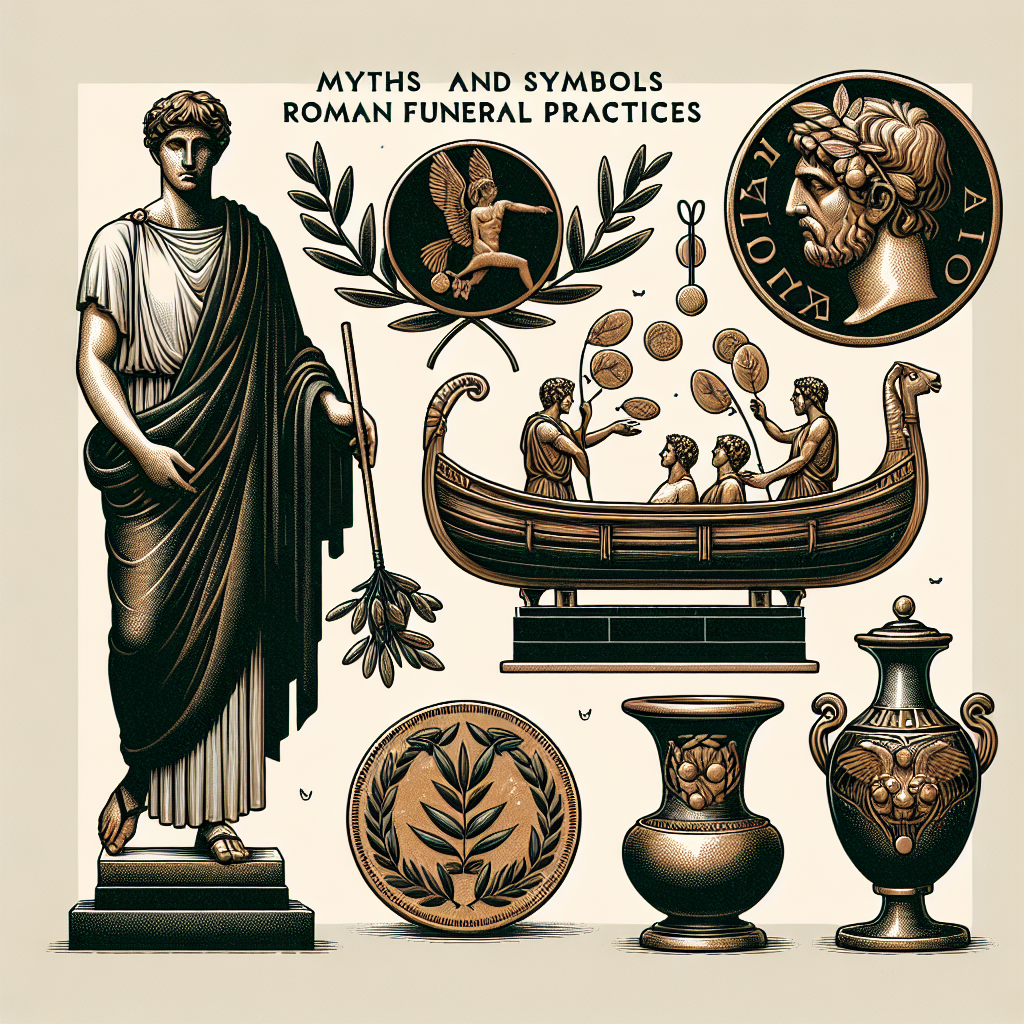
The journey to the afterlife was fraught with challenges and fears. The Romans believed that the deceased had to cross the River Styx, a journey navigated by Charon, the ferryman of the dead. To ensure a smooth passage, Romans often buried their loved ones with coins, known as obols, placed in the mouth, as payment for Charon’s services. This practice not only underscored the importance of proper burial rites but also reflected a deep-seated belief in the need to honor and appease the forces of the afterlife.
Symbols of Transition and Transformation
The symbols used in Roman funerary practices were profound, representing transition and transformation. The act of cremation, one of the most common practices among the Romans, symbolized the purification of the soul. Fire was seen as a transformative force capable of liberating the spirit from the physical body. The ashes, carefully collected and stored in urns, were often placed in tombs or family graves, symbolizing the eternal bond between the living and the deceased. The choice of interment versus cremation would often depend on social class, personal preference, and evolving cultural practices.
The funeral procession itself was a symbol of respect and remembrance. Family members would don mourning garments, typically black, to signify their loss. The somber atmosphere was further enhanced by the presence of musicians, who played melancholic tunes, and mourners who would vocalize their grief. The procession would lead to the burial site, demonstrating the connection between the living and the dead. This poignant representation of loss was filled with symbolic gestures, from the carrying of the deceased on a litter to the scattering of flowers along the path—a testament to the impact of the individual on their community.
Tombs: Eternal Symbols
Tombs played a crucial role in Roman funeral practices, serving as both a resting place for the deceased and a powerful symbol of legacy and memory. The elaborate design of tombs reflected social status and wealth, often adorned with inscriptions and images depicting the deceased’s life, accomplishments, and family lineage. These inscriptions, often written in verse, were important for both the living and the dead; they ensured that the memory of the individual was preserved.
The funerary reliefs found on many tombs illustrate this idea beautifully. Scenes of daily life, mythological events, or representations of the deceased’s virtues were commonly depicted. This artistic expression was not merely decorative; it served to communicate the values and aspirations of the individual and their family. By illustrating virtues such as bravery, wisdom, or piety, families sought to elevate their loved ones in the eyes of those who visited the tomb.
Additionally, the burial practices extended beyond the tomb itself. The use of funerary masks, often made of wax, represents another layer of symbolism. These masks were created to resemble the deceased, serving as potent reminders of their identity. Displayed during funeral rites, these masks fostered a connection between the living and the memory of the departed. The use of masks can be interpreted as an acknowledgment of the impermanence of life and the inevitability of death, emphasizing the importance of honoring one’s ancestors.
Rituals and Ceremonies
The rituals performed during Roman funerals were deeply imbued with symbolism and myth. The Libation, a ritual of pouring liquids, was often conducted to honor the deceased and invite the spirits to partake in the offerings. Typically, wine was chosen for this act, signifying abundance and the celebration of life. This practice reaffirmed the belief that the dead continued to exist in some capacity, deserving of remembrance and offerings.
Another vital component was the funeral oration, delivered by a close family member or a professional orator. These speeches often invoked poignancy and reverence, recounting the life of the deceased and highlighting their virtues. The words spoken in these moments were infused with mythic themes, revealing a society that valued legacy and excellence.
The culmination of the funeral rites was often the burial or cremation, carried out with a fervent sense of duty. The Romans believed that the way one was buried significantly impacted their eternal fate. Indoctrinating the mind with myths about afterlife thresholds and moral judgments underscored the importance of proper funeral practices. A good burial ensured that the soul would be pleased and would favor the living, while inadequate rites could lead to unrest and malevolence from the spirit.
Cultural Legacy
Roman funeral practices encapsulate a rich tapestry of myths and symbols that influenced not only their understanding of death but also their enduring cultural legacy. The elaborate rituals and traditions surrounding death remind us of the universal human experience of grief, memory, and the desire for immortality through remembrance.
As time marched on, the transition from Roman to Christian beliefs brought significant changes to funerary customs, yet many symbols endured. The reverence for the deceased, the significance of remembrance, and the power of myth as a means of understanding the human condition remain potent forces in how cultures throughout history have approached the inevitable reality of death.
In conclusion, the integration of myths and symbols in Roman funeral practices enriches our understanding of their societal values and spiritual beliefs. Through their rituals and customs, the Romans created a profound narrative around death—one that permeates through the centuries and continues to influence contemporary understandings of life, death, and remembrance.