The Story of Sobek: The Nile Crocodile God and Fertility
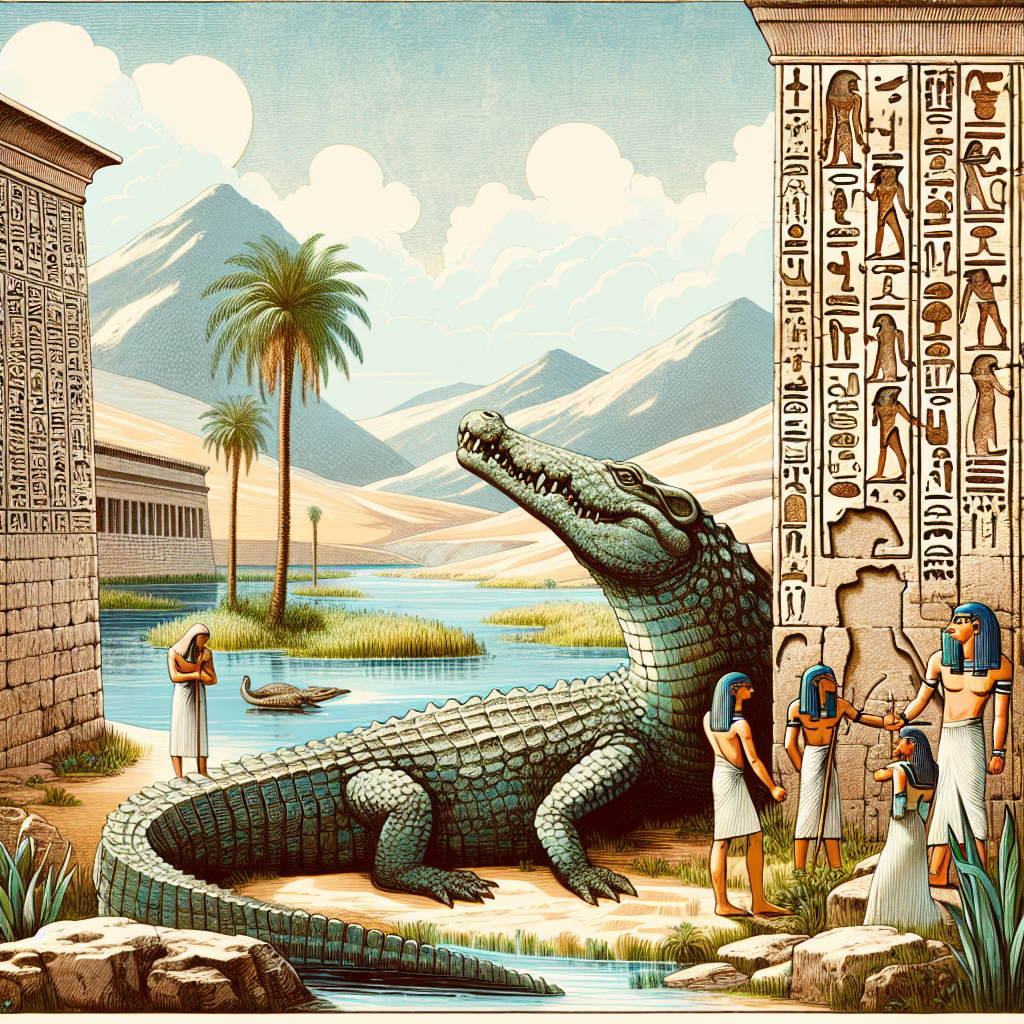
The rich tapestry of ancient Egyptian mythology is woven with gods and goddesses who personified various aspects of life, death, and the natural world. Among these deities stands Sobek, a fascinating figure embodying both the ferocity of the Nile and the fertility it nurtured. Sobek, often depicted as a man with the head of a crocodile, held a significant place in the pantheon, revered not only for his martial prowess but also as a symbol of abundance and protection.
Origins and Historical Context
Sobek’s origins can be traced back to the early dynastic period of Egypt around 3100 BCE. His name, likely derived from the Egyptian word for crocodile, “sbk,” reflects a deep cultural connection to the Nile River and its formidable inhabitants. The Nile was revered as the lifeblood of Egypt, its annual flooding providing the rich silt that transformed barren land into fertile soil. Crocodiles, as both predators and sacred creatures of the Nile, played a crucial role in the agricultural ecosystem, making Sobek’s association with fertility both significant and logical.
Throughout Egyptian history, Sobek’s cult saw varying levels of importance. Initially worshipped in the Faiyum region—an area rich in wetlands and agricultural land—he eventually gained prominence throughout Egypt, with major temples dedicated to him in places like Kom Ombo and Karnak. These locations became centers for rituals aimed at ensuring the fertility of the land and the well-being of the community.
Dual Nature: Protector and Destroyer
Sobek’s dual nature is one of the most intriguing aspects of his character. As a crocodile god, he was revered as a fierce protector of the Pharaoh and the people, symbolizing strength, power, and virility. In this light, Sobek was associated with military prowess, and his fierce nature was invoked to vanquish enemies. Conversely, his connection to the Nile allowed him to embody fertility, health, and prosperity.
This duality reflects the ancient Egyptians’ understanding of the world, where life and death were intimately intertwined. The Nile, with its life-giving properties, was also home to dangerous creatures that could easily turn predator. Sobek offered Egyptians a way to navigate these complexities. They could honor the aggressive nature of the crocodile while also seeking blessings for bountiful crops and healthy livestock.
Symbols and Representations
Sobek is consistently portrayed in art and artifacts as a man with a crocodile head, sometimes adorned with crowns symbolizing Upper and Lower Egypt. He is often seen holding a sistrum (a musical instrument) or an ankh (a symbol of life), reinforcing his roles as a deity of fertility and vital force. In some depictions, he appears with the body of a crocodile, reinforcing his intrinsic connection to this powerful animal.
The annual flooding of the Nile was a pivotal event in the Egyptian agricultural calendar, bringing nutrients to the soil. Sobek was hailed as a god responsible for this natural phenomenon. In ancient texts, he was often called the “Lord of Faiyum,” referring to the fertility of the land and the agricultural prosperity it provided.
Myths and Legends
Numerous myths surrounding Sobek highlight his importance in ancient Egyptian belief systems. One prominent story involves Sobek’s role in the creation myth. Some accounts suggest that Sobek emerged from the primeval waters at the beginning of creation, bringing life and fertility to the world. This narrative emphasizes the interdependence of nature, life, and rebirth.
In another tale, Sobek was believed to have saved the sun god Ra from the serpent Apep, representing chaos and destruction. By protecting Ra, Sobek was not only a warrior but also a protector of balance and order, underpinning the cycle of life and the agricultural abundance crucial for survival.
Sobek and Fertility
Central to Sobek’s worship was his role in promoting fertility. Ancient Egyptians routinely sought his favor for many aspects of life, from agriculture to childbirth. Festivals and rituals aimed at invoking his blessings were commonplace, particularly during the inundation season when the Nile overflowed its banks, rejuvenating the land.
The sacred animals associated with Sobek, primarily the crocodile, were often revered in life and in death. Temples dedicated to Sobek hosted sacred crocodiles, which were believed to embody the god himself. These animals were cared for meticulously, fed, and even adorned with jewelry. After their natural life, many were mummified and buried in elaborate tombs to ensure their continued service to Sobek in the afterlife.
Legacy and Cultural Impact
Although Sobek’s direct worship waned with the decline of ancient Egyptian religion, his legacy endures in popular culture and modern interpretations of Egyptian mythology. Sobek’s duality continues to resonate in contemporary discussions around nature’s fierce and nurturing sides. Crocodiles, often misunderstood, evoke fear and fascination, mirroring Sobek’s complex character.
In addition, the reverence for Sobek reflects broader themes within Egyptian spirituality, such as the balance of opposing forces and the cyclical nature of life. Modern interpretations of Sobek exemplify an ongoing interest in how ancient cultures understood their environment and the forces shaping their lives.
Conclusion
Sobek, the Nile crocodile god, embodies the intricate relationship between danger and fertility in ancient Egyptian culture. His worship reflects a deep understanding of the cycles of nature, life, and death. As a protector and a provider, Sobek served as a reminder of the dual forces at play in the human experience.
In the end, Sobek is not merely a figure of the past; he represents enduring themes that continue to resonate across cultures and time periods. His story serves as a powerful reminder of the delicate balance between ferocity and nurturing, chaos and order, that is integral to our existence. As modern society grapples with the complexities of nature, Sobek’s legacy continues to inspire reverence for the powerful forces that shape our world.