The Osirian Myth: A Story of Betrayal and Resurrection

The Osirian Myth: A Story of Betrayal and Resurrection
The Osirian myth, a cornerstone of ancient Egyptian mythology, is a profound tale centered around themes of betrayal, death, resurrection, and the eternal battle between light and darkness. Central to this myth are the deities Osiris, Isis, Seth, and Horus, whose interactions offer insights into the ancient Egyptians’ understanding of life, death, and the afterlife.
The Birth of Osiris: A God Among Men
Osiris, the god of the afterlife, the underworld, and the harvest, was born to the sky goddess Nut and the earth god Geb. He was the first Pharaoh of Egypt and a symbol of fertility and agriculture. His reign over the land was marked by peace and prosperity, as he taught humanity the arts of civilization, including agriculture, music, and governance. Osiris embodied the principles of life and order, standing in stark contrast to the chaotic forces represented by his brother, Seth.
Osiris’s kind rule extended to his wife, Isis, an equally powerful deity known for her wisdom, magic, and nurturing nature. Isis played a crucial role in the myth, alongside Osiris, and became the embodiment of motherhood and loyalty.
The Betrayal
However, this idyllic existence was not to last. Seth, jealous of Osiris’s power and popularity, sought to usurp the throne of Egypt. In a cunning plot, he devised a scheme to eliminate his brother. Seth invited Osiris to a grand banquet, where he presented a beautifully crafted chest, claiming it as a gift for the god. In a moment of trust, Osiris entered the chest to admire it, only for Seth to seal it shut and throw it into the Nile River, leading to Osiris’s demise.
The tragic betrayal is a critical turning point in the myth, symbolizing the darkness that often lurks within familial relationships and the destructive nature of envy. The act not only highlights the personal vendettas within the divine realm but also reflects the human condition, where betrayal can arise from the closest of relationships.
The Mourning of Isis
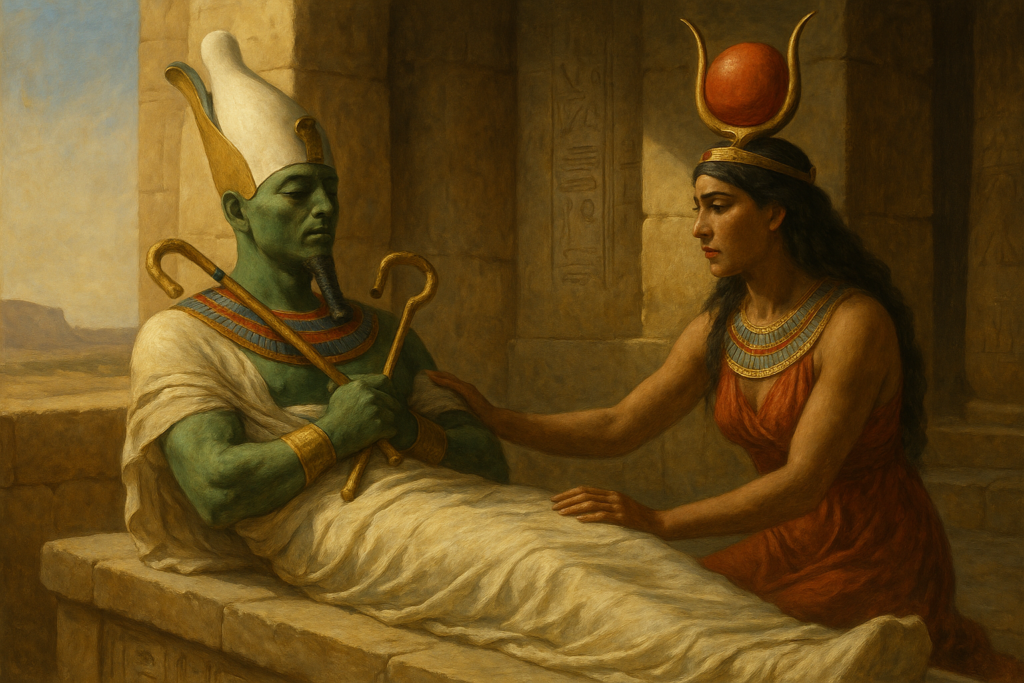
The loss of Osiris plunged the world into mourning, particularly for Isis, who refused to accept her husband’s death. Driven by love and devotion, she embarked on a relentless quest to recover his body. Her journey through perilous landscapes, including the underworld, represents the lengths one will go for love and the determination to seek justice.
Isis’s resilience is further symbolized by her ability to use her magic to protect the deceased, which is a recurring theme in Egyptian culture. Her search ultimately led her to find her husband’s body, which Seth had hidden in a sycamore tree, demonstrating the divine connection between life, death, and resurrection.
Resurrection and the Birth of Horus
The tale takes a mystical turn when Isis uses her magic to bring Osiris back to life, but not in the way that one might expect. Osiris became the ruler of the underworld, embodying the cycle of life and death rather than returning to the earthly realm. This act of resurrection is a poignant reminder of the Egyptian belief in life after death. Isis’s determination and power had not only restored her husband but had also cemented his role as the god who oversees the afterlife.
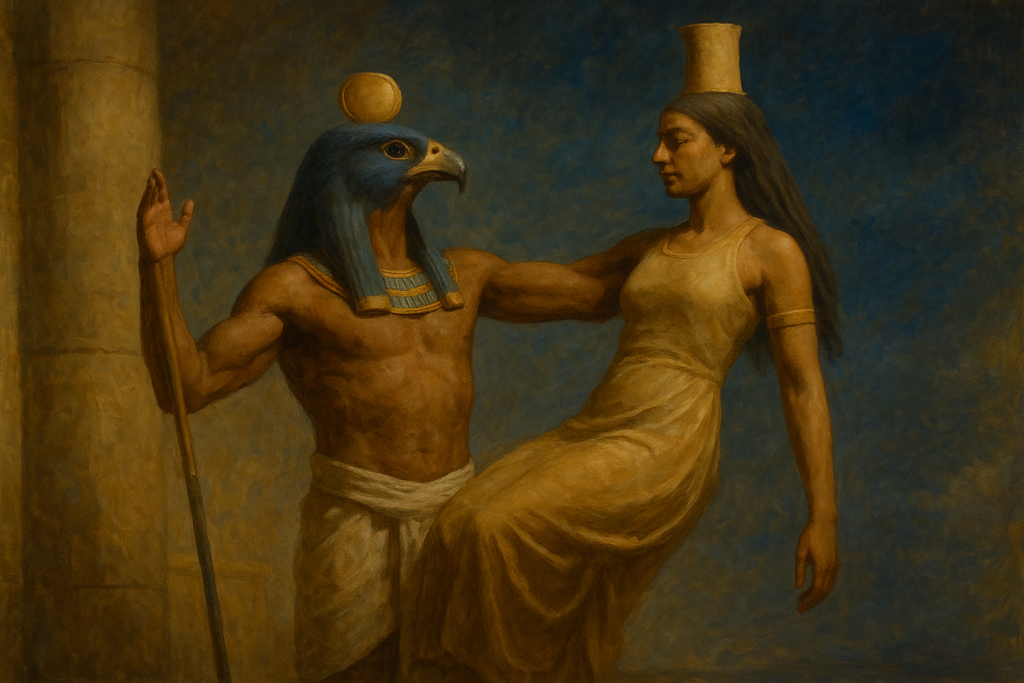
Isis’s love and commitment bore fruit in the form of Horus, the hawk-headed god who symbolizes kingship and the military prowess of the Pharaohs. Horus’s birth signifies hope and renewal; he represents the living Pharaoh on earth, maintaining order and peace. The relationship between Osiris and Horus encapsulates the cyclical nature of life, death, and the promise of rebirth.
The Conflict Between Horus and Seth
The myth continues with the inevitable conflict between Horus and Seth, which reflects the ongoing struggle between order (represented by Horus) and chaos (embodied by Seth). This struggle is not only cosmic but also deeply personal, as Horus seeks to avenge his father’s death and reclaim his rightful place on the throne of Egypt.
The battles between the two deities were fierce and took many forms—physical confrontations, cunning schemes, and strategic allegiances. Ultimately, the conflict culminates in the judgment before the assembly of the gods, where Thoth, the god of wisdom, presides over the final ruling. The gods’ decision to favor Horus not only restored order to Egypt but also solidified the legitimacy of the Pharaoh’s rule, establishing a divine right to kingship.
The Significance of the Osirian Myth
The Osirian myth is much more than a simple tale of betrayal and resurrection; it is a profound exploration of fundamental human emotions and cosmic principles. Themes of love, loyalty, revenge, and the struggle for power resonate throughout the narrative. This myth served as a guide for ancient Egyptians, informing their beliefs about morality, governance, and the afterlife.
Osiris’s resurrection symbolizes the hope for life beyond death, embodying the belief that every ending leads to a new beginning. The annual flooding of the Nile, which brought fertility to the land, was seen as Osiris’s tears—an enduring reminder that from sorrow can arise new life and prosperity.
The funerary practices in ancient Egypt, centered around the worship of Osiris, reflect the belief in the necessity of proper rites to ensure a safe passage to the afterlife. The rituals of mummification and the building of elaborate tombs were ways to honor Osiris and secure a favorable afterlife for the deceased.
Conclusion
The Osirian myth continues to captivate and inspire, transcending time and culture. It offers a lens through which to view the eternal human struggle against darkness, the complexity of relationships, and the hope for resurrection and renewal. Through the tragic tale of betrayal and unwavering love, the myth of Osiris and Isis teaches us that even in the face of chaos and suffering, hope and renewal always have the potential to rise like the phoenix from the ashes, echoing through the ages. The legacy of Osiris, as a god of resurrection and the afterlife, remains a lasting testament to the resilience of life itself.