Prometheus: The Titan Who Gave Man Fire

Prometheus: The Titan Who Gave Man Fire
In the rich tapestry of Greek mythology, few figures stand as prominently as Prometheus, the Titan known for his intelligence, foresight, and, most importantly, his eternal benevolence towards humankind. Often dubbed the “bringer of fire,” Prometheus’s tale is a multifaceted narrative that encapsulates themes of creation, rebellion, and the complex relationship between gods and humanity.
Origins and Identity
Prometheus, whose name means “forethought,” was one of the Titans, an ancient race of deities that predated the Olympian gods. Unlike his brother Epimetheus, whose name translates to “afterthought,” Prometheus was known for his wisdom and keen ability to foresee the consequences of actions. This foresight played a pivotal role in his relationship with humanity and ultimately led to his defiance against the will of the gods.
As the myth goes, Prometheus was tasked by Zeus, the king of the Olympian gods, with creating man from clay. In this role as creator, he took it upon himself to protect humanity not only from ignorance but also from the wrath of the gods. To enhance human life, he decided to gift them a powerful tool: fire.
The Gift of Fire
Fire, in many cultures and narratives, symbolizes knowledge, transformation, and power. For the ancient Greeks, it represented enlightenment and the spark of creativity within humanity. Prometheus’s gift transformed mankind’s existence; fire enabled cooking, warmth in the cold, and protection against predators. It was a catalyst for progress, fostering tools, crafts, and society itself.
However, this act of benevolence came at a grave cost. Prometheus’s decision to steal fire from the gods was seen as an affront to their authority and a significant act of rebellion. He concealed the flames in a hollow fennel stalk and brought them down to Earth, igniting a flame of knowledge that would prove both illuminating and destructive.
Consequences and Retribution
Zeus, enraged by Prometheus’s defiance, decided to make an example of him. As retribution, Prometheus was bound to a rock in the Caucasus Mountains, where an eagle would feast upon his liver, which would regenerate every night. This eternal punishment was not just a punitive measure; it symbolized the profound consequences of challenging divine authority.
While Prometheus endured immense suffering, his resilience turned him into a symbol of rebellion against tyranny. His story resonates with those who stand against oppression, making him a hero in the eyes of many, especially in the context of enlightenment ideals during the Renaissance and the Romantic era. Authors such as Mary Shelley in “Frankenstein” adapted the Promethean archetype, portraying characters who challenged the boundaries of science and humanity.
The Titan’s Message
Prometheus’s narrative underscores various themes that continue to resonate through centuries. One significant theme is the idea of knowledge as a double-edged sword. The gift of fire not only illuminated the paths of civilization but also led to destruction—warfare, environmental degradation, and moral decay. This complex relationship between humanity and knowledge speaks to eternal questions about the ethical implications of progress and the responsibilities that come with it.
Moreover, Prometheus represents the archetype of the martyr. In his unwavering support for humanity, he faced insurmountable suffering, a sacrifice that elevates him to an almost Christ-like figure in certain interpretations. His tale encourages a reflection on our values, urging us to question authority and challenge the status quo in pursuit of a greater good.
Cultural Impact and Modern Interpretations
Prometheus’s influence extends far beyond ancient Greece. Throughout history, his story has inspired countless works of art, literature, and philosophy. In the 20th century, the phrase “Promethean” emerged as a descriptor for individuals who exhibit bold creativity and revolutionary spirit, often in defiance of societal norms or authority figures.
In literature, the figure of Prometheus has been reinterpreted in various ways. In Byron’s “Prometheus,” the Titan’s endurance becomes a celebration of the human spirit’s persistence in the face of adversity. Similarly, in modern cinema, characters who embody Promethean qualities—rebels, innovators, and seekers of truth—continue to captivate audiences.
The idea of Promethean rebellion even finds a place in contemporary discussions surrounding technology and scientific advancement. As societies grapple with the ethical implications of artificial intelligence, genetic engineering, and environmental sustainability, the lessons from Prometheus resonate loudly. Are we, like Prometheus, striding headlong into a transformative yet potentially perilous future?
Conclusion: A Legacy of Fire
Ultimately, Prometheus’s legacy is one of hope, resilience, and caution. He reminds us that while the pursuit of knowledge and progress can illuminate our path, it is crucial to tread carefully, mindful of the consequences that may arise from our actions. The Titan is both a beacon of inspiration and a forewarning, urging us to balance our thirst for knowledge with ethical responsibility and awareness of our interconnectedness.
In the end, Prometheus stands as a poignant symbol of human endeavor and its complexities. The fire he brought not only ignited physical warmth but also sparked a flame of consciousness, inviting generations to ponder their relationship with knowledge, authority, and their shared humanity. As we continue to navigate the ever-evolving landscape of existence, the spirit of Prometheus serves as a guiding light, urging us to embrace both the gifts and burdens that come with the fire of enlightenment.
Recommended reading
These are affiliate links. If you buy through them, we may earn a commission at no extra cost to you.
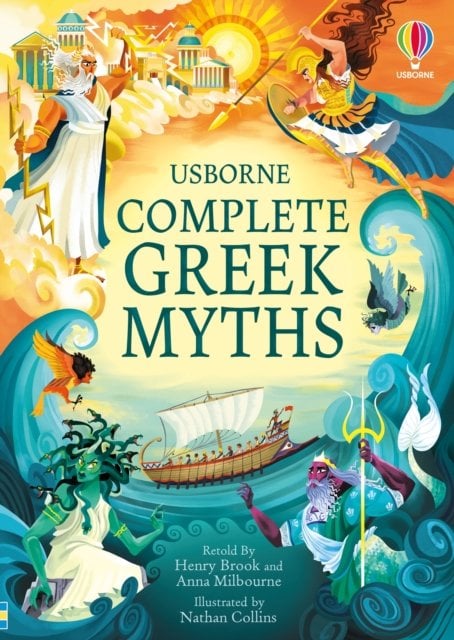
Complete Greek Myths: An Illustrated Book of Greek Myths
Featuring detailed retellings, beautiful character illustrations, and cultural background, this comprehensive volume brings the best-known and obscure Greek myths to life for readers of all ages. Complete with maps, a glossary, and a QR code for pronunciation guides and extra resources, it is an essential addition to any family bookshelf.
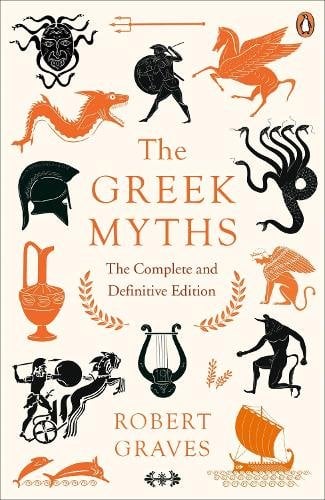
The Greek Myths: The Complete and Definitive Edition
Robert Graves’s definitive edition weaves the classic Greek myths, from the Labours of Hercules to the Trojan War, into one sweeping, authoritative narrative. Perfect for both first-time readers and classicists, this comprehensive volume combines engaging storytelling with detailed scholarly commentary and a complete index of names.

The Odyssey
Homer’s timeless epic The Odyssey follows the hero Odysseus on a perilous decade-long journey home from Troy, facing mythical monsters and divine wrath. Meanwhile, his wife Penelope and son Telemachus defend their kingdom against ruthless suitors in this classic tale of loyalty and endurance.