
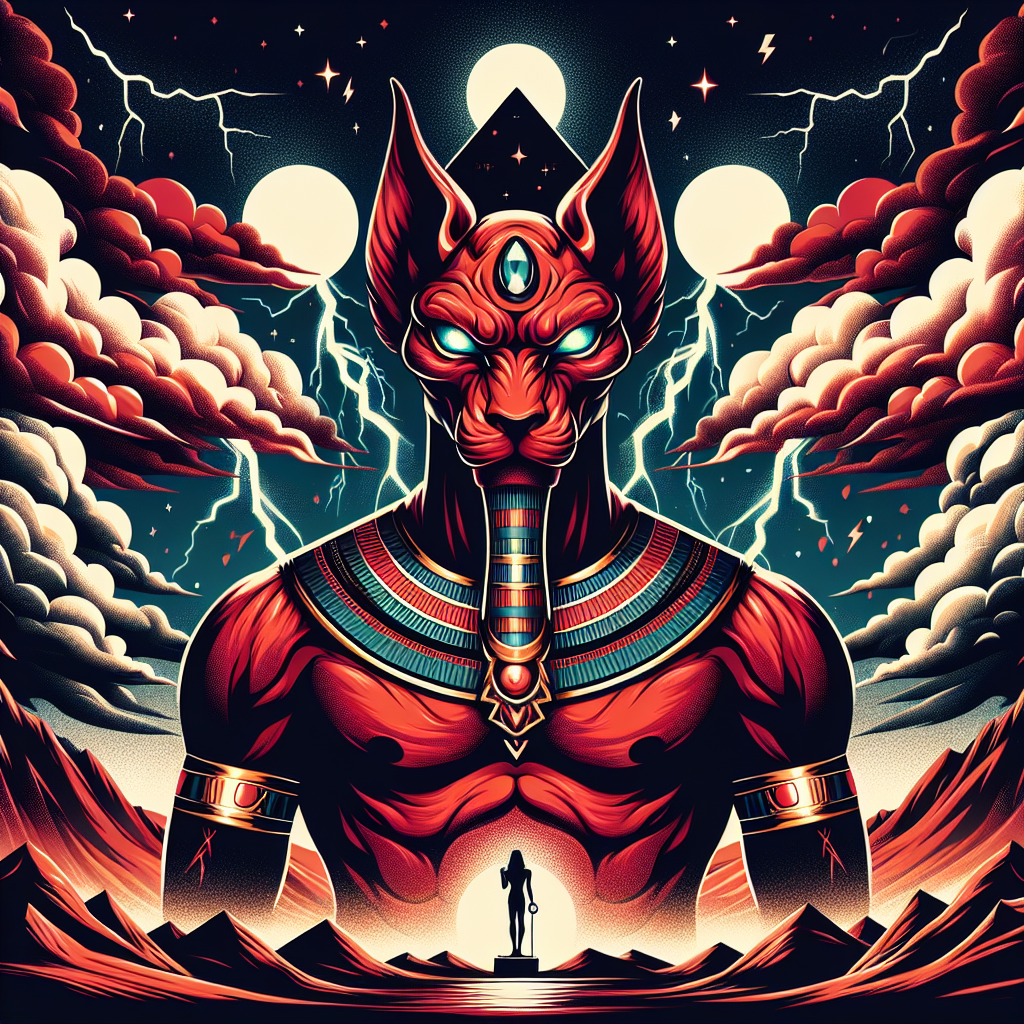
The Story of Set: Chaos, Storms, and Rivalry with Osiris
In ancient Egyptian mythology, the narrative of Set is as complex as the forces he embodies. Often depicted as the god of chaos, storms, and disorder, Set’s mythology is deeply intertwined with the themes of rivalry and duality—the latter primarily illustrated through his tumultuous relationship with his brother Osiris. This article delves into the life of Set, his significance in the Egyptian pantheon, his role in cosmic order, and the tragic narrative arc that led to his infamous reputation.
Origins and Depictions
Set, also known by various names including Seth and Setekh, emerges from the primordial chaos as one of the first gods in creation. He is traditionally associated with the desert, storms, and the forces that disrupt the tranquil balance of life. In ancient Egyptian art, Set is often depicted as a man with a canine-like head, characterized by a long snout, rectangular ears, and a unique body that distinguishes him from other deities. The representation of Set is seen as an embodiment of both strength and unpredictability.
Set is the son of the sky goddess Nut and the earth god Geb, making him a vital figure in the Egyptian creation myth. His siblings include Osiris, Isis, and Nephthys—each representing different aspects of life and existence. While Osiris symbolizes resurrection and fertility, Set embodies conflict and chaos, leading to their eternal rivalry.
The Rivalry with Osiris
At the heart of Set’s story is his fierce envy and rivalry with his brother Osiris, the beloved god of the afterlife. This rivalry is not merely personal; it encapsulates the broader dichotomy of order versus chaos, life versus death—a fundamental theme in Egyptian cosmology. Osiris was revered for bringing civilization, agriculture, and morality to humanity, whereas Set represented the tumult that could unravel the very fabric of Egyptian society.
The most famous myth involving Set and Osiris revolves around the tragic fate of Osiris. Fueled by jealousy and ambition, Set devised a cunning plot to usurp his brother’s throne. He tricked Osiris into entering a coffin—then sealed it and cast it into the Nile, a deed that led to Osiris’ death. This act of treachery reveals the chaotic and destructive side of Set, demonstrating how his nature often leads to devastation.
However, the story does not end with Osiris’s demise. Set’s actions incited a series of events that not only sparked conflict with the other gods but also revealed his vulnerabilities. Isis, the devoted wife of Osiris, embarked on a harrowing journey to recover her husband’s body. With the help of her sister Nephthys and the god Anubis, she resurrected Osiris, allowing him to rule the underworld—a new form of existence that further solidified his role in the cycle of life and death.
Chaos and the Natural World
Set’s dominion over storms and chaos showcases his integral role in the natural world. As a god associated with the desert, his influence can be seen in the fierce sandstorms that sweep across the land, reminiscent of his tumultuous spirit. Yet, these storms also play a critical role in the ecosystem, bringing both destruction and fertility to the parched soil. Thus, Set is emblematic of the dual nature of existence—disorder can lead to renewal and rebirth.
In agricultural societies, such as ancient Egypt, the unpredictability of the Nile’s flooding was a vital aspect of survival. Set’s storms were feared, but they were also recognized as a necessary force for rejuvenation. This duality reflects a broader theme within Egyptian spirituality: that chaos and order coexist and that one cannot exist without the other.
The Fall of Set
Despite his power, Set faced tremendous opposition. His actions against Osiris marked him as a villain in the eyes of the other gods and humanity, leading to his eventual downfall. His rivalry with Horus, the son of Osiris and Isis, heightened this conflict. After Osiris’s resurrection, Horus sought revenge against Set to reclaim his rightful place as ruler. The ensuing battle between Horus and Set was fierce, representing the eternal struggle between order and chaos.
Ultimately, Horus emerged victorious, symbolizing the restoration of cosmic harmony. However, Set was not killed; instead, he was often depicted as being exiled. This outcome indicates that while chaos must be contained, it is an eternal part of existence and cannot be wholly eradicated. In many narratives, Set is redefined; he becomes a complex figure embodying both chaos and the necessary transformations that follow.
Set in the Modern Context
Even thousands of years after the decline of ancient Egyptian civilization, Set’s story remains relevant. In contemporary discussions, themes of chaos and order resonate with modern existential questions, such as the balance of natural forces in our world and the struggle between control and chaos in human society. Set serves as a reminder of both the destructive power of discord and the potential for growth that can arise from it.
Set’s legacy also prompts a reevaluation of how we perceive chaotic forces in our lives. Rather than solely viewing chaos as negative, it can be seen as an invitation to adapt, innovate, and grow. The lessons of Set are poignant in today’s rapidly changing environment.
Conclusion
The story of Set is a rich tapestry of mythology that embodies the complexities of existence—the perpetual struggle between chaos and order, life and death, and rivalry and reconciliation. Set’s character encapsulates the duality of nature, reminding us that both disorder and harmony are essential to the cosmos. Through his tumultuous relationship with Osiris, Set’s narrative reflects humanity’s own struggles and the lessons we can learn from the forces that shape our reality. In his chaos, there lies the potential for renewal, and in his rivalry, the hope for balance and restoring order in the world.


