The Serpent Goddess: Wadjet and Her Role in Protection
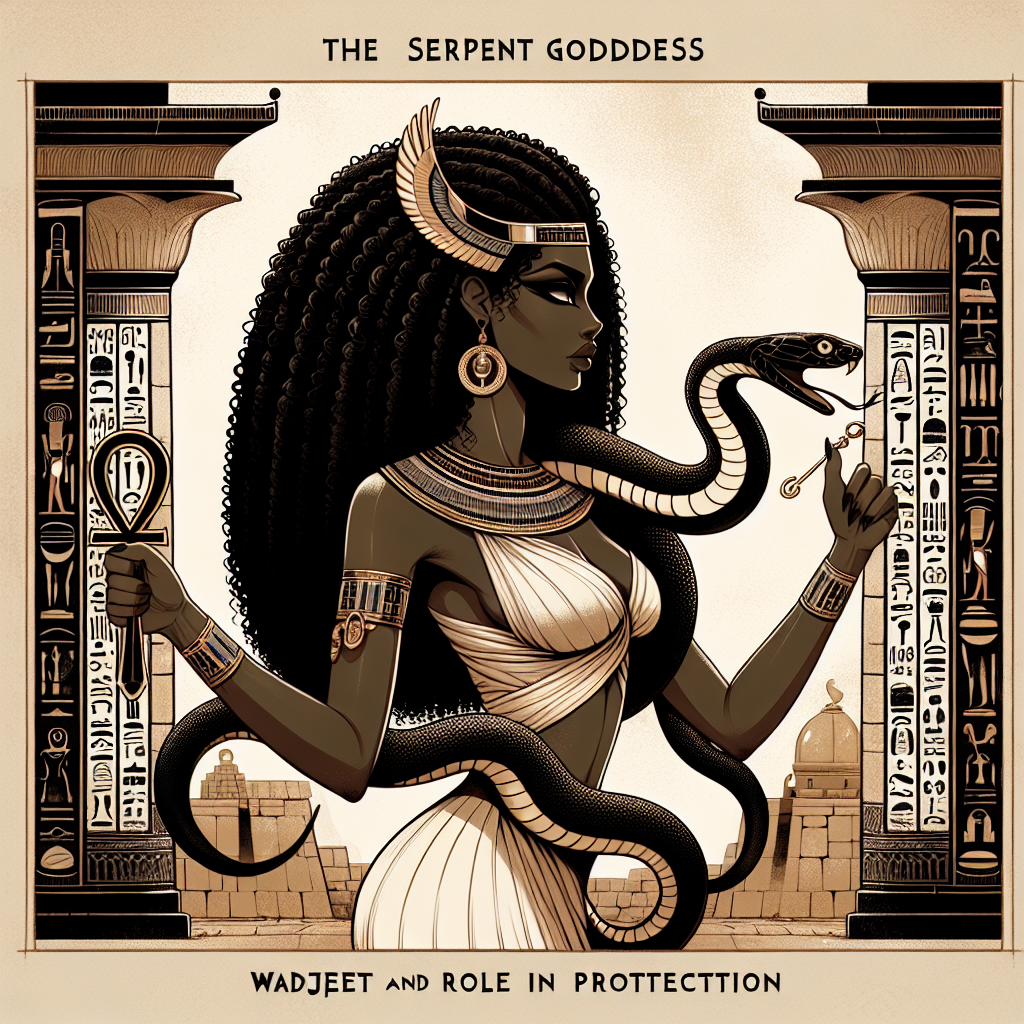
Wadjet, known as one of the most revered deities in ancient Egyptian mythology, embodies the essence of protection and the power of the serpent. Often depicted as a cobra or as a woman with the head of a cobra, she is a symbol of sovereignty, authority, and divine guardianship in the rich tapestry of Egyptian religious beliefs. Her presence permeated various aspects of ancient Egyptian society, influencing everything from personal protection charms to the state’s ideological framework.
Origins and Mythology
Wadjet’s roots can be traced back to the early dynastic period of Egypt, where she initially emerged as a local deity of Lower Egypt, specifically associated with the city of Buto (modern-day Tel Basto). The name “Wadjet” translates to “the green one,” linked to the nourishing aspects of the papyrus swamps and possibly indicative of her connection to fertility and rebirth.
As Egyptian civilization progressed, Wadjet evolved from a local deity into a national symbol, closely associated with the pharaohs and the concept of duality in the kingdom. She became an integral part of the mythology surrounding the unification of Upper and Lower Egypt, serving as the protective goddess of the pharaohs and the patron deity of the rulers of the country. As a symbol of divine kingship, Wadjet played a pivotal role in the legitimacy of a pharaoh’s rule, providing both physical and spiritual defense to the monarchs.
Symbolism and Depictions
The image of the cobra, particularly the “uraeus,” which represents the raised cobra often found on the crowns of pharaohs, is synonymous with Wadjet’s power and protective nature. This symbol served as a fierce guardian, ready to strike at any enemies of the state or the pharaoh.
Wadjet is also associated with the Eye of Horus, a powerful symbol representing protection, healing, and restoration. The connection between Wadjet and this iconic symbol solidified her role as a protector not just for rulers, but for the entirety of the Egyptian populace. Often, she was invoked in funerary practices, wherein amulets and inscriptions featuring her iconography were placed within tombs to ensure safe passage to the afterlife and safeguard against malevolent forces.
Types of Protection
Wadjet’s protective attributes extended across several spheres of life:
1. Royal Protection
As the protector of both the pharaoh and the nation, Wadjet was critical in cementing the divine right of kings. Pharaohs would invoke her name in rituals, believing that her blessings granted them strength and fortitude in their rule. Gold and precious jewels often adorned artifacts depicting Wadjet, emphasizing her divine nature and the importance of her protection in both life and death.
2. Military Guardian
Wadjet’s fierce nature made her a guardian in times of war. Soldiers would carry amulets and talismans bearing her image into battle, seeking her intervention to ensure victory and safety. In historical records, battles often included rituals and ceremonies dedicated to Wadjet for divine guidance and protection against foes.
3. Domestic and Personal Protection
On a more personal level, ancient Egyptians often wore amulets featuring Wadjet in their daily lives, believing that her presence would guard them from harm. Households would have representations of the goddess displayed to protect against envy, illness, and any malevolent spirits. This everyday invocation of her protective power demonstrates Wadjet’s vital role in both individual and communal well-being.
4. Afterlife Guardian
In funerary contexts, Wadjet’s presence was paramount. Her image was commonly included in burial goods, ensuring that the deceased was under her watchful eye on their journey to the afterlife. The belief was that Wadjet would provide protection against dangers that lurked beyond the mortal world, assisting souls in navigating the challenges of the underworld. Funerary texts often invoked her name, reinforcing her identity as a guardian in both life and death.
The Cult of Wadjet
Wadjet’s worship was widespread, with numerous temples and cult centers throughout Egypt. The main cult was located in Buto, where priests performed rituals and offerings tailored to honor and invoke her protection. Festivals celebrating Wadjet exhibited both public reverence and a communal spirit, highlighting the importance of her protection in the life of the community.
As Christianity spread and ancient Egyptian religions waned, many of Wadjet’s functions and attributes were syncretized or transformed. Yet, her legacy as the protector remained embedded in the cultural and spiritual consciousness of Egypt, influencing future religious practices.
Legacy and Influence
Wadjet’s influence extends beyond her ancient origins. In modern times, she is a source of inspiration in various artistic expressions, literature, and academic studies focusing on ancient spirituality. Her symbolism is often referenced as a representation of female empowerment and the nurturing aspect of divinity. Organizations advocating for women’s rights and empowerment have drawn upon her legacy as a source of strength, invoking her dual role as both a guardian and a provider.
In the realm of esotericism and modern spirituality, Wadjet has found renewed relevance, often associated with themes of protection, sovereignty, and the divine feminine. Her image serves as a powerful reminder of the enduring human desire for safety and assurance in an unpredictable world.
Conclusion
Wadjet, the Serpent Goddess of ancient Egypt, stands as an enduring symbol of protection, sovereignty, and divine guardianship. From the pharaohs who invoked her power for legitimacy and security to the common people wearing amulets in their daily lives, her influence permeated all levels of ancient Egyptian society. As we reflect on her legacy, it becomes clear that she offers not only a glimpse into the religious practices of a bygone era but also a rich source of inspiration for contemporary discussions of empowerment, protection, and the sacred femininity. Wadjet’s story is not just one of mythology; it embodies the universal longing for safety amid life’s tumultuous seas.