Set’s Role in Myth, Kingship and Desert Power
Set is one of the most striking gods in ancient Egyptian religion because he never settles into a single, easy role. He can be dangerous, disruptive and violent; he can also stand at the edge of the world defending the sun god against chaos. That tension is exactly what makes him so compelling. In Egyptian texts and temple thought, Set belongs to the desert, storms, foreign lands and upheaval, yet he is also tied to kingship and to the machinery of cosmic order. Rather than a simple villain, he is a god of necessary force, whose meaning changed over time and depended on where and when Egyptians worshipped him.
Set’s place in the Egyptian divine family
Set appears in Egyptian tradition as a son of Geb and Nut and the brother of Osiris, Isis and Nephthys in the family group often called the Ennead of Heliopolis. That genealogy is important, but it should not be treated as the only Egyptian way of understanding the gods. Egyptian religious ideas developed over many centuries and across different centres, so Set’s position could shift depending on the text, cult place and period being considered.
In the Heliopolitan tradition, Set belongs to a divine family whose dramas explain both kingship and disorder. Elsewhere, he could be more strongly associated with local cult and with royal power itself. The most useful approach is therefore to read Set not as one fixed character, but as a god whose identity was made and remade in different settings.
The desert god who stood outside the fertile land
Set is most consistently linked with the desert, barren spaces and what lies beyond the cultivated Nile valley. This matters because ancient Egyptian religion was shaped by the contrast between ordered land and dangerous outlying regions. The desert was not merely empty scenery; it was a zone of threat, travel, foreign contact and uncertainty. Set belonged there.
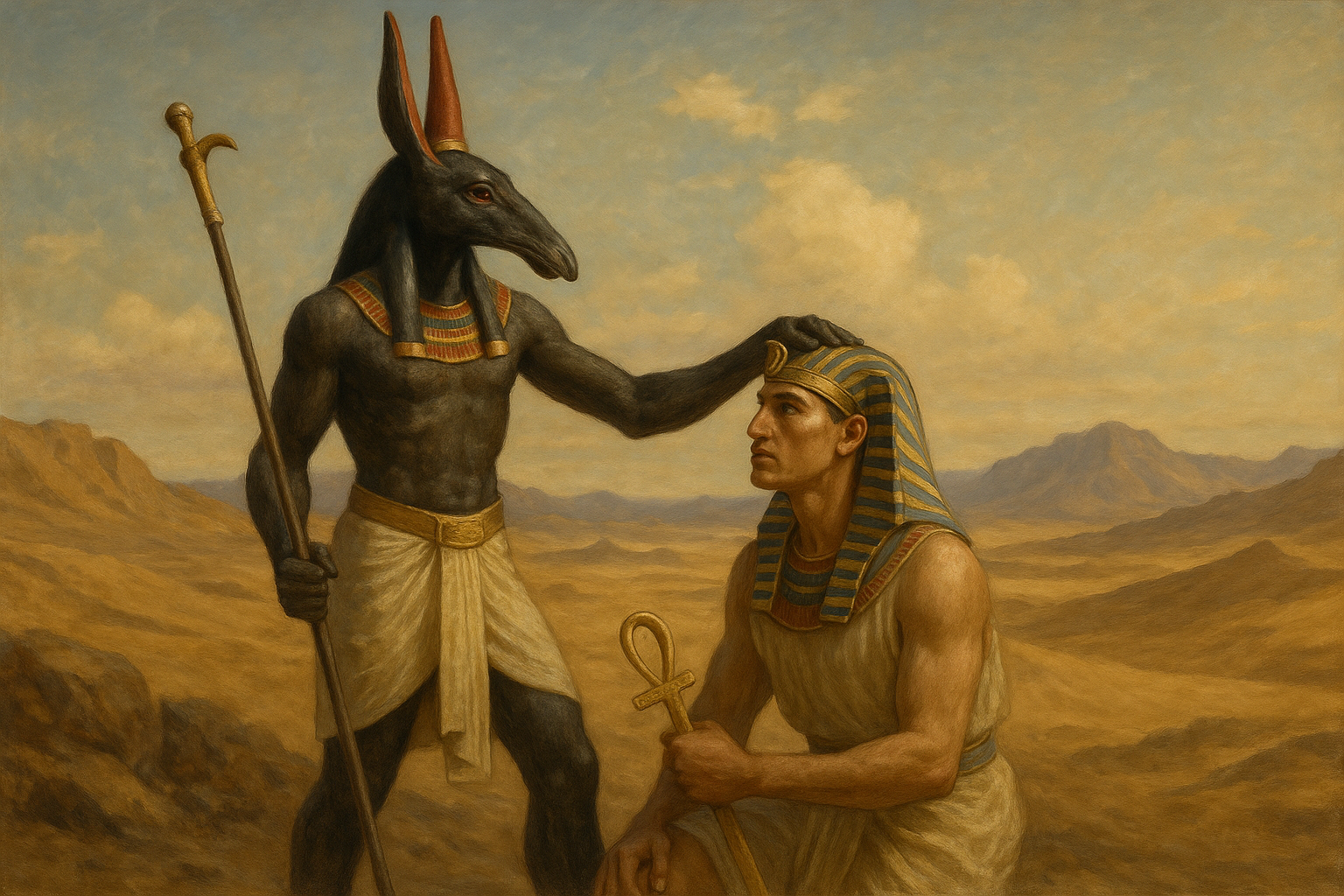
He is also associated with storms, violent weather and unsettled force. In visual tradition he is commonly shown with a distinctive animal head that does not correspond neatly to any single real creature. Egyptian artists used this strange form to mark him as recognisably other. His appearance fits his character: powerful, unsettling and difficult to domesticate.
At the same time, Set was not simply the enemy of order. Some texts and ritual contexts present him as a necessary power within the cosmos. That ambivalence is essential. Egyptian religion did not always divide the world into wholly good and wholly bad figures. A god could be dangerous and useful at once.
Set and the murder of Osiris
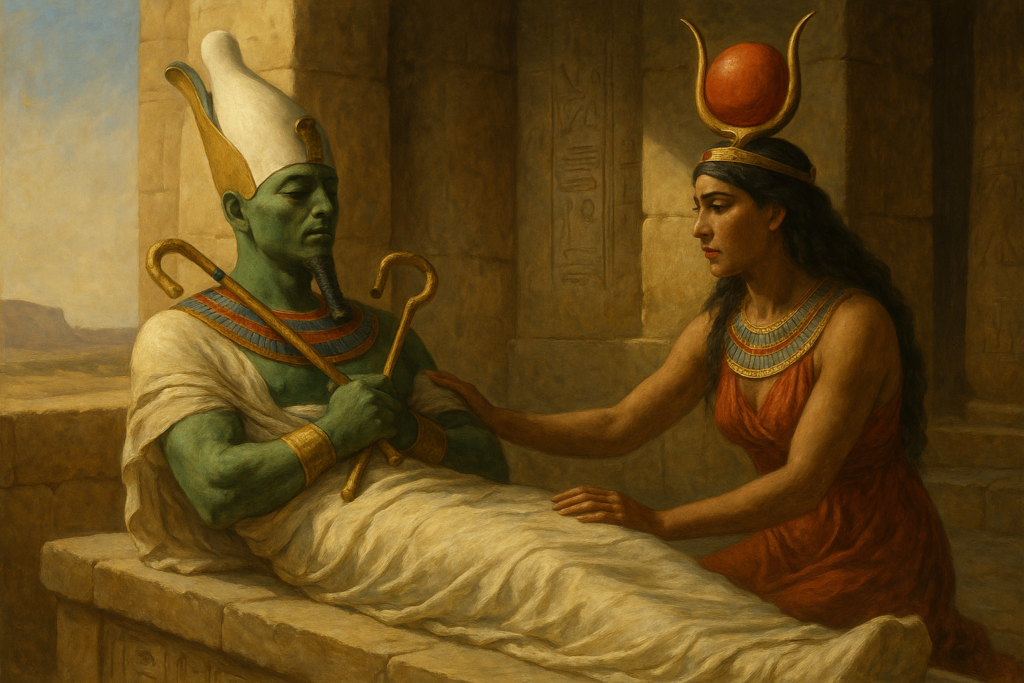
The best-known story involving Set is the killing of Osiris. In the major Egyptian narrative tradition later gathered in the myth of Osiris, Set kills his brother Osiris and seizes his position. In the most famous surviving literary treatment of the wider conflict, The Contendings of Horus and Seth, preserved on Papyrus Chester Beatty I and usually dated to the Ramesside period, this murder is already assumed as background rather than retold in full. The narrative instead focuses on the struggle between Horus and Set for legitimate kingship after Osiris’s death.
Other Egyptian texts, especially funerary and ritual compositions, refer to Osiris’s death, dismemberment and restoration in scattered ways rather than as one continuous story. The point is not that Egyptians told one uniform “myth of Osiris” everywhere, but that Set’s violent act became a key way of explaining the loss of a rightful king and the need for restoration.
Later Greek writers, especially Plutarch in Isis and Osiris, gave the story a more literary and moralised shape. That account is useful, but it is a later interpretation, not a substitute for Egyptian sources. In Egyptian tradition, the emphasis is less on a villain’s psychology than on the damage done to kingship, family order and cosmic balance.
The long contest for kingship in The Contendings of Horus and Seth
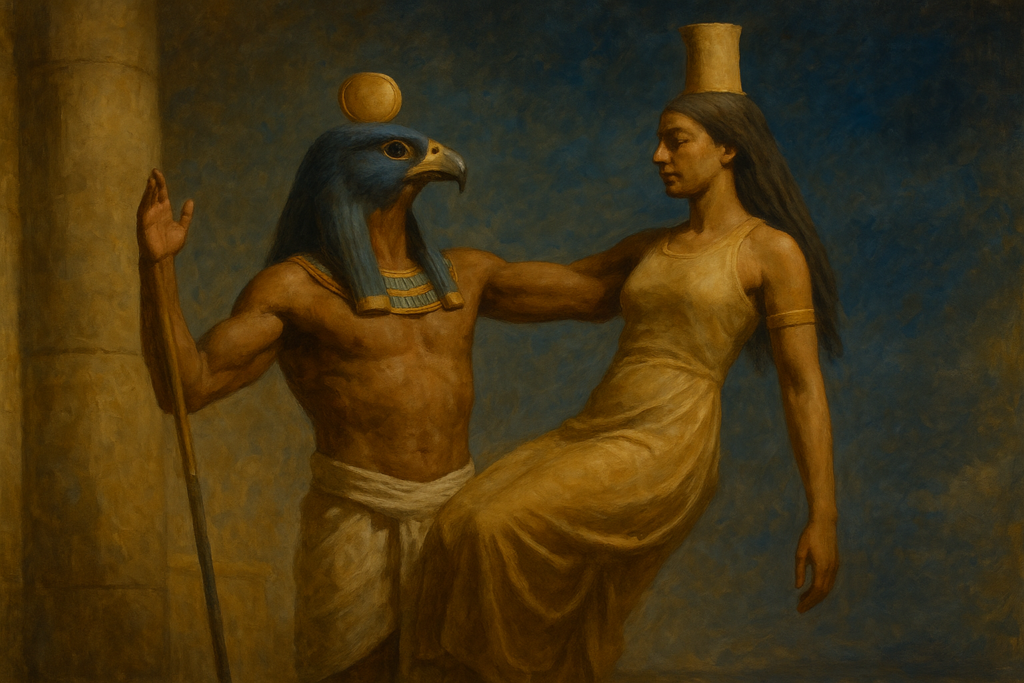
The fullest surviving narrative about Set is The Contendings of Horus and Seth, a humorous and highly inventive tale from the New Kingdom. Here the dead Osiris’s son Horus and his uncle Set argue before the divine tribunal over who should rule. The story opens with the gods gathered to judge the case, and the dispute then unfolds through a series of contests, appeals and humiliations.
Set repeatedly tries to prove that he is the stronger or more suitable ruler. One episode has him challenge Horus to a boat race in which both competitors build vessels of stone; another features shifting forms of contest, trickery and legal wrangling. The story is not a straightforward heroic duel. It is a court case, a spectacle and a satire of divine administration all at once.
Some of the most memorable moments show that Set’s strength is real but not enough. He is powerful, aggressive and persistent, yet his conduct repeatedly exposes the limits of force when compared with rightful inheritance and patient endurance. The tale eventually moves toward settlement, and Horus is recognised as king. Set does not simply vanish, however. In the ending, the older gods do not erase him from the cosmos; instead, he remains part of divine order, even if in a diminished or redirected role. That ending is one reason the tale feels so Egyptian: disorder is not eliminated so much as contained, managed and put to work.
Set as a defender of the sun god
Set’s dark reputation is only half the picture. Long before the Ramesside tale of Horus and Set was copied, Egyptian religious texts could cast him as a protector of the sun god Ra. In later funerary and temple traditions, Set appears as one of the gods who repels the serpent Apep, the great enemy of the sun’s nightly journey. This role makes sense of his violent force in a constructive way: the god who threatens order can also defend it when properly directed.
This protective role helps explain why Set was never universally rejected in ancient Egypt. He was feared in some contexts and honoured in others. Gods in Egyptian religion were often understood through what they did, not just through a fixed moral label. Set could be dangerous to Osiris and Horus while still serving the sun god and, by extension, the maintenance of the world.
The British Museum notes that he was worshipped by some Egyptians, including kings whose names incorporated his own, while also being viewed as a god of chaos and foreign lands. That combination is not a contradiction in Egyptian terms. It reflects the way divine power could be both disruptive and necessary.
Set, kingship and the problem of legitimate power
Set’s link with kingship is one of the most revealing aspects of his cult. In some periods he was not merely the enemy of the king but a force implicated in royal authority itself. The Egyptian ruler had to master dangerous energies, subdue enemies and maintain balance at the borders of the land. Set embodied those border energies. He could therefore belong to the logic of kingship even when myth made him the rival of the rightful king.
The royal names of Seti I and Seti II are a reminder that Set still carried prestige in the Ramesside period. Their names do not prove that every Egyptian admired the god equally, but they do show that Set remained available as a source of royal identity and power. In some contexts, especially in the eastern Delta and at places connected with the god’s cult, his worship was evidently more positive than his later reputation might suggest.
Set also appears in royal and religious imagery as a figure who helps define what kingship must overcome. He marks the dangerous edge of rule: the desert beyond the fields, the threat from outside, the conflict that must be held in check. In that sense, Set was not merely a problem for kingship. He was one of the ways Egyptian religion thought about kingship at all.
Why Set matters beyond the label of “evil god”
It is tempting to reduce Set to a single idea: murderer, villain, embodiment of chaos. Ancient Egyptian religion is more interesting than that. Set’s story shows a world in which order and disorder are not absolute enemies but intertwined realities. A god of violence can protect the sun; a rival to the rightful heir can remain part of the divine system; a figure associated with the barren desert can still be useful to kings.
That complexity is why Set has endured in the modern imagination. He is unsettling, but he is also recognisably political and cosmic. Egyptian sources never let him settle into one simple meaning, and that is the best reason to read him with care: Set is not just the god who breaks order, but the god who reveals how much work order requires.
Sources and further reading
- The Contendings of Horus and Seth, Digital Library of Inscriptions and Calligraphies, Bibliotheca Alexandrina (opens in a new tab)
- Ancient Egyptian gods and goddesses, The British Museum (opens in a new tab)
- Metropolitan Museum of Art exhibition essay on ancient Egyptian religion and kingship, The Metropolitan Museum of Art (opens in a new tab)
- Pyramid Texts, Digital Egypt for Universities, University College London (opens in a new tab)