Njörðr, Sea-Winds and the Vanir Exchange
Njörðr is one of the more elusive gods of Norse mythology: a Vanir deity associated with sea, ships, wealth and fair winds, yet remembered mainly through a handful of medieval texts written down in Christian Iceland centuries after Scandinavia’s conversion. The clearest narrative source for his story is Snorri Sturluson’s Prose Edda, especially Gylfaginning, while the Poetic Edda preserves a different, older poetic texture in the hymn Hymiskviða. The result is not a single fixed portrait but a small set of related traditions that overlap without quite merging.
Njörðr among the Vanir
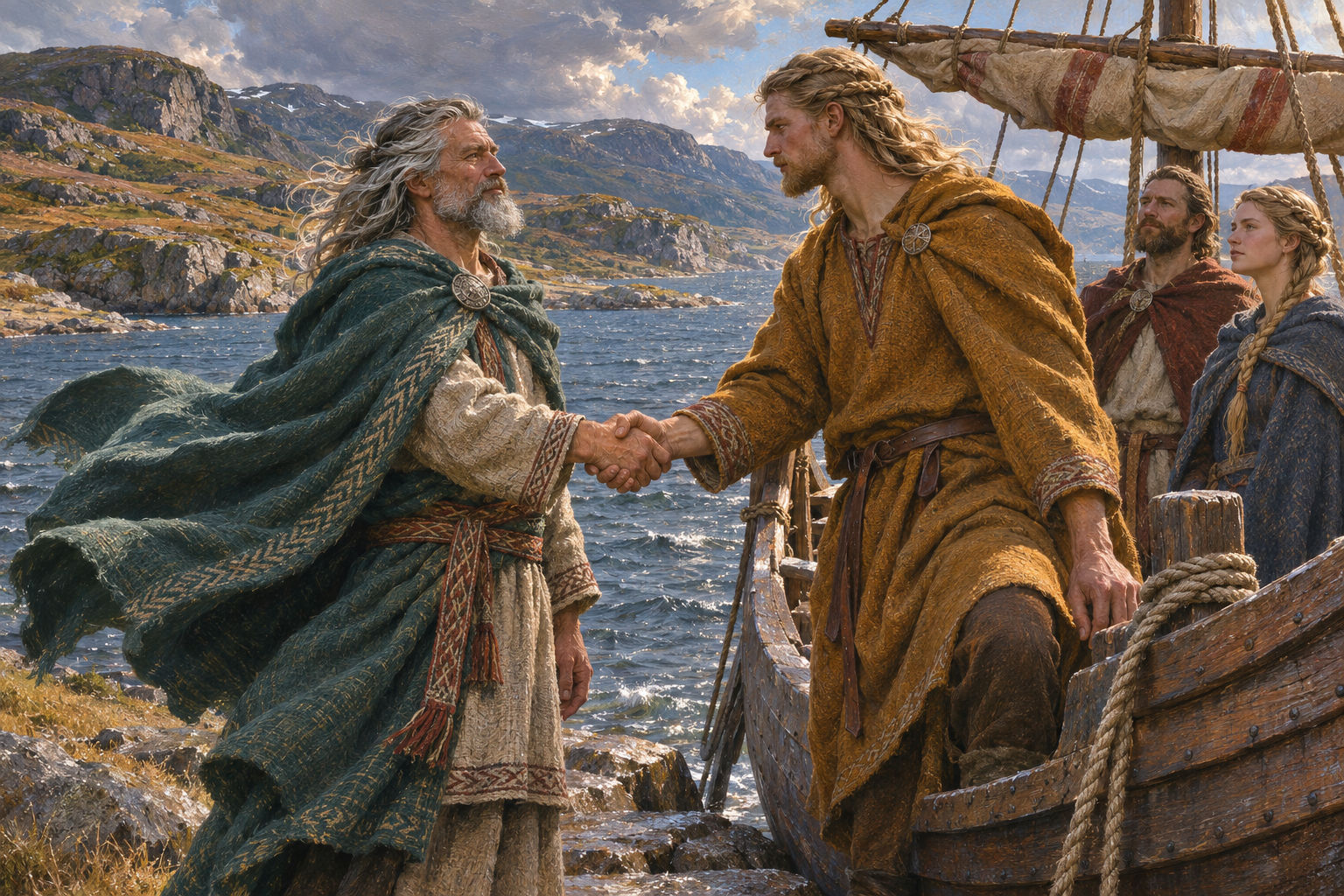
Snorri places Njörðr among the Vanir, the divine group later joined to the gods of Ásgarðr after a war and exchange of hostages. In Gylfaginning, the account is brief but important: the Vanir send Njörðr to the gods, and in return receive Hœnir. This exchange makes Njörðr a sign of reconciliation between divine groups, and Snorri explicitly says that he became “an atonement” between gods and Vanir. That hostage story belongs to Snorri’s narrative framework and is not preserved in exactly the same way elsewhere.
Snorri also says that Njörðr is not originally of the race of the Æsir, but was “reared in the land of the Vanir”. He later folds him into the highest divine company, listing him among the principal gods at Ægir’s feast in Skáldskaparmál. There, Njörðr is treated as a major figure in the mythological order, even while his origin is marked as different from that of Óðinn, Thor and the rest.
The sea, the wind and riches
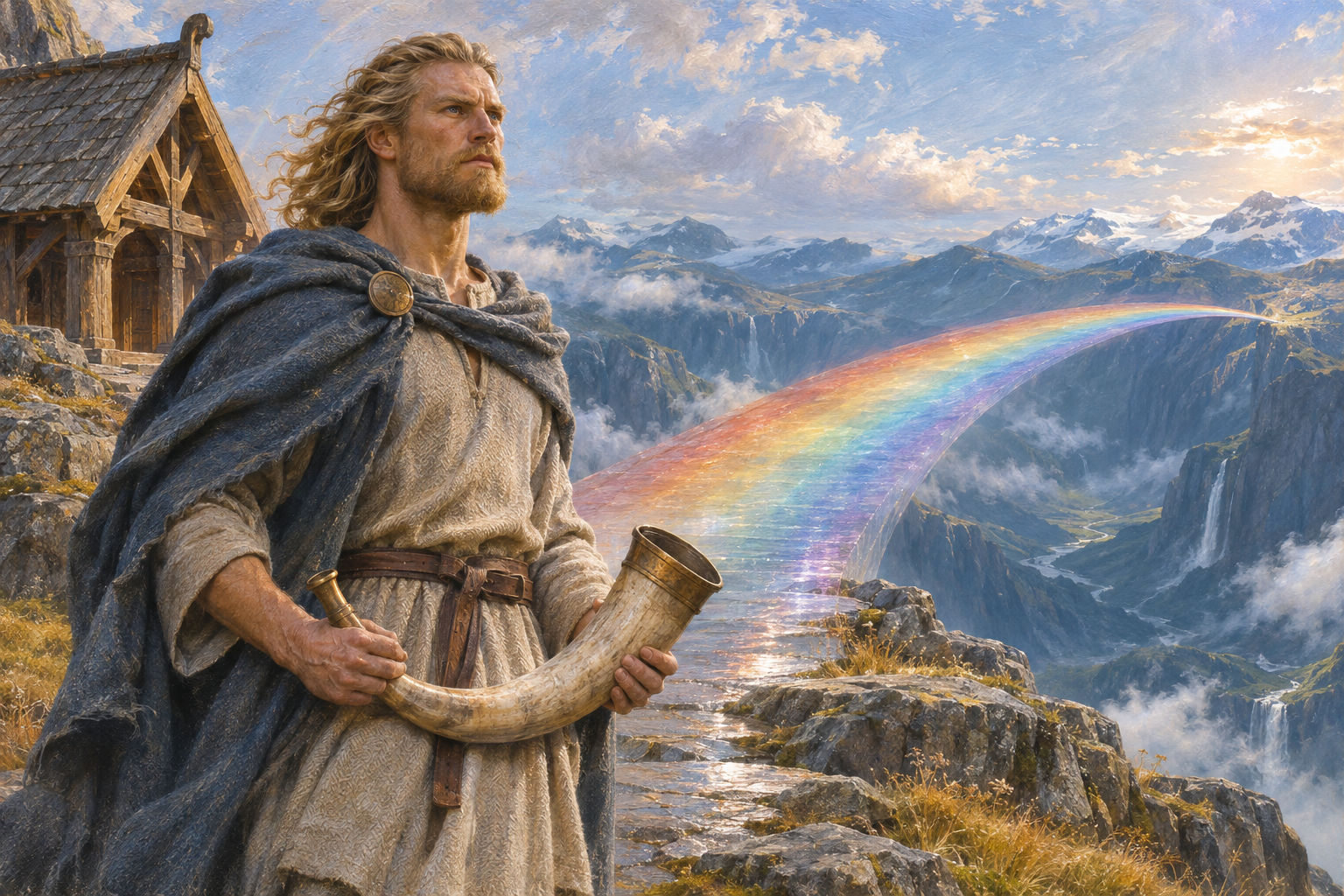
Njörðr’s sphere is the maritime world. Snorri says that people should invoke him for prosperity, abundance and possessions, because he can give “great plenty of lands or of gear”. This is one of the few explicit statements in the medieval sources about what he was for. He is also linked with ships and seafaring in later poetic and prose references, and modern scholars often describe him as a god of the sea and of wealth gained by fair weather and successful travel.
That association is not hard to understand in a Norse society where sailing was essential and the coast shaped daily life. Yet the sources do not turn Njörðr into a vague “nature god”. They present a more specific figure: a divine patron of maritime prosperity, movement and gain, not simply the sea in the abstract. When medieval poets use his name in kennings and descriptions, they are drawing on that older reputation.
The marriage with Skaði
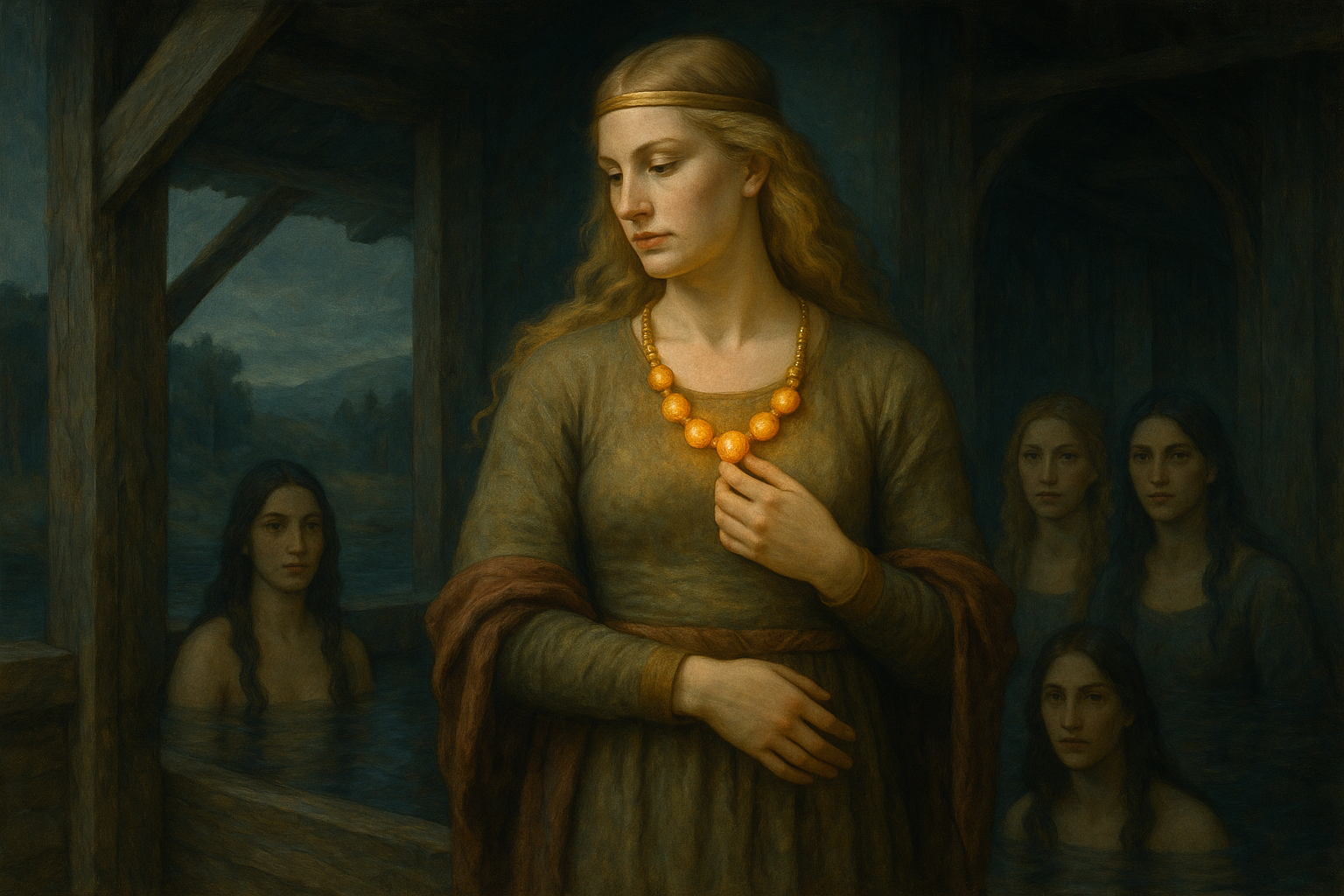
Njörðr’s best-known story is his marriage to Skaði, and Snorri tells it in Gylfaginning as a conflict between incompatible ways of life. Skaði, the giant’s daughter, wants to live in her father Thjazi’s mountain home at Thrymheimr. Njörðr wants to live by the sea at Nóatún. They compromise: first nine nights in the mountains, then nine at the sea. The arrangement fails almost at once. Njörðr dislikes the howl of wolves and the mountains’ harshness; Skaði cannot sleep by the shore because of the noise of the seabirds and especially the sea-mews. In the end she returns to the mountains and he remains near the sea.
Snorri ends the episode with brief poems spoken by each of them, a reminder that he is weaving prose narrative from poetic material. The point of the story is clear enough: a divine marriage can join two worlds in theory, yet in practice neither partner can settle into the other’s environment. The sea and the mountains remain opposed realms.
What Hymiskviða does, and does not, say
The principal source for Njörðr’s other famous connection is actually Hymiskviða, one of the poems of the Poetic Edda. Here Njörðr does not dominate the action. The poem concerns Thor and Týr seeking a giant’s cauldron so that Ægir may brew ale for the gods. Týr directs Thor to Hymir, “at the end of heaven”, and the pair travel east, stop at Egil’s farm, and then go on to Hymir’s hall. The poem’s emphasis falls on the awkward hospitality, the giant household, and Thor’s eventual triumph at sea.
Njörðr appears only indirectly in this poem through Týr’s genealogy. Týr points to Hymir as his own grandfather, which means that Hymir is Týr’s mother’s father. That detail matters because it shows how divine kinship can cross between gods and giants, but it is not a story about Njörðr himself. It would be misleading to treat Hymiskviða as if it narrated Njörðr’s deeds. It does not. For Njörðr, the relevant text is Snorri’s account of the marriage with Skaði and the hostage exchange.
Father of Freyr and Freyja
Snorri’s Skáldskaparmál also identifies Njörðr as the father of Freyr and Freyja. This is one of the most stable genealogical facts about him in the surviving literary tradition. Freyr is called “son of Njörðr”, and Freyja “daughter of Njörðr”. That parentage helps explain why Njörðr matters beyond his own cultic or mythic profile: he anchors the great Vanir pair who are among the most prominent gods in late medieval Old Norse literature.
Even so, scholars are cautious about assuming that every surviving text preserves the same divine family tree in the same form. The literary record is uneven, and some details may reflect Snorri’s systematising habits rather than a single pan-Scandinavian belief. The safest statement is that the fatherhood of Freyr and Freyja is strongly attested in Snorri and widely repeated in later tradition.
How the sources differ
The contrast between the sources is worth keeping in view. The Poetic Edda preserves earlier verse, often in compressed and obscure form, while Snorri’s Prose Edda is a prose handbook for poets, written with a Christian-Icelandic audience in mind. Snorri’s version is fuller, more explanatory and more narrative. It gives Njörðr a clear role in the Vanir-Æsir settlement and a memorable domestic myth with Skaði. The eddic poems, by contrast, are less interested in explanation and more in dramatic or allusive effect. That difference does not mean one is “right” and the other “wrong”; it means they are different kinds of evidence.
What survives is therefore a layered picture. Njörðr is a Vanir god brought into the divine mainstream, a bringer of wealth and favourable winds, a husband unsuited to his mountain bride, and the father of Freyr and Freyja. The medieval texts do not give him a large cycle of adventures, but they do preserve enough to show why he mattered: he stands at the meeting-point of sea travel, prosperity and divine exchange.
Sources and Further Reading
- Snorri Sturluson, Gylfaginning, in Arthur Gilchrist Brodeur’s translation of The Prose Edda (opens in a new tab)
- Snorri Sturluson, Skáldskaparmál, in Arthur Gilchrist Brodeur’s translation of The Prose Edda (opens in a new tab)
- Hymiskviða in the Poetic Edda, Old Norse text at heimskringla.no (opens in a new tab)
- John McKinnell, “Misalliance and the Summer King”, in Meeting the Other in Norse Myth and Legend (opens in a new tab)