Horus, Set and the Struggle for Kingship
Horus and Set: a myth of rivalry, succession and royal power
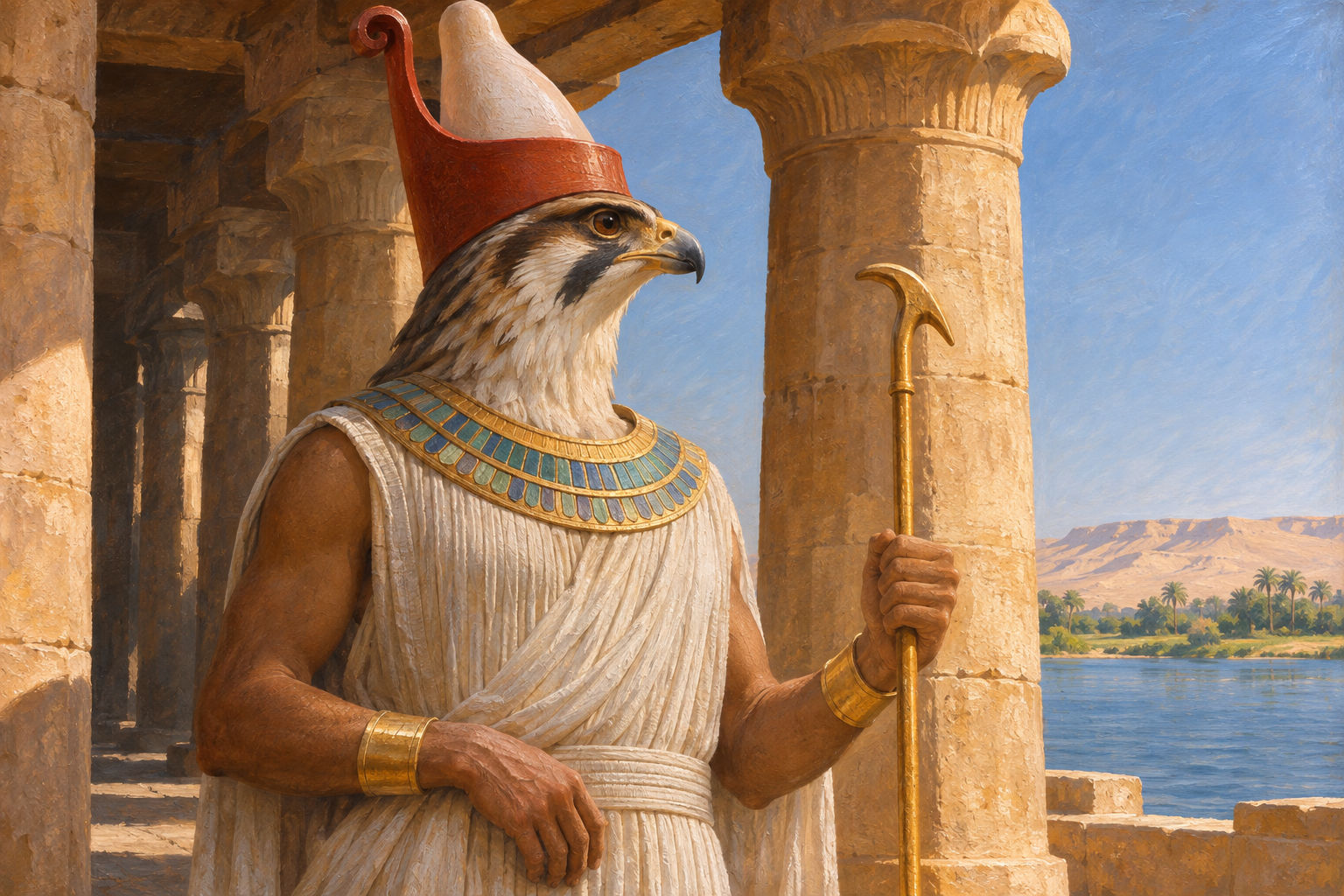
Few Egyptian myths are as politically charged as the struggle between Horus and Set. At its heart, this is a story about who has the right to rule: the son of the murdered king, or the god who seizes power and refuses to give it back. In its best-known literary form, the tale is funny, violent, cynical and deeply serious at once. It explains not only a divine family feud, but the logic of kingship itself.
Osiris, Isis and the inheritance of the throne
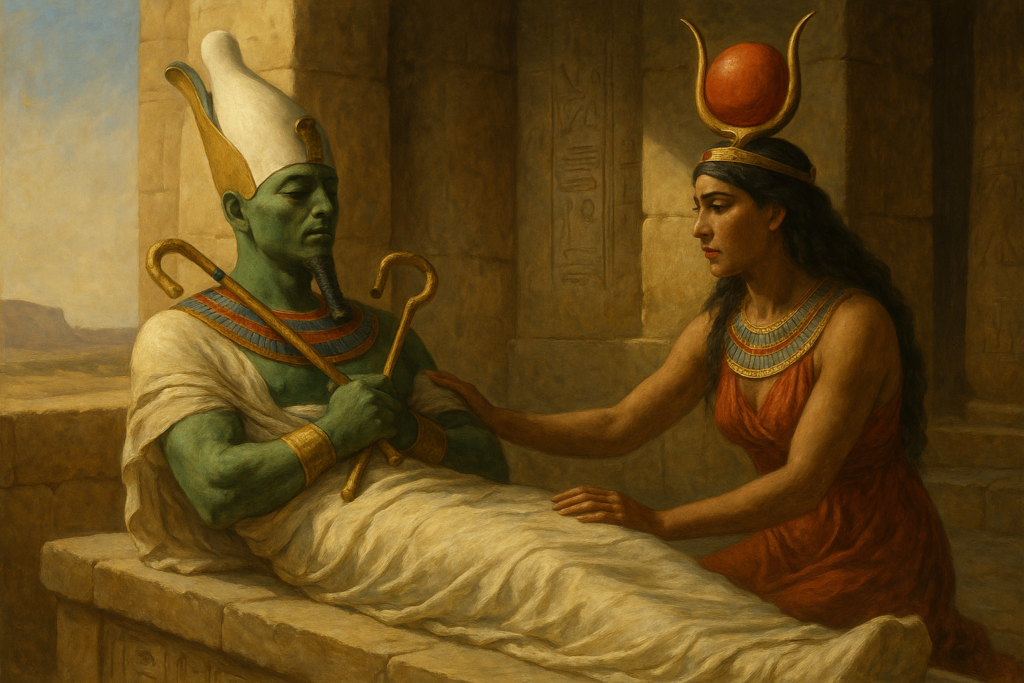
The myth belongs to the wider Osiris cycle, but it is not the same thing as a single fixed story. Different Egyptian texts preserve different pieces. In the most famous narrative, the Late Egyptian tale known as The Contendings of Horus and Seth, Set has already killed Osiris and taken the throne. Isis protects her son Horus, raising him in secret so that he can eventually claim his father’s kingship. That basic set-up is central, but the surrounding details vary from text to text and period to period.
This matters because Egyptian religion was never one tidy, universal system. Horus was linked to kingship very early, while Osiris became the dead ruler and lord of the afterlife in a different strand of tradition. The story of Horus and Set draws these ideas together, but it should not be mistaken for a single creation myth or an all-purpose explanation for every Egyptian belief about the gods.
The contest begins: law, injury and divine politics
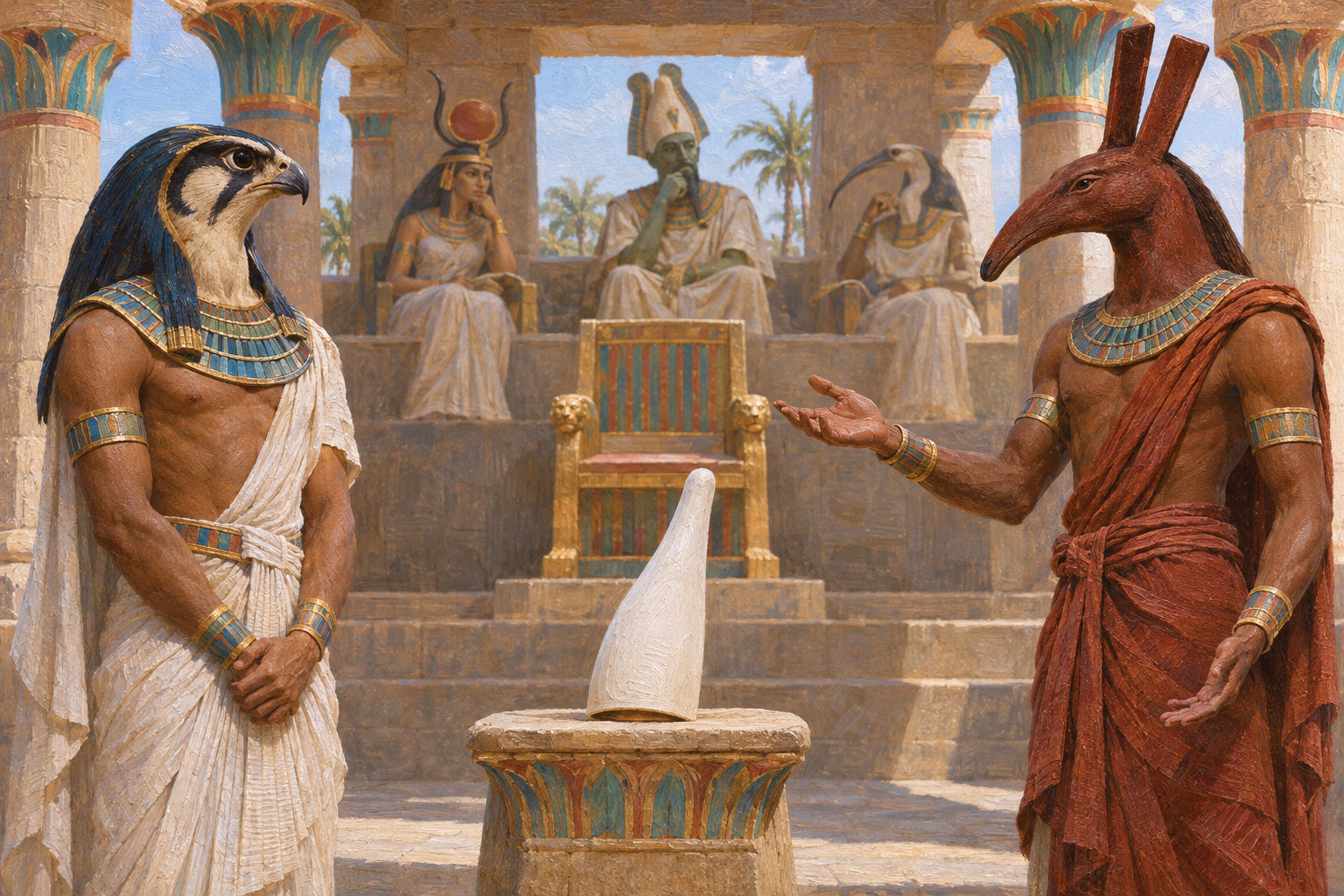
In The Contendings of Horus and Seth, preserved most fully on the Chester Beatty Papyrus and usually dated to the Ramesside period, the gods do not simply settle the question of succession by force. Instead, the quarrel becomes a legal and social drama before the divine court, with Re-Atum, the Ennead and the god Thoth playing major roles. Horus and Set each make their case for the kingship of Egypt. The dispute is not just about lineage; it is about fitness to rule, legitimacy and order.
Set argues for strength, experience and seniority. Horus claims the throne as Osiris’s son and rightful heir. The divine assembly does not reach a quick verdict. That hesitation is typical of the tale: the gods can recognise the principle of rightful succession, but the story makes the path to it slow, obstructed and contested. Kingship is not handed over neatly; it must be proved, defended and recognised.
A myth of trickery, humiliation and endurance
What follows is one of the most surprising features of the text. The contest is not resolved by a single heroic duel. Instead, the gods undergo a series of absurd, theatrical and often bawdy episodes. Set behaves like a bully, but Horus is not always presented as a flawless hero either. In one notorious episode, Set attempts sexual domination; in another, Horus and Set compete in a series of tests. The story is full of reversals, and it can feel almost satirical in its treatment of divine authority.
One famous episode in the papyrus involves a boating contest. Set proposes that the pair race in stone boats, expecting to expose Horus’s weakness. Horus, however, cheats in a very Egyptian way: he uses a boat made of wood plastered and painted to resemble stone, and Set is fooled. The trick is emblematic of the tale as a whole. This is not a straightforward moral fable in which strength always wins. It is a story in which intelligence, persistence, legal argument and divine patronage matter as much as force.
Another memorable moment comes when Isis intervenes on behalf of her son. She is determined, resourceful and politically astute, though her actions can be difficult to reconcile across different versions. In the papyrus, she repeatedly helps Horus, even when the divine court seems reluctant to settle the matter in his favour. The story’s energy comes from this tension: Set can stall the process, but he cannot finally erase the principle that Horus is the legitimate heir.
How Horus wins, and what kind of victory it is
Eventually the judgment shifts in Horus’s favour. In the surviving late tale, the gods recognise him as the rightful ruler, though the ending is not simple triumph in a modern sense. Set is not annihilated. In some versions of the broader mythic tradition, he remains a force with a place in the cosmos. That is important: Egyptian myth does not always divide the world into one eternally good god and one permanently evil one. Set could be dangerous, disruptive and necessary all at once, depending on the context and the period.
In the larger religious imagination, Horus’s victory legitimised the living king. Egyptian pharaohs were associated with Horus while alive, and with Osiris after death. The myth therefore helped explain succession as a sacred process: the son inherits not merely property or office, but the divine mandate to maintain maat, the proper order of the world. That link between myth and monarchy is one reason the story remained so influential.
Set, chaos and a more complicated god
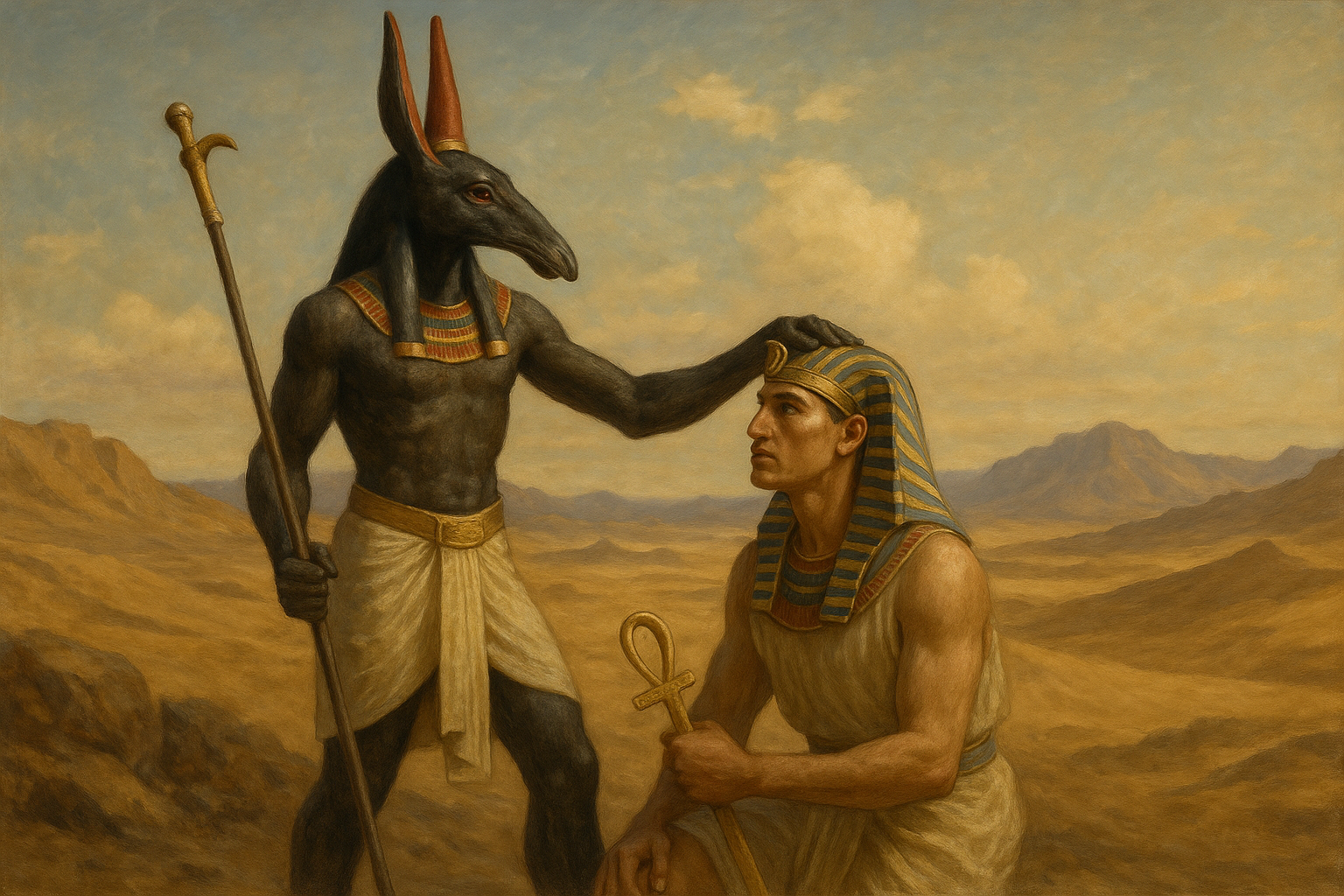
Later readers often flatten Set into the role of villain, but the Egyptian evidence is more nuanced. Set was not always a simple embodiment of evil. He could be associated with storms, deserts, foreign lands and disorder, yet he also appears as a protector of Re on the solar bark, fighting the serpent Apophis in the nightly struggle against chaos. That duality helps explain why the Horus-and-Set myth could never be reduced to a neat moral tale.
The same complexity appears in royal imagery. Very early kings used the falcon of Horus as the sign of legitimate rulership, but there are also second-dynasty royal names associated with Set, suggesting that the divine pair could be politically and regionally significant in different ways. Later Egyptian tradition increasingly foregrounded Horus as the ideal king, but the mythology preserved traces of a more balanced, less one-sided relationship.
Later retellings and why they should be kept separate
Much later, Plutarch’s Isis and Osiris retold the story for a Greek-speaking audience, identifying Set with Typhon and reshaping Egyptian religion through Greek philosophical language. That work is valuable, but it is not the same as an Egyptian source from the New Kingdom or earlier. When modern readers encounter the myth through Plutarch, they are seeing a later interpretation, not the earliest Egyptian account.
The Egyptian textual record is itself fragmented: spells, hymns, narrative papyri and temple inscriptions preserve overlapping but not identical material. Some details familiar from modern retellings belong only to one version. The safest way to read the myth is to keep the principal tradition in view — especially The Contendings of Horus and Seth — while remembering that Egyptian religion was flexible, local and historically layered.
That is part of what makes the story so enduring. Horus and Set are not just characters in a mythic brawl; they are a way of thinking about power, legitimacy and the uneasy task of turning conflict into order. In ancient Egypt, kingship had to be defended as much as inherited, and this myth gave that truth a divine shape.
Sources and further reading
- Henri Frankfort, Kingship and the Gods (University of Chicago Press / ISAC) (opens in a new tab)
- Kim Ryholt, Narrative Literature from the Tebtunis Temple Library (University of Chicago Press) (opens in a new tab)
- Susan Allen, “Kings and Queens of Egypt” (The Metropolitan Museum of Art) (opens in a new tab)
- British Museum collection entry for an amulet depicting Horus and Set (opens in a new tab)