Freyja, Brísingamen and the Daughters of Ægir
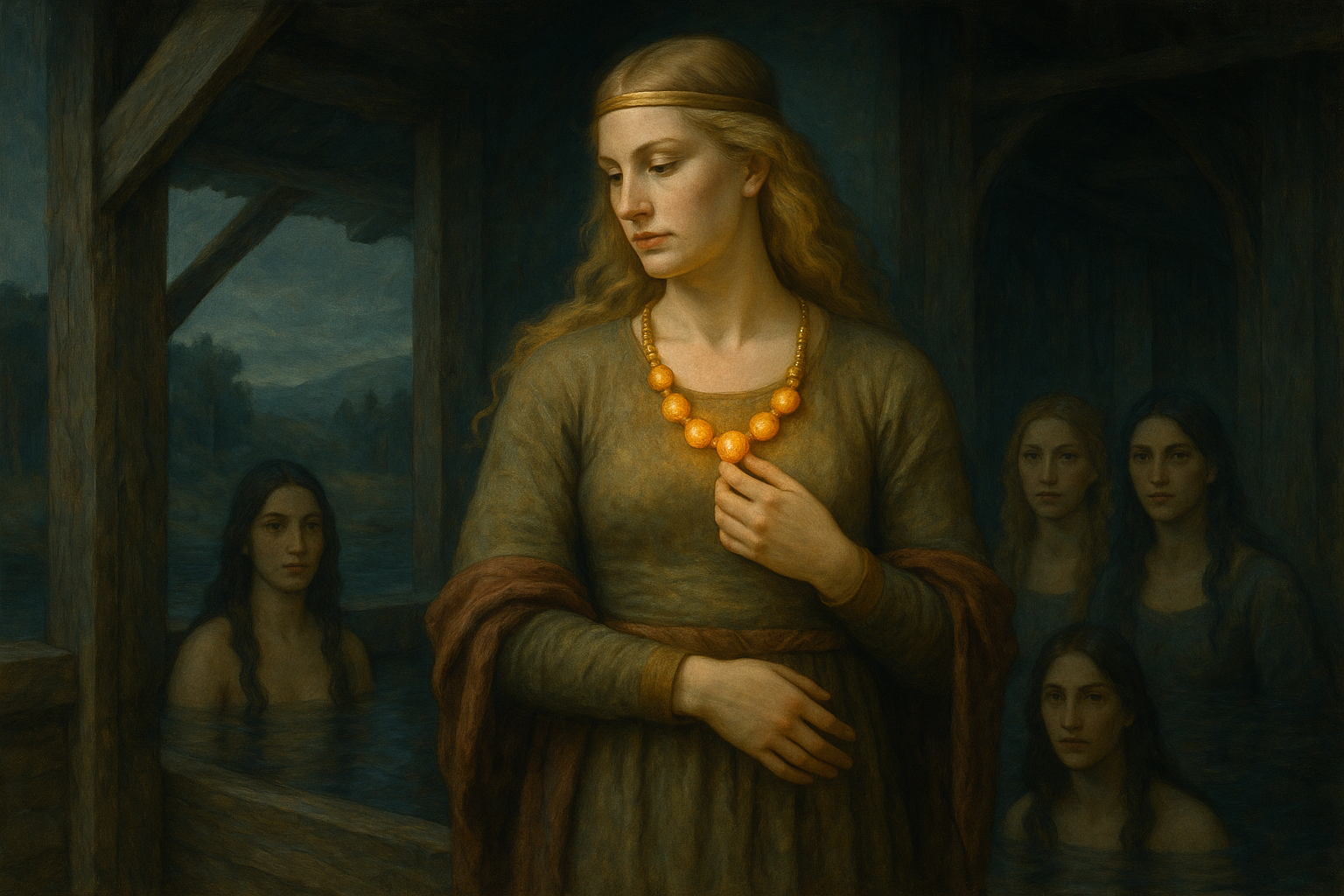
Freyja is one of the best-known goddesses of Norse mythology, and her most famous possession is Brísingamen, a splendid necklace that appears in several medieval sources. The surviving stories are not straightforward “records” of pre-Christian belief: they were written down in Iceland and Norway after conversion to Christianity, mainly in the thirteenth century, and they preserve older traditions in literary form rather than giving a single, fixed pagan canon. The “Daughters of Ægir” belong to a different cluster of traditions: they are the waves personified, and their names are preserved chiefly in skaldic material and lists of poetic terms. Together, Freyja, Brísingamen and the Daughters of Ægir show how Norse myth could link divine women, sea imagery and poetic language.
Freyja in the medieval sources
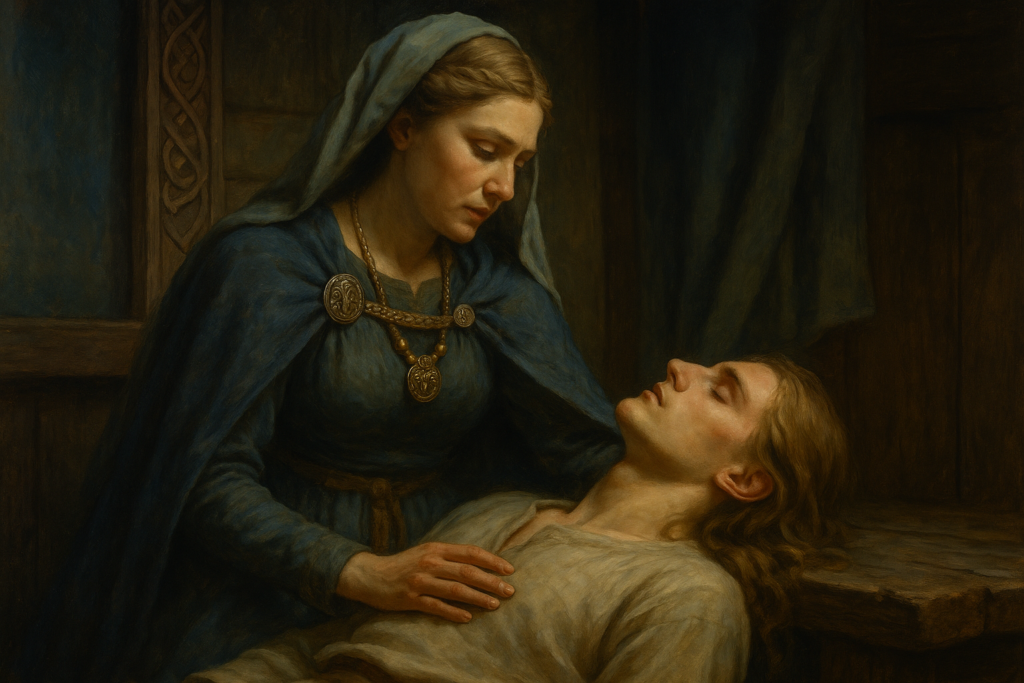
The fullest short description of Freyja comes from Snorri Sturluson’s Prose Edda, especially Gylfaginning. There Snorri presents her as second only to Frigg among the goddesses, the wife of Óðr, mother of Hnoss, and owner of Brísingamen. He also says that Óðr went away on long journeys and that Freyja wept for him; her tears were red gold. That detail matters because it links Freyja with both lament and wealth, a pairing that later writers and modern readers have often found striking.
Snorri also lists several of Freyja’s alternative names, including Mardöll, Hǫrn, Gefn and Sýr, and calls her Vanadís, “lady of the Vanir”. Those names are not decorative extras. They show that different poetic traditions could refer to the same goddess under different epithets, and they remind us that medieval Icelandic myth-making often preserved variant forms rather than a single tidy system.
How Brísingamen enters the story
The best-known story about Brísingamen is not in Snorri’s Gylfaginning but in the late medieval tale Sörla þáttr, preserved in Flateyjarbók. In that version, Freyja sees four dwarfs making a magnificent necklace and wants it for herself. She offers them gold and silver, but they refuse that price and instead demand that she spend a night with each of them. Freyja agrees, and the necklace becomes hers.
This is the principal narrative account of Brísingamen’s acquisition, but it is late and Christian-period in provenance. That does not make it worthless; it means that its tone, moral colouring and shape may reflect the literary culture in which it was copied and preserved. The tale presents Freyja as determined and desirous, but it also places her in a transaction that is unusual, uncomfortable and probably crafted to provoke the audience. Earlier and shorter references in Gylfaginning simply assume that Freyja owns Brísingamen rather than explaining how she got it.
The theft of the necklace
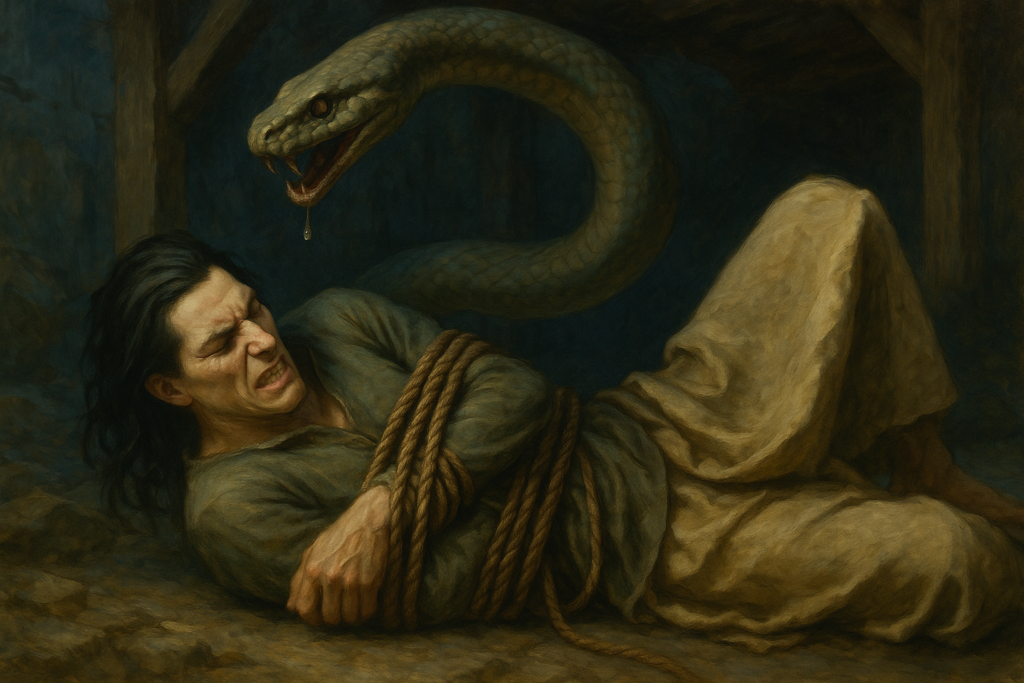
A different Brísingamen story survives in Snorri’s Skáldskaparmál, though only in fragmentary and allusive form. There Loki steals the necklace, turns himself into a seal, and hides it at sea. Heimdallr also takes the form of a seal, the two struggle, and Heimdallr wins back Brísingamen for Freyja. Because the account is fragmentary, it is best to be cautious: the core sequence is clear, but the details come from skaldic and prose material that is less complete than the Sörla þáttr narrative.
This episode is important because it shows Brísingamen not merely as jewellery but as an object worth dramatic conflict. The necklace has status, magic and social force. Its recovery by Heimdallr also places that god in a role of defender or restorer, while Loki appears in his characteristic guise as thief and troublemaker. In later reception, these stories have sometimes been blended carelessly, but the sources should be kept distinct: Sörla þáttr tells how Freyja acquired the necklace; Skáldskaparmál preserves the theft and recovery.
Freyja, Brísingamen and the disguise in Þrymskviða
Another major poem, Þrymskviða in the Poetic Edda, uses Brísingamen in a quite different way. When Thor needs to recover his hammer from the giant Þrymr, the gods persuade him to dress as Freyja for the journey to Jǫtunheimar. He is made up as a bride and, in some versions and translations, wears Brísingamen as part of the disguise. The point is not that the poem retells the necklace’s origin, but that Brísingamen is already famous enough to function as an instantly recognisable marker of Freyja.
That distinction matters. Þrymskviða does not provide a second origin story for the necklace. Instead, it shows how Brísingamen could operate as a symbol within mythic narrative. The necklace belongs to the visual and literary identity of Freyja, so much so that Thor’s disguise needs it.
The Daughters of Ægir
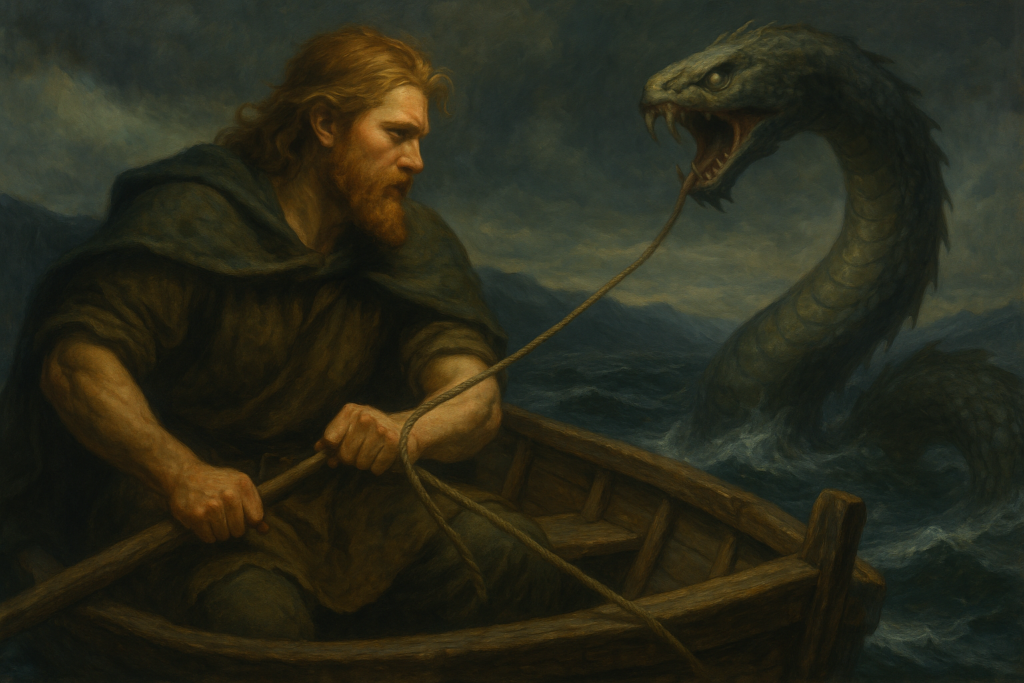
The “Daughters of Ægir” are not a family in the ordinary sense but a poetic personification of waves. Their names appear in skaldic verse and in Snorri’s material on poetic diction, where they are listed among the many kennings and heiti that poets could use. The sea giant Ægir and his wife Rán are associated with the sea’s dangers and abundance, and the waves are imagined as their daughters. In some poetic lists the daughters are named individually; in others they appear mainly as a collective image of rolling water.
What is striking is how differently this material survives from the stories about Freyja. The waves are not a narrative family with a cycle of adventures. They are part of the technical vocabulary of skaldic poetry, where mythological names could stand for natural forces or poetic effects. The “daughters” therefore belong as much to literary craft as to myth.
What the sources agree on — and where they do not
The sources agree that Freyja owns Brísingamen and that the necklace is among her defining possessions. They also agree, in different ways, that the necklace is important enough to be stolen, recovered, named in poetry and used as a sign of Freyja herself. They do not agree on a single origin story. Sörla þáttr supplies the dwarf tale and the sexual bargain; Snorri’s Gylfaginning assumes the necklace is already Freyja’s; Skáldskaparmál preserves the theft by Loki and recovery by Heimdallr; Þrymskviða uses the necklace in Thor’s disguise.
That variety is not a problem to be solved away. It is evidence of a living mythological tradition that reached us through different genres: eddic poetry, skaldic poetry, Snorri’s prose handbook and later saga-style retellings. The Daughters of Ægir, meanwhile, remind us that Norse myth also lived in poetic language itself, where sea, waves and family names could merge into kennings and lists.
Freyja, Brísingamen and the Daughters of Ægir therefore belong to the same imaginative world, but they do not all belong to the same kind of source. Read carefully, they reveal not one tidy mythology but a tradition of overlapping stories, poetic formulas and later medieval interpretation.
Sources and Further Reading
- Snorri Sturluson, Prologue and Gylfaginning, translated by Anthony Faulkes (opens in a new tab)
- Snorri Sturluson, Skáldskaparmál, translated by Anthony Faulkes (opens in a new tab)
- The Poetic Edda, translated by Carolyne Larrington (opens in a new tab)
- Store norske leksikon: “Brisingamen” (opens in a new tab)