Shiva as Nataraja: Dance, Creation and Cosmic Order
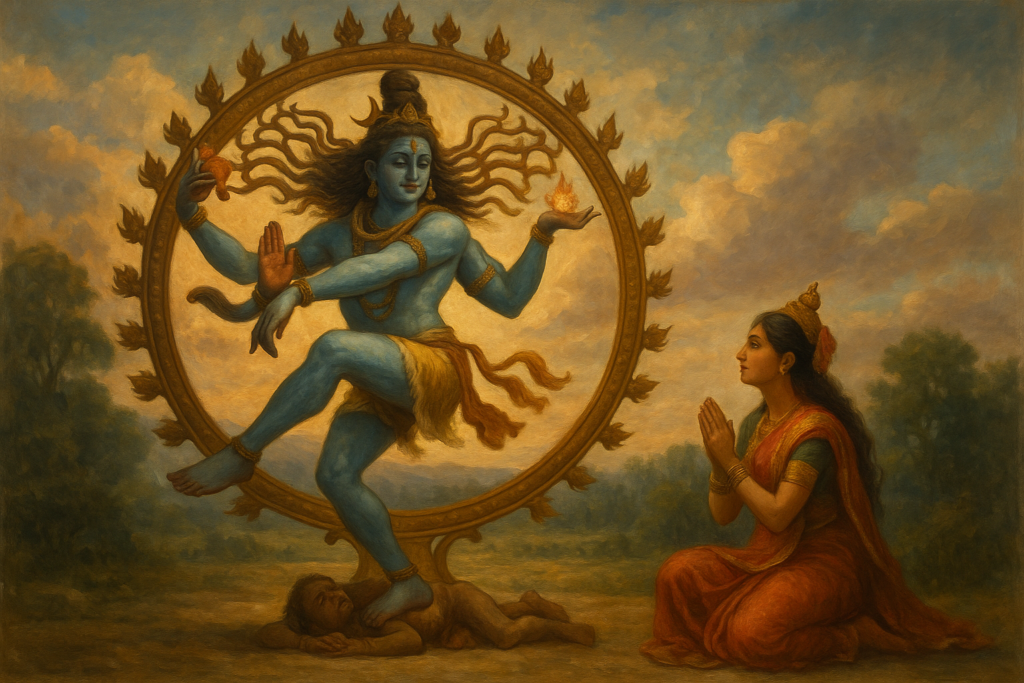
Shiva as Nataraja, “Lord of Dance”, is one of the most recognisable images in Hindu art: a god balanced within a ring of flame, one foot raised, one foot pressing down a tiny figure of ignorance, his matted hair and limbs set in motion yet his face calm. It is an image that compresses a whole theology into bronze. In a single figure, Shiva becomes destroyer and creator, terrifying and compassionate, still and active. For many viewers it is also the most elegant visual statement of cosmic order in South Asian religious art.
A god who dances the world into being
The name Nataraja comes from Sanskrit: nata, “dancer” or “actor”, and raja, “king” or “lord”. As an iconographic form, Shiva Nataraja is especially associated with Tamil Shaiva traditions in southern India, though the god’s dances are not confined to one region. The image presents Shiva not as a remote deity but as the moving principle of the cosmos itself. The drum in his upper right hand is commonly understood as the source of creation; the fire in his upper left hand signals dissolution. The gesture of reassurance, the lifted foot, and the figure underfoot together suggest that divine order includes both protection and the overcoming of ignorance. Museums and scholarly collections routinely describe the image in these terms, while also noting that its present, world-famous form was developed in the Chola period in Tamil Nadu.
This is not a simple story of a god “invented” to explain the universe. In Shaiva traditions, Shiva’s dance is a way of speaking about reality: creation, preservation, destruction, concealment and grace are not separate acts performed by a capricious deity, but aspects of one divine power. That reading is especially explicit in later devotional and philosophical traditions, including Tamil Shaiva Siddhanta, where the dance is used to describe Shiva’s relation to the world and to liberation. Different communities and texts frame the symbolism in different ways, but the central visual language remains remarkably stable.
What the bronze actually shows
A standard Nataraja image is dense with meaning. The circular ring of flames marks the cosmic arena in which the dance unfolds. The drum, or damaru, evokes the first vibration from which the universe emerges. The fire in the opposite hand is the force that ends an age or a cycle. Shiva’s right hand often forms abhayamudra, the gesture that removes fear. His front left hand points towards the raised foot, inviting refuge. Beneath the grounded foot lies Apasmara, a dwarf-like figure traditionally identified with ignorance, forgetfulness or spiritual delusion. The god’s hair fans out as if the dance were in full motion, yet his expression is composed, giving the image its paradoxical calm.
That balance of motion and stillness is central to the image’s power. Shiva is not merely dancing in the world; he is the rhythm by which the world changes. Some modern observers have been tempted to read the figure as a statement about physics or modern cosmology, but that is a later interpretation, not the image’s original religious setting. The older language is devotional and philosophical: the dancer reveals a universe that is rhythmic, cyclic and governed by dharma, the sustaining order that makes life intelligible and morally liveable.
Chidambaram and the living temple of the dance
Among the places most closely associated with Nataraja is the temple at Chidambaram in Tamil Nadu. The British Museum notes that the legend of Shiva’s dance is especially recorded there, and Tamil Shaiva devotional literature repeatedly praises the deity enshrined at Tillai, the older name associated with the temple complex. In these traditions, Chidambaram is not just a shrine; it is the place where the divine dance is present in ritual form and where worship becomes an encounter with Shiva’s movement and stillness.
One important Tamil text in this context is the Tirumantiram, a major work of Shaiva Siddhanta traditionally attributed to Tirumular, though scholarly dating is uncertain and varies. The text does not tell a single continuous “origin story” for Nataraja. Instead, it uses Shiva’s dance as part of a broader meditation on yoga, devotion and liberation. That matters, because the image of Nataraja is not only about the universe at large; it is also about the inner path of the devotee. The lifted foot can signify release from bondage, and the dance can be read as the pulse of spiritual awakening.
How the image took shape under the Cholas
Although Shiva as dancer appears in earlier art, the familiar bronze form became especially prominent under the Chola dynasty, roughly from the ninth to thirteenth centuries. Chola bronzes are admired for their technical refinement and for the clarity with which they turn theology into sculpture. The Metropolitan Museum describes Nataraja as a brilliant iconographic invention that combines Shiva’s roles as creator, preserver and destroyer in a single image. That formulation captures why the figure became so influential: it is not decorative illustration, but a condensed theology in metal.
The icon also travelled. It appears in later South Indian temple traditions, in exported bronzes, in museum collections and in modern art historical writing. Yet the bronze should first be understood on its own religious terms. It belongs to temple worship, to ritual viewing and to the devotional imagination of Shaiva communities. Modern displays can help audiences appreciate its beauty and craft, but they cannot replace the lived context in which such images are worshipped.
Dance, liberation and the limits of a single reading
Because Nataraja is so visually rich, the image has attracted many interpretations. Tamil devotional sources emphasise the dance as a revelation of divine grace. Shaiva Siddhanta writers often connect it with release from bondage and ignorance. Art historians have highlighted the sculpture’s formal elegance and its place in Chola metalworking. All of these readings can be useful, provided they are kept distinct. What should not be done is to flatten the image into a generic “Hindu trinity” or to treat one Shaiva interpretation as if it were universal across Hindu traditions. Shiva’s dance matters because it is rooted in specific ritual, textual and regional traditions while also speaking in a language broad enough to be recognised far beyond them.
That breadth may be the reason Nataraja continues to captivate. The figure is at once immensely local — anchored in Tamil temple culture — and expansive enough to suggest the whole of existence. In Shiva’s poised movement, change does not cancel order; it expresses it. Destruction is not merely ending, but part of the cycle by which the world is renewed. The image endures because it does more than depict a god. It imagines reality as dance, and asks the viewer to see, within motion itself, a kind of sacred calm.
Sources and further reading
Recommended reading
These are affiliate links. If you buy through them, we may earn a commission at no extra cost to you.
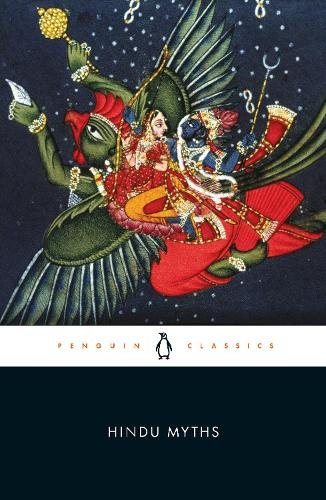
Hindu Myths: A Sourcebook Translated from the Sanskrit
Preserved in ancient Sanskrit texts like the Rig Veda and Mahabharata, Hindu myths date as far back as 1000 BCE. These seventy-five core stories feature Vishnu’s heroic avatars and youthful Krishna, along with tales of minor gods, demons, and sacred animals. Vibrant and expansive, they reflect a worldview encompassing cosmic creation, infinite earthly possibilities, and the universal touch of Death.
The Bhagavad Gita (Deluxe Hardbound Edition)
Compiled from the nine-volume Complete Works, this book brings together Swami Vivekananda's commentary on the Bhagavad Gita, systematically ordered by chapter and verse. Readers can study the original Devanagari verses and their English translations right alongside Vivekananda's illuminated perspective.
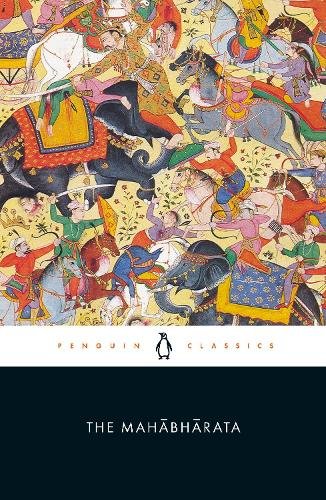
The Mahabharata
Rooted in ancient Indian literature, the Mahabharata is a cornerstone Sanskrit epic and a vital text of Hinduism. Beyond its sweeping narrative, it delves into the four key human pursuits—artha (purpose), kama (pleasure), dharma (duty), and moksha (liberation)—exploring how karma and self-identity shape an individual's connection to society and the universe.