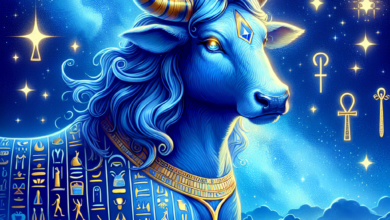

Thoth, the ancient Egyptian deity, plays a pivotal role in the mythological landscape of one of the world’s oldest civilizations. Revered as the god of wisdom, writing, and knowledge, Thoth embodies a myriad of attributes that signify the importance of literacy, intellect, and communication in ancient Egyptian society. Depicted often as a man with the head of an ibis or a baboon, Thoth is deeply intertwined with the divine principles that governed human endeavor, societal structure, and the afterlife.
Origins and Symbolism
The exact origins of Thoth remain shrouded in the mists of time, but he is widely recognized as a creation from the Ennead of Heliopolis—a group of nine deities worshipped primarily in ancient Egypt. Thoth’s parentage is often attributed to Ra, the sun god, or sometimes the primordial gods Nu and Naunet, highlighting his connection to cosmic order and creation.
Thoth’s duality is symbolized through his affiliations with both the moon and the sun. While Ra represents the sun and daytime, Thoth embodies the moon and nighttime, implying a balance between light and darkness, reason and mystery. His roles extend to overseeing the cycles of time and reconciliation of opposites, representing wisdom that emerges from understanding the universe’s dual nature.
Thoth as the God of Writing
Thoth’s most celebrated attribute is his role as the god of writing and hieroglyphs, a function integral to Egyptian civilization. The ancient Egyptians viewed writing as a divine gift; thus, Thoth was credited with creating the hieroglyphic script, which allowed for the documentation of language, history, and religious practices. He was considered the scribe of the gods, meticulously recording the deeds of both deities and mortal beings.
The invention of writing under Thoth’s guidance facilitated record-keeping, administration, and the arts, transforming oral traditions into a tangible form. Consequently, Thoth is often invoked in prayers and rites for scholars, scribes, and those engaged in the literary arts, who sought his blessing for wisdom and eloquence in their endeavors.
Thoth and Wisdom
In addition to his writing prowess, Thoth’s vast intelligence rendered him the ultimate counselor and advisor among the gods. He is frequently depicted mediating disputes and providing wisdom in key mythological narratives. One of the most significant examples is his involvement in the Osiris Myth, where he helps Isis resurrect Osiris, her slain husband, by using his knowledge of magic and healing.
Thoth’s association with wisdom extends beyond mere understanding; he personifies the importance of judgment and morality. The ancient Egyptians believed that Thoth helped govern the soul’s journey in the afterlife. In the weighing of the heart ceremony—a critical aspect of the judgment of the dead—Thoth recorded the outcome of the weighing that determined whether a soul would be granted passage to the afterlife or consumed by the fearsome devourer, Ammit.
Rituals and Worship
Thoth was worshipped throughout Egypt, possibly gaining roots in the city of Khmun (Hermopolis) where he was often celebrated with great reverence. Temples dedicated to him featured intricate artworks showcasing Thoth’s various aspects—particularly his roles as a scribe, mediator, and divine arbiter.
During the lunar month, specific festivals celebrated Thoth, such as the “Feast of the Opening of the Mouth,” which signified the revival of the dead. Rituals invoked Thoth’s presence to bless the deceased, ensuring their successful passage into the afterlife. The Egyptians also consulted magical texts attributed to Thoth, further solidifying his role as a provider of protection and knowledge.
Cultural Impact
Thoth’s influence transcended beyond religion into various aspects of Egyptian culture. Scholars and scribes who revered him sought to emulate his attributes, striving for accuracy and depth in their documentation. His name adorned countless scrolls, inscriptions, and texts that chronicled history, science, religion, and philosophy. Thoth’s guidance resonated deeply in Egyptian society, shaping not only ethical standards but also the very structure of knowledge throughout the ages.
In more recent times, interest in Thoth has been revived through the lens of modern spirituality and esotericism. He is often invoked in contemporary mysticism and metaphysical studies, symbolizing the quest for enlightenment and higher knowledge. References to Thoth are prevalent in various cultural narratives, including literature, philosophy, and even modern games, illustrating the lasting legacy of his attributes.
Modern Interpretations
Thoth’s legacy has permeated beyond the boundaries of ancient Egypt, prompting modern interpretations that delve into the essence of wisdom and creativity. His figure has inspired writers, artists, and historians who explore themes of knowledge, enlightenment, and the power of language.
In the realm of psychology, Thoth’s association with the intellect is often paralleled to contemporary concepts of critical thinking and the importance of communication. As people continue to grapple with the complexities of the digital age and information overload, Thoth emerges as an emblematic figure representing the value of discernment in a vast sea of data.
Conclusion
Thoth, the god of wisdom and writing, stands as a testament to the rich tapestry of ancient Egyptian civilization. His multifaceted nature represents a profound understanding of the human experience, encompassing creation, knowledge, morality, and the journey of the soul. Revered not only for his divine abilities in writing and intellect but also his role as a mediator and protector in the afterlife, Thoth is a compelling figure that continues to resonate with contemporary ideals of wisdom and creativity. The legacy of Thoth endures, reminding us of the timeless values of knowledge, communication, and the eternal quest for understanding in both life and the beyond.