Parvati’s Austerities and the Winning of Shiva’s Love
Parvati’s resolve and Shiva’s reluctance
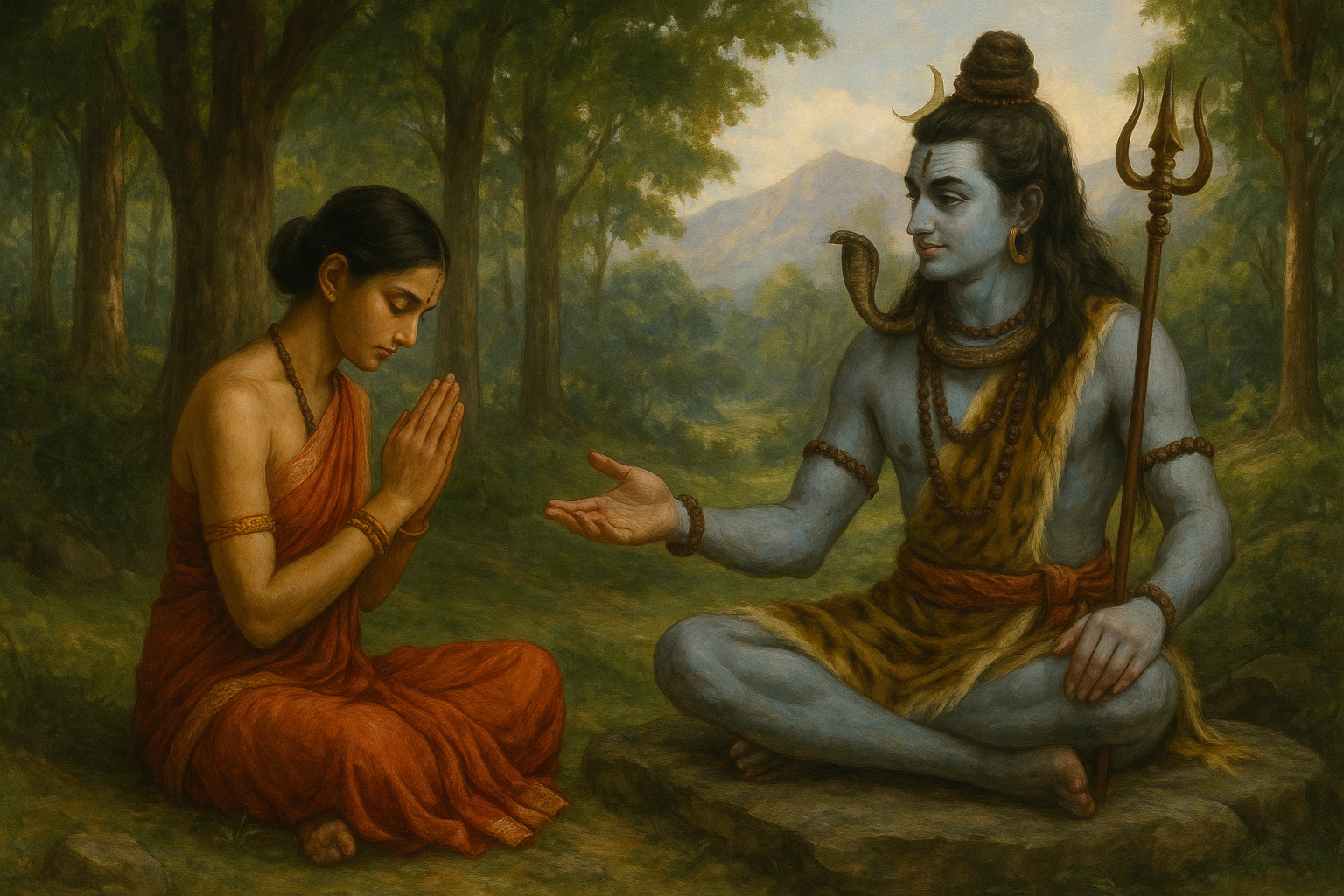
Among the many stories told about Shiva and Parvati, this one is especially beloved because it turns on patience rather than force. Parvati does not win Shiva’s affection by argument or display; she wins it through austerity, devotion and steadiness of purpose. In the Puranic tradition most often associated with this episode, especially the Shiva Purana, the goddess who will become Shiva’s wife sets out to prove that she is worthy of the wandering ascetic who has withdrawn from ordinary life.
The story begins after Parvati has been born as the daughter of Himavat, lord of the mountains, and Menā. She is already linked with Shiva through an earlier life as Sati, Shiva’s first wife, who had died after humiliation at her father Daksha’s sacrificial rite. In the later life of Parvati, that past bond becomes the deeper reason for her desire. She knows Shiva as both formidable and distant: a god absorbed in meditation, disinclined to household life, and not easily drawn into marriage.
In the Shiva Purana, Parvati asks permission to perform penance so that she may win Shiva as her husband. Her parents hesitate, but she is determined. The narrative is careful to present her austerity not as self-punishment for its own sake, but as a deliberate religious discipline, a form of tapas: the heat generated by concentrated spiritual effort.
Standing in austerity, remembering Shiva
Parvati’s penance is described in severe terms. She lives simply, gives up comfort and food, and remains focused on Shiva through meditation and repeated recitation of his five-syllabled mantra, “Om Namah Shivaya”. In one version of the tale in the Shiva Purana, she stands on one leg while continuing her devotion. The image is striking, but the point is not spectacle. The story presents her as mastering the body through disciplined attention, not as seeking pain as an end in itself.
Her austerity draws notice from the gods and the heavenly sages. They recognise that this is no ordinary vow. Parvati is not merely praying for a personal wish; she is entering a spiritual contest of sorts, one that tests whether her devotion is powerful enough to move even Shiva, the great renouncer. In many Shaiva tellings, this is also the moment when the wider cosmic order begins to take an interest. Shiva’s solitude, though spiritually potent, is not the final word. The world has its own need for union, continuity and creation.
There is a pleasing tension here. Shiva is the lord of ascetics, associated with detachment from domestic life. Parvati, by contrast, is the goddess who seeks relationship, embodiment and union. Yet the story does not make one side simply superior to the other. It gives both renunciation and devotion real dignity. The marriage will happen not because Shiva is defeated, but because Parvati’s tapas is itself a form of divine power.
The gods intervene, but Parvati remains the centre
As Parvati’s austerities intensify, the gods worry about the consequences of Shiva’s continued withdrawal. In the Shiva Purana, they send intermediaries and praise Shiva, seeking a resolution to the problem. Nārada, the sage and messenger, plays an important part in the unfolding of the story, though not as the hero in the modern sense; he is a catalyst, carrying messages and prompting events already ripening in Parvati’s favour.
One important episode in this version comes when the seven celestial sages test Parvati. They approach her to see whether her resolve is genuine. She answers simply and firmly that she is performing this steady penance with the desire that Rudra, another name for Shiva, become her husband. The test reinforces a central theme of the tale: Parvati’s devotion is not impulsive attraction, but an informed and unwavering commitment.
Then comes a famous turning point. The sages recognise the seriousness of her vow, and Shiva himself begins to respond. He is not coerced; rather, he is moved by Parvati’s devotion and by the rightness of the cosmic moment. The Shiva Purana presents his decision as gracious and voluntary. He tells the gods that Parvati’s penance has won him over, and that he has granted her the boon of becoming her husband.
How Shiva becomes the devoted bridegroom
The most delicate part of the story is the reversal it creates. Shiva, who is usually imagined as self-sufficient and aloof, becomes in these Puranic narratives a bridegroom who is “subservient” to his devotee in the sense that he honours her devotion. This does not diminish him; rather, it reveals another side of divine greatness. He is not merely the remote yogi on Mount Kailasa. He is also responsive, relational and capable of entering household life.
In some versions, especially in the Shiva Purana, Shiva tests or observes Parvati further before the marriage is completed. At one point he appears in disguised or playful forms, and there are episodes of recognition in which Parvati discerns his true nature. These scenes underline the emotional texture of the tale: desire, patience, restraint and the gradual arrival of mutual understanding. The marriage is not a simple romantic conclusion; it is the meeting of two cosmic principles that must learn how to live together.
Eventually Shiva agrees to the wedding, and the gods prepare for a great celebration. The marriage is presented as auspicious for the universe itself. In Shaiva tradition, the union of Shiva and Parvati is not only a domestic event but also a sacred pattern of harmony between ascetic power and nourishing presence, withdrawal and participation, transcendence and embodied life.
The wedding and what it means in Shaiva tradition
The marriage is richly described in Puranic retellings. The gods, sages and celestial beings gather. Music, ritual and auspicious timing all matter. Shiva appears as the bridegroom, but the ceremony still carries the marks of his ascetic identity: the contrast between his renunciate appearance and the splendour of the occasion is part of the story’s charm. The marriage joins two modes of divine life that are often held in tension in Hindu traditions.
Parvati’s victory is therefore not over Shiva in any crude sense. She does not conquer him; she draws him into relationship. Her austerities demonstrate that devotion can be active and transformative. For many Shaiva and Shakta readers, the tale also affirms that the goddess’s power, or shakti, is not secondary. She is the force through which divine relationship and worldly continuity become possible.
The narrative has also shaped art and temple culture. The marriage of Shiva and Parvati, often called Kalyanasundara, is a favourite theme in sculpture and temple ritual, especially in South India. In such contexts, the story is not simply read; it is re-enacted as an image of divine auspiciousness and married harmony. That temple life has helped keep the tale vivid for worshippers long after its literary form was first composed.
Different tellings, same devotional core
The broad outline of Parvati’s austerities and Shiva’s eventual consent is widely shared, but details vary by text and region. The Shiva Purana offers one of the clearest narrative versions, while the Skanda Purana also retells the marriage with its own emphases. Other devotional and poetic traditions give Parvati’s agency a somewhat different colouring, sometimes stressing her role as the perfect wife, sometimes her independent spiritual power. It is best to keep those accounts distinct rather than blending them into a single, flattened story.
What remains constant is the emotional logic of the tale. Parvati’s austerities are not a mere obstacle to be overcome. They are the means by which she becomes fully herself, and by which Shiva is drawn from seclusion into companionship. The story endures because it makes devotion active, intelligent and brave. Parvati does not simply wait to be chosen; through discipline and steadfast love, she becomes the one who makes union possible.
Sources and further reading
- J. L. Shastri, translation of the Shiva Purana, Chapter 22: “Description of Parvati’s penance” (opens in a new tab)
- J. L. Shastri, translation of the Shiva Purana, Chapter 25: “The seven celestial sages test Parvati” (opens in a new tab)
- J. L. Shastri, translation of the Shiva Purana, Chapter 28: “Parvati sees Shiva’s real form” (opens in a new tab)
- Encyclopedia.com, “Shiva and Shaivism” (opens in a new tab)
Recommended reading
These are affiliate links. If you buy through them, we may earn a commission at no extra cost to you.
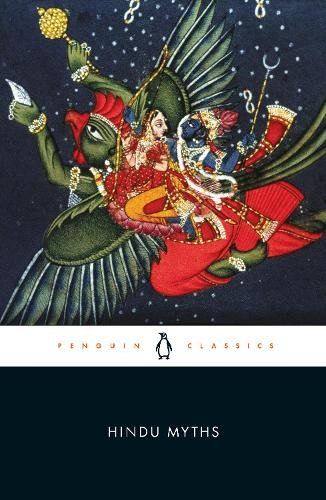
Hindu Myths: A Sourcebook Translated from the Sanskrit
Preserved in ancient Sanskrit texts like the Rig Veda and Mahabharata, Hindu myths date as far back as 1000 BCE. These seventy-five core stories feature Vishnu’s heroic avatars and youthful Krishna, along with tales of minor gods, demons, and sacred animals. Vibrant and expansive, they reflect a worldview encompassing cosmic creation, infinite earthly possibilities, and the universal touch of Death.
The Bhagavad Gita (Deluxe Hardbound Edition)
Compiled from the nine-volume Complete Works, this book brings together Swami Vivekananda's commentary on the Bhagavad Gita, systematically ordered by chapter and verse. Readers can study the original Devanagari verses and their English translations right alongside Vivekananda's illuminated perspective.
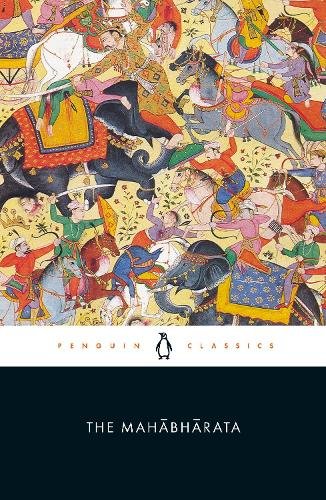
The Mahabharata
Rooted in ancient Indian literature, the Mahabharata is a cornerstone Sanskrit epic and a vital text of Hinduism. Beyond its sweeping narrative, it delves into the four key human pursuits—artha (purpose), kama (pleasure), dharma (duty), and moksha (liberation)—exploring how karma and self-identity shape an individual's connection to society and the universe.