The Role of the Gods in Roman Legal Systems
The Role of the Gods in Roman Legal Systems
The Roman legal system, one of the most sophisticated of ancient times, developed in a social milieu deeply intertwined with religious beliefs. In Rome, the distinction between sacred and secular was often blurred, and the influence of the divine permeated various aspects of daily life, including the law. This article explores the role of the gods in Roman legal systems, illustrating how religion shaped legal practices, moral codes, and public perception of justice.
The Divine and Legal Authority
In ancient Rome, the gods were viewed as crucial to the maintenance of societal order. The state’s authority was considered to be derived from the favor of the divine. This relationship manifested in various important rituals and practices, which underscored the connection between religion and law.
Legal authority was often legitimized through divine endorsement. For example, magistrates, who held various judicial powers, performed rituals to invoke the favor of the gods before presiding over significant legal proceedings. A well-known ritual involved the auspices, where officials would observe the behavior of birds or other omens to ensure that their actions would be blessed by the gods. If the omens were unfavorable, a magistrate might postpone critical legal decisions to avoid angering the divine.
The Role of Priests and Augurs
Priests and augurs were integral to the Roman legal system. Augurs specialized in interpreting omens, and their role extended into matters of law and justice. Before important legal decisions or public trials, augurs would assess the signs from the gods. Their interpretations could significantly influence the adjudication process, as the community often relied on divine communication to judge a case’s moral standing.
Additionally, the involvement of other priestly officials, such as the Pontifex Maximus, underscored the notion that laws were not mere social contracts but sacred mandates. This priesthood was responsible for maintaining the relationship between humans and the divine, which included overseeing legal oaths that often invoked the gods as witnesses. Breaking these oaths was seen not only as a social taboo but also as an offense against the divine order.
Legal Codes and Religious Doctrine
The Roman legal system evolved through various iterations, most notably with the Twelve Tables and later the Corpus Juris Civilis. While these codes represented an attempt at codifying laws, they did not exist in a vacuum separate from religious doctrine. The Twelve Tables, for instance, established fundamental legal principles that mirrored societal morals and religious norms. Many established laws had divine roots, affirming that injustices were not solely legal but also sacrilegious.
The concept of ius divinum (divine law) played a crucial role in Roman legal philosophy. Adhering to the divine order was perceived as critical for the stability of the state. Laws that aligned with communal virtues and religious expectations were seen as righteous, while those that contradicted divine principles faced public disapproval and potential annulment.
The Concept of Justice
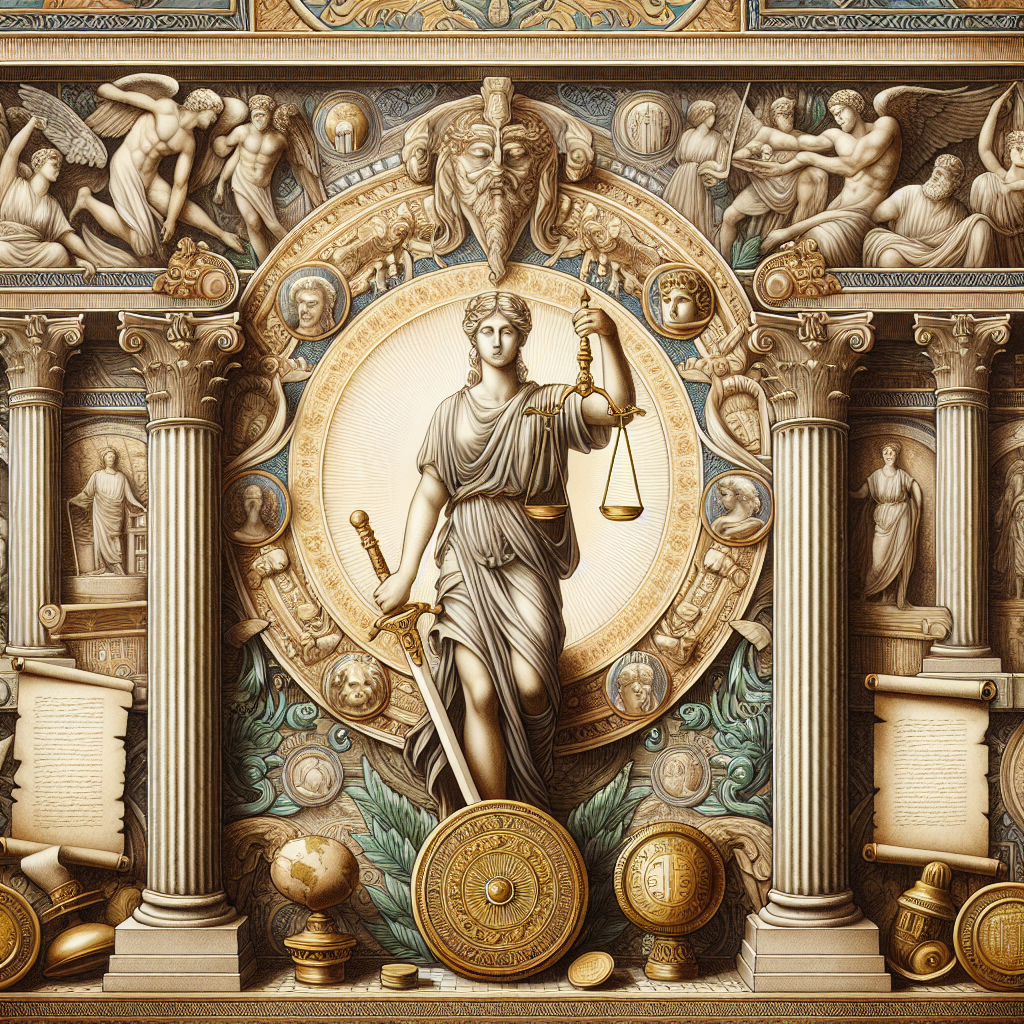
Justice in Rome was inherently tied to the divine. The Roman goddess of justice, Justitia, embodied the ideals of fairness and impartiality, guiding magistrates in their decisions. Roman citizens often associated justice with the will of the gods, leading to the belief that justice would ultimately prevail, reflecting divine order. This belief nurtured a culture where citizens expected the legal system to reflect moral values sanctioned by the gods.
Public trials were often imbued with religious significance, where the outcome was perceived as a manifestation of divine will. If a defendant was acquitted, it was understood as divine favor; conversely, a conviction was seen not just as a legal judgement but a punishment from the gods. This understanding galvanized the Roman populace’s trust in the legal process, as they interpreted outcomes as evidence of moral righteousness.
The Intersection of Law and Moral Order
Family law also highlighted the intersection of divine influence and legal matters. Marriages were considered sacred unions, and religious ceremonies were essential to formalize these bonds. Legal disputes over inheritance, property, and divorce were not merely civic matters; they were also viewed through a spiritual lens. The gods’ approval was fundamental to the legitimacy of familial and social structures, reinforcing moral responsibilities reinforced by law.
Moreover, religious festivals and state rituals were occasions for reaffirming legal and social contracts within society. They provided opportunities for reinforcing civic solidarity, intertwining justice with public worship. Such rituals reminded citizens that adherence to the law was not only a civic duty but also a religious commitment.
Legal Development Amid Changing Beliefs
As Roman society evolved, so did the relationship between law and religion. The rise of Christianity in the later Empire marked a significant shift. While initial tensions existed between Christian doctrine and Roman religious practices, eventually, Christianity also co-opted the intertwining of law and divine oversight. Legal systems began reflecting Christian moral teachings, leading to an alignment of secular and sacred justice, though this transformation faced considerable resistance.
Roman emperors took on the role of both political and spiritual leaders, further complicating the divine relationship with law. As the legal landscape transitioned, the old traditions of consulting the gods became less emphasized in favor of a monotheistic approach that focused on a single deity’s authority. This transition ultimately paved the way for modern Western legal systems, where laws, while often reflective of moral values, are more distanced from overt divine influences.
Conclusion
The role of the gods in the Roman legal system was substantial and complex, intricately weaving religious beliefs and practices into the fabric of legal authority and community morals. From the auspices that influenced key legal decisions to the religious underpinnings of community morals, the divine played a critical role in shaping justice. The reverberations of these ancient beliefs can still be felt today, as modern legal systems continue to grapple with the intersection of morality, ethics, and legality, echoing their Roman predecessors’ struggles with divine authority and justice.